PM Modi Highlights India's Macroeconomic Stability, Vows Aatmanirbharta Push
Synopsis
Prime Minister Narendra Modi on June 29, 2026, highlighted India's macroeconomic resilience amid global headwinds, crediting a decade of stable, agile policymaking and pledging to advance the Aatmanirbharta agenda to protect the nation from external vulnerabilities.
Key Takeaways
PM Modi credited ten years of macroeconomic stability and responsive policymaking for India's resilience during global turbulence.
He acknowledged India's 'structural vulnerabilities' while arguing they have been managed through disciplined policy choices.
The Aatmanirbharta (self-reliance) doctrine, launched in May 2020 , remains the government's central economic-security framework.
The statement signals continued policy support for domestic manufacturing, import substitution, and strategic sector development.
The remarks position India as a stable, policy-predictable destination for investment amid volatile global conditions.
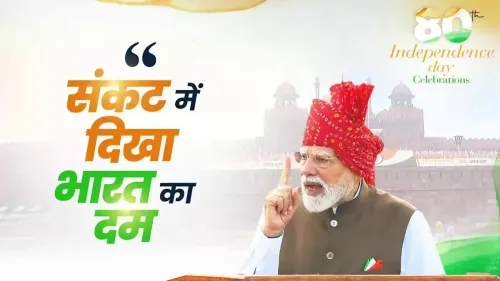
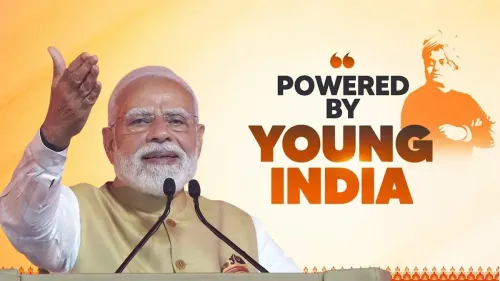
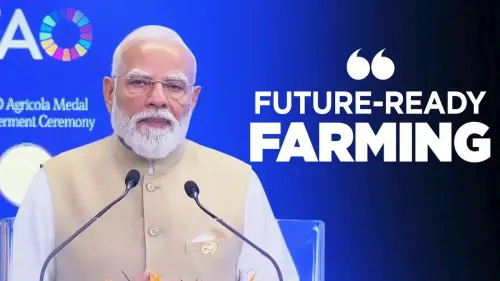
Prime Minister Narendra Modi on Monday, June 29, 2026, credited a decade of macroeconomic discipline and agile policymaking for India's resilience amid global turbulence, reaffirming the government's commitment to deepening Aatmanirbharta (self-reliance) as a strategic safeguard for the nation.
Context
In his post, PM Modi stated: 'India has shown remarkable stability during tough and testing times globally, despite our structural vulnerabilities.' He attributed this performance to 'ensuring macroeconomic stability over the last decade while making policy-making responsive and agile.' The remarks come at a time when global economies continue to grapple with elevated interest rates, geopolitical conflicts, and supply-chain disruptions that have weighed on growth across emerging and developed markets alike.
India has, in recent years, positioned itself as one of the fastest-growing major economies, frequently cited alongside other large emerging markets for its relative insulation from external shocks. The Prime Minister's statement appears to anchor that narrative in deliberate, long-term policy choices rather than cyclical fortune.
Policy Backdrop
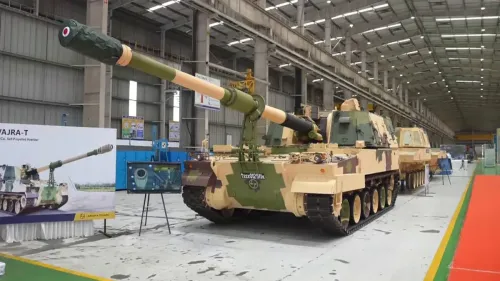
The concept of Aatmanirbhar Bharat — self-reliant India — was formally launched by PM Modi in May 2020 as a comprehensive economic response to the COVID-19 pandemic, encompassing reforms in manufacturing, defence, agriculture, and digital infrastructure. Since then, it has evolved into a broader doctrine covering production-linked incentive (PLI) schemes, import-substitution drives, and an emphasis on domestic value addition across sectors from semiconductors to solar panels.
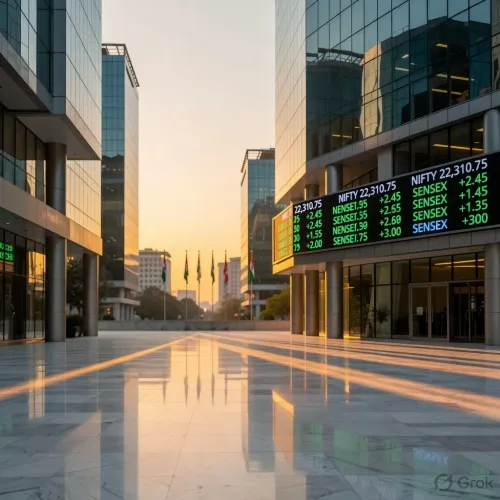
Macroeconomic stability has been a consistent government talking point, underpinned by measures such as inflation targeting by the Reserve Bank of India, fiscal consolidation efforts, and a push to attract foreign direct investment through regulatory simplification. The government has also pointed to a relatively stable rupee and robust foreign-exchange reserves as evidence of structural resilience.
Stakeholders and Impact
The Prime Minister's statement carries significance for multiple constituencies. For domestic industry, the renewed emphasis on Aatmanirbharta signals continued policy support — including tariff protection and PLI incentives — for sectors seeking to build local manufacturing capacity. For foreign investors, the framing of India as a stable, policy-predictable destination is a deliberate pitch at a time when global capital is seeking alternatives to more volatile markets.
For ordinary citizens, the broader promise is one of economic insulation: that structural reforms pursued over ten years have built buffers against external shocks that might otherwise translate into inflation, unemployment, or currency depreciation. The reference to 'structural vulnerabilities' is notably candid, acknowledging that India's integration into global trade and finance means it is not immune to external pressures — only better equipped to manage them.
What's Next
The statement is likely to set the tone for upcoming policy communications as India navigates a complex global environment. Further announcements on Aatmanirbharta-linked schemes — particularly in critical sectors such as electronics, defence manufacturing, and clean energy — are expected to follow as the government looks to convert the self-reliance doctrine into measurable industrial outcomes. Observers will watch whether the next Union Budget and sector-specific policy reviews reflect the agility the Prime Minister has described.
Point of View
Lending the broader claim of stability more credibility than a purely triumphalist framing would. Anchoring the narrative in 'a decade' of policymaking is also a deliberate electoral and historical argument, tying current resilience to choices made since 2014. The renewed Aatmanirbharta pledge suggests the self-reliance doctrine is being re-energised, possibly in response to fresh global supply-chain or geopolitical pressures.
NationPress
28 Sept 2026
Frequently Asked Questions
What did PM Modi say about India's economy on June 29 2026?
PM Modi said India has shown remarkable stability during tough global times, crediting ten years of macroeconomic discipline and agile policymaking, and reaffirmed the government's commitment to deepening Aatmanirbharta to safeguard the nation.
What is Aatmanirbhar Bharat?
Aatmanirbhar Bharat, meaning 'self-reliant India,' is an economic doctrine launched by PM Modi in May 2020 that promotes domestic manufacturing, import substitution, and strategic self-sufficiency across sectors including defence, electronics, and clean energy.
Why is India considered resilient despite global economic troubles?
The government attributes India's resilience to sustained macroeconomic stability measures — including inflation targeting, fiscal consolidation, and strong foreign-exchange reserves — alongside responsive policymaking that allows quick adaptation to global shocks.
What are India's structural vulnerabilities the PM referred to?
While PM Modi did not specify them in the post, structural vulnerabilities typically refer to India's dependence on imported energy, exposure to global supply-chain disruptions, and sensitivity to foreign capital flows — risks the government says have been managed through policy buffers.
What is the significance of PM Modi's Aatmanirbharta statement in 2026?
The statement signals that the self-reliance agenda remains a live policy priority, likely pointing to continued incentives for domestic manufacturing sectors and a strategic push to reduce dependence on imports in critical industries.