PM Modi Reaffirms Self-Reliance Push After Surat Visit
Synopsis
Prime Minister Narendra Modi visited Surat on June 5, 2026, using the occasion to collectively reaffirm India's commitment to becoming strong and self-reliant, reinforcing the Atmanirbhar Bharat agenda that has anchored the government's economic policy since 2020.
Key Takeaways
PM Modi visited Surat, Gujarat on June 5, 2026 and addressed the people of the city.
He reaffirmed India's commitment to becoming 'strong and self-reliant' during the visit.
The remarks align with the Atmanirbhar Bharat Abhiyan , launched in May 2020 with a package of approximately Rs 20 lakh crore .
Surat is a key industrial city in Gujarat , central to India's textile and diamond sectors — both priorities under the self-reliance push.
The visit fits a broader BJP pattern of combining state-level public outreach with national economic policy messaging.
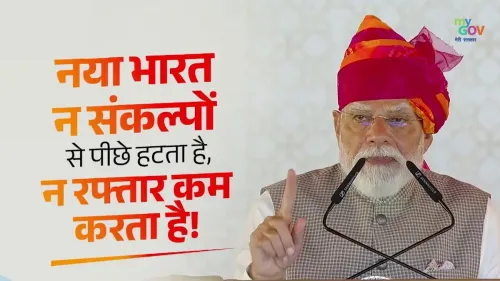
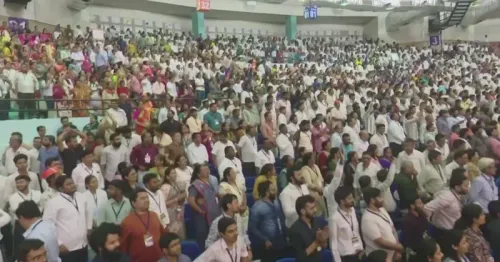
Prime Minister Narendra Modi on Saturday, June 7, 2026, reflected on his visit to Surat, Gujarat, describing the engagement as an occasion where he and the people of the city collectively reaffirmed India's commitment to becoming strong and self-reliant.
Posting on X, PM Modi wrote: 'It was wonderful being among the people of Surat yesterday. From this vibrant city, we collectively reiterated our commitment to making India strong and self-reliant.'
Context
Surat is one of Gujarat's most economically significant cities, known globally for its dominance in diamond processing, textiles, and manufacturing. The city has historically served as a key venue for BJP outreach, blending industrial symbolism with political messaging. A visit here carries particular resonance when the subject is economic self-reliance, given the city's deep roots in trade and domestic enterprise.
The Prime Minister's remarks align with a pattern of using Gujarat engagements to reinforce national economic objectives, particularly those linked to the Atmanirbhar Bharat Abhiyan.
Policy Backdrop
The Atmanirbhar Bharat Abhiyan (Self-Reliant India Mission) was launched in May 2020 with a stimulus package of approximately Rs 20 lakh crore, aimed at reducing India's dependence on imports and boosting domestic production across sectors including defence, electronics, pharmaceuticals, and textiles. It built on the earlier Make in India initiative, which was announced in September 2014 to attract investment and promote manufacturing.
Since its launch, the self-reliance framework has been woven into multiple central government schemes, with production-linked incentive programmes across more than a dozen sectors serving as its primary implementation vehicle. Surat's textile and diamond industries make it a natural touchstone for this messaging.
Stakeholders and Impact
The residents and business community of Surat — including workers in the city's sprawling textile clusters and diamond polishing units — are among the most direct stakeholders of self-reliance policies. Indian MSMEs more broadly stand to gain from policies that prioritise domestic sourcing and reduce competition from cheaper imports.
The Prime Minister's public reaffirmation signals continued political will behind the Atmanirbhar agenda, which analysts have noted is increasingly tied to India's positioning in global supply chains, particularly as multinational companies diversify away from single-country manufacturing hubs.
What's Next
Observers will watch for follow-up central government announcements, including possible revisions to production-linked incentive schemes or changes to import duty structures in sectors relevant to Surat's economy. Such visits by the Prime Minister to industrial cities have in the past preceded or accompanied policy announcements targeting specific manufacturing verticals.
The broader Atmanirbhar Bharat push is expected to remain a central pillar of the government's economic communication as India seeks to deepen its role in global value chains.
Point of View
The Prime Minister positions self-reliance not as a top-down policy directive but as a shared national resolve, a framing that has proven effective in building grassroots ownership of the agenda. The choice of Surat is also politically significant: the city is a BJP stronghold and an economic bellwether, making it an ideal stage to signal continuity in the government's manufacturing and import-substitution push. This fits a six-year pattern in which Gujarat visits serve as both political consolidation exercises and platforms for reiterating the government's core economic doctrine.
NationPress
21 Oct 2026
Frequently Asked Questions
Why did PM Modi visit Surat?
PM Modi visited Surat on June 5, 2026, to engage with the people of the city and reaffirm India's commitment to self-reliance, consistent with the Atmanirbhar Bharat Abhiyan.
What is Atmanirbhar Bharat?
Atmanirbhar Bharat, or Self-Reliant India, is a central government initiative launched in May 2020 with a package of approximately Rs 20 lakh crore to promote domestic production and reduce import dependence across sectors.
What industries is Surat known for?
Surat is known primarily for its diamond processing and textile industries, making it one of India's most important manufacturing and trading cities.
What is Make in India?
Make in India is a government programme launched in September 2014 to encourage domestic manufacturing and attract both domestic and foreign investment into key industrial sectors.
What could follow PM Modi's Surat visit?
Observers expect possible follow-up announcements on production-linked incentive schemes or import duty revisions relevant to Surat's textile and diamond sectors, in line with the Atmanirbhar Bharat agenda.