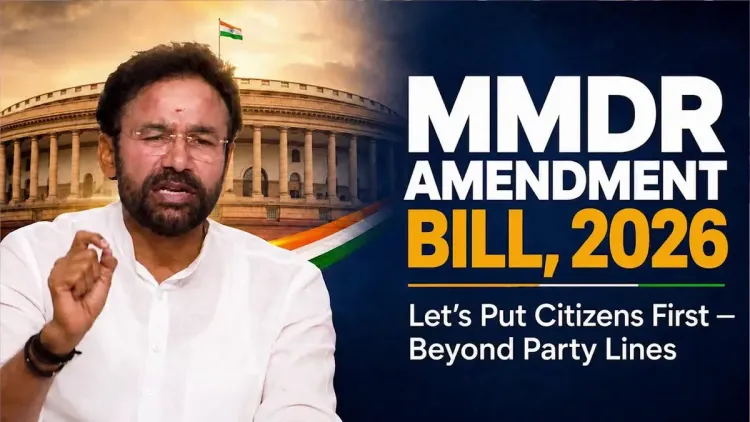
Kishan Reddy backs mineral Bill as step toward import independence
Synopsis
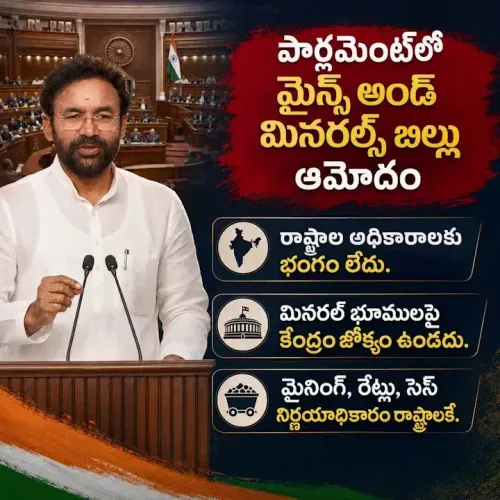
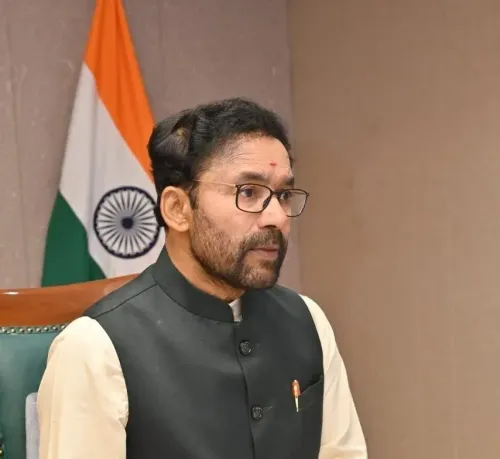
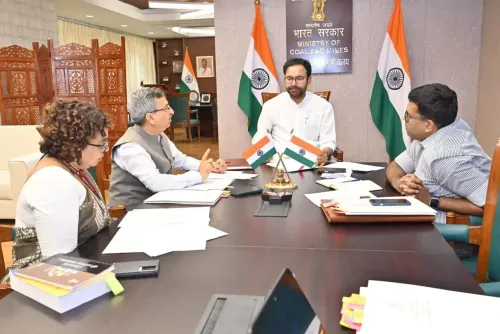
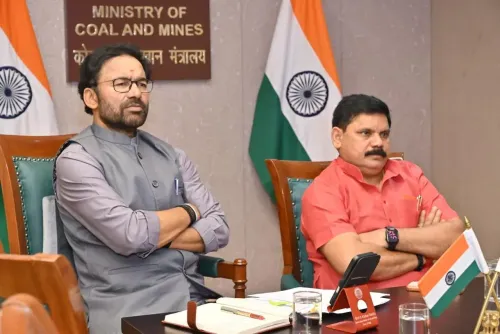
Union Minister G. Kishan Reddy backed a new mineral and coal Bill on 13 August 2026, calling it a step toward reducing import dependence and deepening centre-state cooperation in mining governance — the latest move in India's post-2014 resource-security push.
Key Takeaways
Union Coal and Mines Minister G.
Kishan Reddy endorsed a new mineral and coal Bill on 13 August 2026 , describing it as decisive for India's resource security.
The Bill aims to reduce import dependence on minerals and coal while accelerating domestic infrastructure development.
Reddy explicitly framed the legislation as a cooperative governance effort between the Centre, state governments, and industry stakeholders.
The reform continues a legislative arc that includes commercial coal auction liberalisation in 2020 and the MMDR Amendment Act of 2021 .
Parliamentary proceedings and subsequent rules on lease auctions and revenue distribution will determine real-world impact for mineral-rich states.
A legislative push to unlock India's mineral wealth moved into sharper focus on Thursday, 13 August 2026, when Union Coal and Mines Minister G. Kishan Reddy publicly backed a new Bill aimed at reducing the country's dependence on imported minerals and coal — framing it as a cornerstone of a self-reliant India.
What the Bill is designed to do
Reddy described the legislation as 'an important step towards unlocking India's mineral potential while upholding the rights and interests of States.' The minister stressed that the Bill reflects 'the spirit of cooperative governance,' with the Centre, states, and industry stakeholders aligned behind a common national interest. The twin goals: faster domestic mineral development and a meaningful dent in import bills that weigh on India's current account.
A reform arc stretching back to 2020
This Bill does not arrive in isolation. India has been methodically rewriting its mining rulebook since 2014 under the Atmanirbhar Bharat framework. Commercial coal mining was thrown open to private players through competitive auctions in 2020, ending a decades-old state monopoly. The Mines and Minerals (Development and Regulation) Amendment Act, 2021 then accelerated exploration timelines and streamlined lease processes. Each successive amendment has tried to square a difficult circle — faster project approvals on one side, equitable revenue-sharing with mineral-rich states on the other.
That centre-state tension is precisely why Reddy's framing matters. By explicitly naming state governments as partners rather than subordinates, the minister signals that this round of reform is being sold — politically and administratively — as a cooperative exercise, not a central diktat.
Why mineral security is a strategic bet right now
India imports significant volumes of coking coal for its steel industry and relies on foreign sources for critical minerals essential to batteries, electronics, and defence manufacturing. Reducing that exposure is not merely an economic calculation — it is a supply-chain security argument that has gained urgency globally since pandemic-era disruptions exposed the fragility of long import chains. Domestic mining expansion, if it proceeds at the pace the government envisions, could ease pressure on the rupee and give Indian manufacturers a more predictable input cost structure.
The stakeholders watching most closely: state governments in mineral-rich belts who want a fair share of royalties, mining companies eyeing new auction blocks, and domestic manufacturers in steel, cement, and clean-energy sectors who need reliable, affordable raw material supply.
Parliamentary proceedings and what comes next
The next test is in Parliament, where the Bill's provisions — particularly on state consent mechanisms and revenue distribution — will face scrutiny. Any subsequent rules or state-level notifications on lease auctions will determine whether the legislation's cooperative spirit translates into operational reality on the ground. A Bill is a promise; the rules that follow are the proof.
Point of View
So Reddy's deliberate inclusion of states as partners signals political groundwork being laid before parliamentary debate heats up. The Bill also fits a broader pattern of the BJP government converting Atmanirbhar Bharat from a slogan into sector-specific legislation, with mineral security now occupying the same strategic space as semiconductor and defence manufacturing self-reliance. Whether the cooperative framing survives contact with royalty-sharing negotiations in mineral-rich opposition-governed states remains the real test.
NationPress
14 Aug 2026
Frequently Asked Questions
What is the mineral and coal Bill that Kishan Reddy is supporting?
The Bill referenced by Union Minister G. Kishan Reddy on 13 August 2026 is a legislative measure aimed at expanding domestic mineral and coal development, reducing India's import dependence, and strengthening centre-state cooperation in mining governance. Specific provisions are subject to parliamentary proceedings.
What is India's current mineral import situation?
India imports significant quantities of coking coal for steel production and relies on foreign sources for critical minerals used in batteries, electronics, and defence manufacturing, creating both economic and supply-chain security vulnerabilities.
How does this Bill relate to earlier mining reforms?
It extends a reform arc that includes the opening of commercial coal mining to private players through auctions in 2020 and the Mines and Minerals (Development and Regulation) Amendment Act of 2021, both aimed at accelerating domestic production under the Atmanirbhar Bharat framework.
What role do state governments play in India's mining legislation?
State governments hold key interests in mineral-rich territories, including royalty revenues and land consent. Kishan Reddy specifically highlighted that the new Bill upholds state rights, reflecting the political necessity of securing state-level buy-in for central mining reforms.
Who is G. Kishan Reddy?
G. Kishan Reddy is India's Union Minister of Coal and Mines and serves as the BJP's Telangana state president. He is responsible for legislative and administrative policy on India's mineral and coal resources.