Tharoor backs INOC-USA piece on minority freedoms in India
Synopsis
Congress MP Dr. Shashi Tharoor amplified a piece by George Abraham of INOC-USA arguing that freedoms the Indian diaspora exercises abroad must not be denied to minorities at home — a pointed symmetry aimed at domestic minority rights debates in India.
Key Takeaways
Shashi Tharoor shared an article by George Abraham of INOC-USA on August 13, 2026 .
The highlighted quote argues that freedoms Indians claim as guests in foreign countries must equally apply to minorities within India.
INOC-USA is the Indian National Congress's overseas support organisation based in the United States .
Tharoor, a former UN Under-Secretary-General , has a long record of linking India's secular commitments to its international standing.
The post makes no specific legislative demand but enters an ongoing political debate over minority rights and majoritarian policy in India.
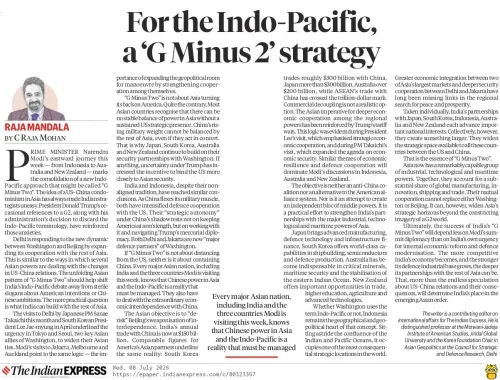
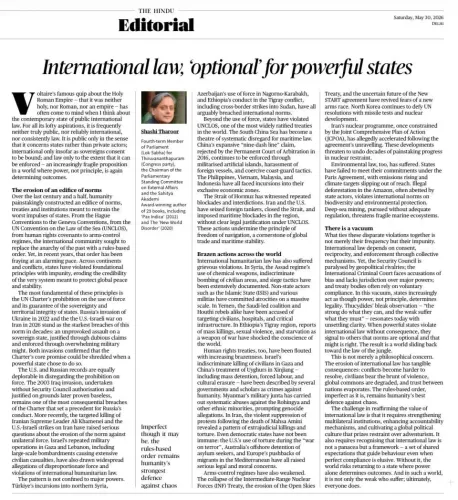
A sharp moral argument about double standards and minority rights has drawn the attention of Congress MP Dr. Shashi Tharoor, who on Thursday, August 13, 2026, amplified a piece by George Abraham of INOC-USA — the Indian National Congress's overseas support organisation in the United States.
The line Tharoor chose to highlight cuts to the bone: 'The freedoms we enthusiastically exercise when we are guests in another country ought not to become freedoms we view with suspicion when exercised by minorities in our own.' The argument is simple, symmetrical, and deliberately pointed — if the Indian diaspora abroad expects full civil and religious freedoms in its host nations, the same yardstick must apply to minorities at home.
A diaspora voice enters a domestic debate
The invocation of an INOC-USA author is itself a rhetorical move worth noting. Diaspora organisations like INOC-USA occupy a particular space in Indian political discourse — they carry the moral weight of communities that have lived as minorities in foreign lands and understand, firsthand, what it means to depend on the goodwill and legal protections of a majority culture. Abraham's framing draws directly on that lived experience to make a universalist case: rights are not a privilege extended by a majority, but a standard that must be applied consistently. For Tharoor, a former UN Under-Secretary-General with decades of international exposure, the argument aligns with a worldview he has articulated repeatedly — that India's secular constitutional framework is both a domestic commitment and a global credential. To erode protections for minorities at home, in this reading, is to undercut the very argument Indian communities make when seeking equal treatment abroad.The consistency principle in Indian political debate
The broader pattern here is familiar. Congress leaders have consistently invoked the principle of equal treatment for minorities in contrast to what they describe as majoritarian policy drift under the current political dispensation. What gives this particular post its edge is the messenger: not a domestic politician, but a member of the Indian-American community whose credibility rests on navigating pluralism in practice, not just in theory. The post carries no legislative demand and names no specific policy or incident — it operates at the level of principle. But in a political climate where minority rights remain a live and contested issue, a principle stated this cleanly is rarely politically neutral. Whether Abraham's full article — linked but unverifiable from available sources — goes further with specifics remains to be seen. What Tharoor chose to quote, however, says enough on its own.Point of View
Harder to dismiss as partisan. The diaspora framing adds moral authority: communities that have lived as minorities abroad carry firsthand credibility on the subject. This fits a broader Congress strategy of internationalising the secularism debate, using India's global aspirations as a mirror held up to domestic policy. The post stakes out principled ground without naming a specific incident, leaving it resonant across multiple ongoing controversies.
NationPress
29 Sept 2026
Frequently Asked Questions
What did Shashi Tharoor post about minority rights?
Tharoor shared an article by George Abraham of INOC-USA, highlighting the argument that freedoms Indians exercise as guests in foreign countries should not be viewed with suspicion when exercised by minorities within India.
Who is George Abraham and what is INOC-USA?
George Abraham is the author of the referenced article. INOC-USA is the Indian National Congress's overseas support organisation based in the United States, representing the party's diaspora network.
What is the main argument in the article Tharoor shared?
The article argues for a consistent standard of civil and religious freedoms — that the same liberties the Indian diaspora expects abroad must be equally protected for minorities inside India.
Why is Tharoor's endorsement of a diaspora author significant?
As a former UN Under-Secretary-General, Tharoor has long linked India's secular credentials to its international reputation. Citing a diaspora voice reinforces the argument that inconsistency on minority rights has global implications, not just domestic ones.
Does the post target a specific policy or incident?
No. Tharoor's post operates at the level of principle and does not name a specific law, policy, or incident, though it enters an ongoing political debate about minority rights in India.