Tharoor: Revive Inter-State Council for Delimitation
Synopsis
Congress MP Dr. Shashi Tharoor, in his TharoorThink column, calls for reviving the Inter-State Council under Article 263 as the constitutionally proper forum for delimitation — warning that Parliament alone cannot settle a question with such asymmetric regional impact on India's federal balance.
Key Takeaways
Tharoor argues delimitation cannot be decided by Parliament alone and requires Centre-state consultation through the Inter-State Council .
The Inter-State Council , established under Article 263 , was constituted in 1990 on the recommendation of the Sarkaria Commission but has met only rarely since.
The 84th Constitutional Amendment (2001) froze delimitation of constituencies until after the first post- 2026 census, a window that is now opening.
Southern states fear losing parliamentary seats to higher-population northern states if delimitation proceeds on headcount alone.
Tharoor's column, pinned on X , frames the government's non-use of the Council as a deliberate political choice rather than a procedural oversight.
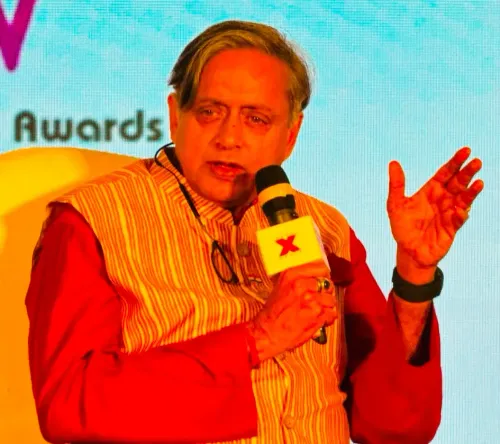
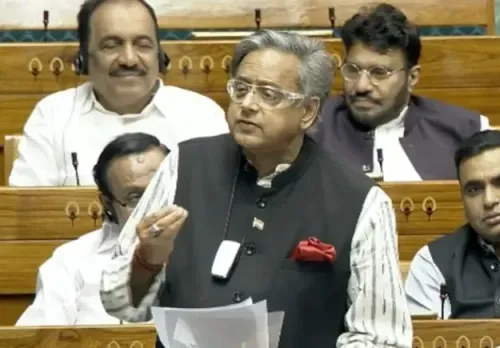
A constitutional body created precisely for moments like this one has been gathering dust for decades — and Congress MP Dr. Shashi Tharoor wants that to change. Writing in his latest TharoorThink column on Friday, 31 October 2026, the Thiruvananthapuram MP argues that the politically charged question of delimitation cannot be resolved by Parliament acting alone, and that India's federal architecture already has the tool to handle it: the long-dormant Inter-State Council.
Tharoor's column, which he pinned to the top of his X profile, frames the issue squarely: 'Issues like delimitation cannot be settled by Parliament alone; our federal system demands consultation with the states as well.' His proposed vehicle is the Inter-State Council, a constitutional body under Article 263 that the government, he writes, 'prefers to neglect.'What the Inter-State Council is — and why it has barely met
Established under Article 263 of the Constitution, the Inter-State Council was designed to investigate and discuss subjects of common interest between the Centre and the states. It sat as a theoretical provision for over four decades before the Sarkaria Commission (1988) — set up to examine centre-state relations — formally recommended activating it. The VP Singh government finally constituted the body in 1990.
Since then, the Council has convened only a handful of times, with meetings growing increasingly infrequent after its first active decade. Critics have long argued that successive governments — regardless of party — have preferred bilateral negotiations or parliamentary majorities over the slower, more inclusive forum that the Council provides. Tharoor's column lands that charge squarely at the current dispensation.
Delimitation and the north-south fault line
The urgency behind Tharoor's argument is directly tied to a constitutional clock. The 84th Constitutional Amendment of 2001 froze the delimitation of Lok Sabha and Assembly constituencies until after the first census conducted post-2026. That window is now opening, and southern states are watching with anxiety.
The fear is straightforward: southern states that invested heavily in population control over decades could see their parliamentary representation shrink relative to northern states with higher population growth, if seats are redrawn purely on headcount. This is not a hypothetical grievance — it has animated federal politics for years, and any fresh delimitation exercise will force the question into the open.
That asymmetry is precisely why Tharoor argues a parliamentary majority alone cannot — and should not — settle the matter. The Inter-State Council, with its mandate to bring state governments into deliberation, offers a constitutionally grounded path to consensus rather than imposition.
The mechanism that a census exercise demands
What to watch now: whether any state government formally echoes the call for an Inter-State Council meeting, and whether the Centre responds with a scheduled session or a formal agenda ahead of the post-2026 census exercise. Parliamentary or state assembly resolutions demanding Council convocation would significantly raise the political stakes.
Tharoor's intervention, timed as the delimitation debate moves from abstract to imminent, puts the federal governance question at the centre of a conversation that will define India's parliamentary map for a generation. Neglecting Article 263 once more is no longer a procedural choice — it is a political one, and the country's southern states will be watching every step of the way.
Point of View
He grounds a politically charged demand in institutional history, making it harder for the Centre to dismiss as partisan. The timing is deliberate: with the post-2026 census window now open, the demand for Inter-State Council convocation is moving from rhetorical to operational. If southern state governments formally adopt this position, it could coalesce into coordinated regional pressure that cuts across party lines.
NationPress
30 Oct 2026
Frequently Asked Questions
What is the Inter-State Council and why is Tharoor calling for its revival?
The Inter-State Council is a constitutional body under Article 263 created to discuss issues of common interest between the Centre and the states. Tharoor argues it must be revived to ensure states have a voice in the delimitation process, which will redraw parliamentary constituencies after the next census.
What is delimitation and why does it concern southern states?
Delimitation is the constitutional process of redrawing Lok Sabha and state assembly seat boundaries based on census population data. Southern states are concerned that their successful population control programmes could lead to a reduction in their parliamentary seats relative to more populous northern states.
When was the Inter-State Council last active?
The Inter-State Council was constituted in 1990 following the Sarkaria Commission's recommendations. It held meetings during its first decade but has convened only infrequently since, with exact recent meeting dates unconfirmed.
What did the 84th Constitutional Amendment do?
The 84th Constitutional Amendment of 2001 extended the freeze on delimitation of Lok Sabha and assembly constituencies until after the first census conducted post-2026, largely to protect the representation of southern states.
Can the government be forced to convene the Inter-State Council?
There is no statutory mechanism compelling the Centre to call an Inter-State Council meeting on a specific schedule, making it effectively a matter of political will. Tharoor's argument is that the government has a constitutional obligation to use the body for issues with major federal implications.