Kishan Reddy: DMF crosses Rs. 1.28 lakh crore in mineral funds
Synopsis
Union Mines Minister G. Kishan Reddy highlights that the District Mineral Foundation, mandated under the 2015 MMDR Amendment Act, has crossed Rs. 1.28 lakh crore in collections, channelling royalty revenues into healthcare, education and livelihoods across India's mining districts.
Key Takeaways
The District Mineral Foundation (DMF) has collected mineral funds exceeding Rs.
1.28 lakh crore , according to Union Mines Minister G.
The DMF was created under the Mines and Minerals (Development and Regulation) Amendment Act, 2015 , requiring mining firms to contribute 10–30 percent of royalties to district-level welfare bodies.
Funds are directed toward healthcare, education, and sustainable livelihoods in communities affected by mineral extraction.
States with the largest mining footprints — Odisha, Jharkhand, and Chhattisgarh — host the biggest DMF pools and see the most direct impact.
DMF utilisation rates and project completion timelines vary by district, making annual Ministry of Mines utilisation reports a key accountability checkpoint.
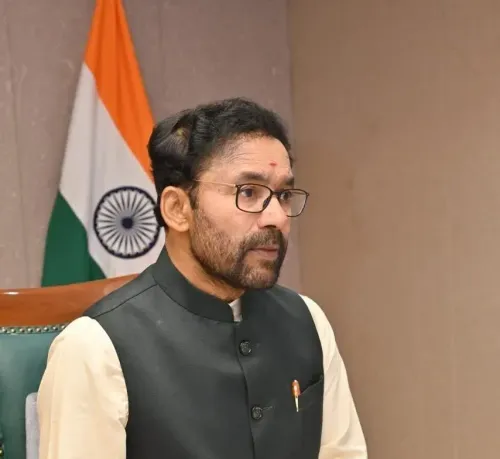
More than a decade after India rewired how it handles the revenues from its own earth, the numbers are starting to speak for themselves. Union Coal and Mines Minister G. Kishan Reddy announced on Friday, October 30, 2026, that the District Mineral Foundation (DMF) has now collected mineral funds exceeding Rs. 1.28 lakh crore — a figure the Ministry of Mines is positioning as proof that resource extraction can be made to serve the communities living above those resources.
What the DMF actually is — and why 2015 changed everything
The DMF was not born of good intentions alone. It was born of law. The Mines and Minerals (Development and Regulation) Amendment Act, 2015 made it mandatory for mining companies to contribute between 10 and 30 percent of their royalty payments into district-level statutory bodies — one for each mining district — ringfenced entirely for the welfare of communities affected by extraction. Before 2015, mineral royalties flowed to state consolidated funds with no guaranteed local return. That changed overnight.
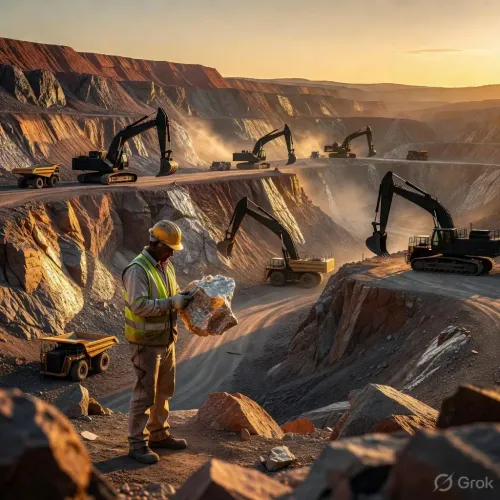
The Ministry of Mines frames the DMF as a structural mechanism, not a discretionary grant. Every mine, every royalty payment, every district produces a compulsory contribution. The result, accumulated over roughly a decade of operation, is the Rs. 1.28 lakh crore corpus that Kishan Reddy highlighted — directed at healthcare facilities, school infrastructure, and livelihood programmes in mineral-rich but often infrastructure-poor districts.
Where the money flows: Odisha, Jharkhand, Chhattisgarh at the centre
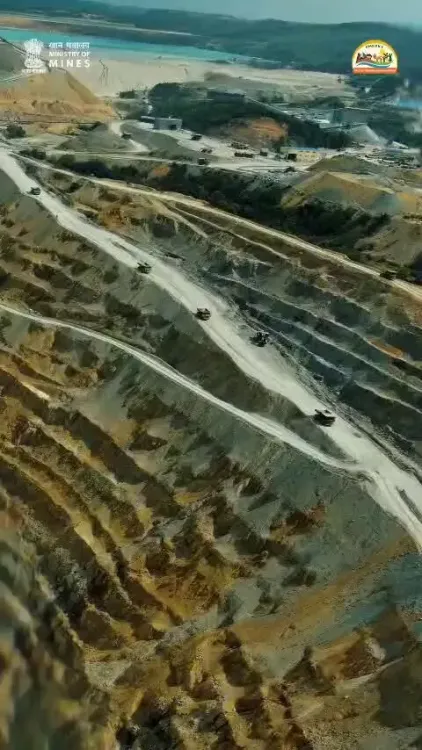
The DMF's weight falls heaviest where India's mining footprint is deepest. States like Odisha, Jharkhand, and Chhattisgarh — which together account for a disproportionate share of India's iron ore, coal, and bauxite output — host the largest DMF pools. It is in these states that the foundation's impact on local health posts, drinking water projects, and school upgrades is most visible and most closely watched by district administrations.
The model is deliberately bottom-up: district administrations and local bodies are meant to identify priorities rather than wait for a central directive. That design principle is also its central challenge — utilisation rates and project completion timelines vary sharply across districts, and the Ministry's annual reports on DMF spending remain a key accountability metric that civil society and parliamentary committees return to each year.
The political and policy signal behind the post
Kishan Reddy's post attributes the DMF's trajectory to the 'visionary guidance' of Prime Minister Narendra Modi — language that situates the milestone within the BJP's broader governance narrative heading into the political calendar. But strip away the framing and the underlying policy architecture predates the current political moment: the 2015 amendment created a durable, statutory revenue-share that no single administration can easily reverse.
What the announcement does signal is that the Ministry of Mines is moving to make DMF's aggregate number — rather than individual project stories — the headline metric. A Rs. 1.28 lakh crore corpus is a number large enough to demand a reckoning with the next obvious question: how much of it has actually reached a clinic, a classroom, or a livelihood programme — and how fast?
That answer, when it comes in the Ministry's next utilisation report, will tell the fuller story of whether India's most ambitious mineral-welfare experiment is delivering at the pace its collections now demand.
Point of View
Not just state exchequers. Kishan Reddy's decision to lead with the aggregate corpus figure reflects a Ministry strategy of making scale — not individual projects — the political and policy headline. The real test, however, is utilisation: a large corpus with slow drawdown risks becoming a talking point rather than a transformation. Watching the gap between collections and actual on-ground spending will determine whether DMF is India's most consequential mining reform or its most underspent one.
NationPress
30 Oct 2026
Frequently Asked Questions
What is the District Mineral Foundation (DMF)?
The DMF is a statutory body in every mining district of India, created under the Mines and Minerals (Development and Regulation) Amendment Act, 2015. It collects 10–30 percent of mining royalties and uses the funds for healthcare, education, and livelihood support in communities affected by mineral extraction.
How much has the DMF collected so far?
Union Mines Minister G. Kishan Reddy stated that DMF collections have exceeded Rs. 1.28 lakh crore in total since the scheme's inception.
Which states benefit most from DMF funds?
Mineral-rich states such as Odisha, Jharkhand, and Chhattisgarh receive the largest DMF allocations because they account for a significant share of India's mining output and royalty payments.
When was the DMF created and what law governs it?
The DMF was mandated by the Mines and Minerals (Development and Regulation) Amendment Act, 2015, which made it compulsory for mining companies to contribute a share of their royalties to these district-level welfare foundations.
How is DMF money spent?
DMF funds are spent on local priorities identified by district administrations, typically covering healthcare infrastructure, school facilities, drinking water projects, and livelihood programmes for communities living in and around mining zones.