Kishan Reddy highlights DMF's role in skilling mining-area youth
Synopsis
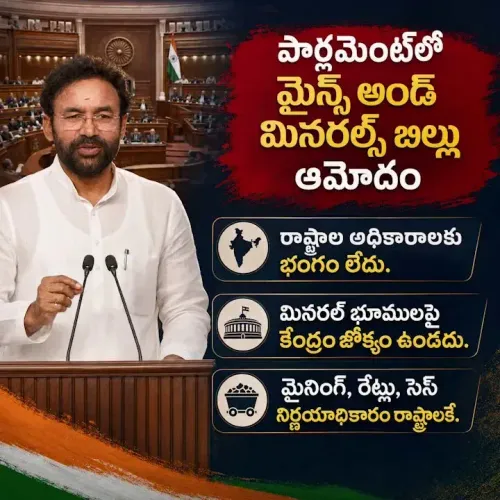
Union Coal and Mines Minister G. Kishan Reddy on 27 October 2026 highlighted the District Mineral Foundation — a statutory scheme born from the 2015 Mines and Minerals Amendment Act — as a transformative vehicle for skilling youth in mining-affected communities and driving inclusive national growth.
Key Takeaways
Union Coal and Mines Minister G.
Kishan Reddy posted on 27 October 2026 praising the District Mineral Foundation (DMF) for empowering youth in mining regions through skill development.
The DMF was created under the Mines and Minerals (Development and Regulation) Amendment Act, 2015 , mandating contributions from mining lease holders into district-level welfare trusts.
The scheme targets youth in mineral-bearing districts across states such as Jharkhand, Odisha, Chhattisgarh, and Madhya Pradesh.
Ministry of Mines guidelines have progressively steered DMF spending toward skill training and livelihood programmes, beyond physical infrastructure.
Reddy's post tagged @dmf_gov , indicating active ministerial coordination with the DMF's central oversight body.
Fund utilisation data in Ministry of Mines annual reports remains the key accountability measure for DMF's on-ground impact.
A decade after a landmark law quietly redirected mining royalties toward the communities bearing the heaviest cost of extraction, Union Coal and Mines Minister G. Kishan Reddy on Tuesday, 27 October 2026 spotlighted the District Mineral Foundation (DMF) as proof that resource wealth can flow back to the people who live atop it — particularly through skill development for youth in mining-affected regions.
What the District Mineral Foundation actually does
The DMF is not a government department — it is a network of statutory trusts, one in each mining district, funded by mandatory contributions from mining lease holders. Its legal spine is the Mines and Minerals (Development and Regulation) Amendment Act, 2015, passed under the Narendra Modi-led government. The idea was straightforward: if a district bleeds minerals, it earns a share of the proceeds. Every rupee collected flows into local welfare — health, education, infrastructure, and increasingly, skill training for young people whose land feeds the national industrial machine but who have historically been left outside its prosperity.
Reddy's post praised Prime Minister Modi's 'visionary leadership' and called the DMF's impact 'remarkable,' framing it as 'grassroots empowerment' that is 'opening doors to brighter futures and fostering inclusive national growth.' The mention of @dmf_gov signals active coordination between the Ministry of Mines and DMF's central oversight body.
Skill development as the DMF's sharpest edge
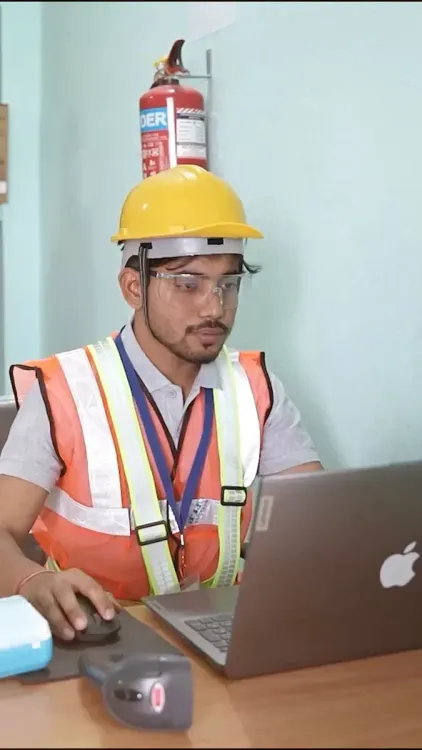
Since 2015, successive Ministry of Mines guidelines have pushed DMF trusts toward livelihood and skill programmes — moving beyond the earlier focus on physical infrastructure. The logic is pointed: mineral-bearing districts in states like Jharkhand, Odisha, Chhattisgarh, and Madhya Pradesh are home to large tribal and rural youth populations with limited access to formal employment pathways. Channelling mining revenues into vocational training directly addresses a structural gap that market forces alone have not closed.
Reddy's emphasis on 'targeted skill development' echoes the broader central government posture of linking resource extraction to regional employment — a narrative that has gained traction in successive union budgets and aligns with the wider Viksit Bharat (Developed India) framing.
What the numbers will need to show
Advocacy around the DMF is not new, but the mechanism's credibility ultimately rests on fund utilisation data. Ministry of Mines annual reports track how much each district trust has collected versus disbursed — and whether those disbursements reach skill programmes or remain locked in slower-moving infrastructure pipelines. That accountability trail is the real metric behind the political messaging.
A minister championing the DMF publicly raises the profile of the scheme and, implicitly, the pressure on district administrations to spend well. The spotlight Reddy has turned on it today is itself a form of governance signal — and the communities waiting for those skill certificates will be watching the follow-through.
Point of View
And a Union Minister spotlighting it publicly raises both its political visibility and the implicit accountability bar for district trusts. The skill-development framing is strategically significant: it shifts the DMF conversation from passive welfare transfers to active economic mobility, which resonates better with the government's broader Viksit Bharat employment messaging. Whether the policy rhetoric converts into improved fund utilisation figures is the question district communities — and opposition benches — will press hard on.
NationPress
27 Oct 2026
Frequently Asked Questions
What is the District Mineral Foundation (DMF)?
The District Mineral Foundation is a statutory trust set up in every mining district of India, funded by mandatory contributions from mining lease holders. It was created under the Mines and Minerals (Development and Regulation) Amendment Act, 2015, and is meant to benefit communities affected by mining operations through spending on welfare, health, education, and skill development.
What did Kishan Reddy say about the DMF?
On 27 October 2026, Union Coal and Mines Minister G. Kishan Reddy praised the DMF on X, calling it a 'transformative initiative' under PM Modi's leadership that is empowering youth in mining-affected regions through targeted skill development and fostering inclusive national growth.
Which states benefit most from the District Mineral Foundation?
Mineral-rich states such as Jharkhand, Odisha, Chhattisgarh, and Madhya Pradesh are among the primary beneficiaries of the DMF, as they host a large share of India's mining districts and the tribal and rural youth populations the scheme targets.
How is DMF money used for skill development?
Ministry of Mines guidelines direct DMF trusts to fund vocational training and livelihood programmes for youth in mining-affected communities, complementing spending on health, education, and infrastructure. The goal is to convert mining revenues into employment opportunities for local populations.
How can one track DMF fund utilisation?
The Ministry of Mines publishes annual reports that track how much each district DMF trust has collected and disbursed. These reports are the primary public accountability mechanism for assessing whether DMF funds are reaching intended programmes like skill development.