CM Naidu Activates Full Cyclone Response as Arnab Nears AP Coast
Synopsis
Andhra Pradesh CM N. Chandrababu Naidu has activated a full-scale disaster response to Cyclone Arnab, deploying 22 NDRF-SDRF teams, identifying 2,199 shelters, shifting 2,360 pregnant women to safety, and mobilising over 8,400 power restoration personnel across vulnerable coastal districts.
Key Takeaways
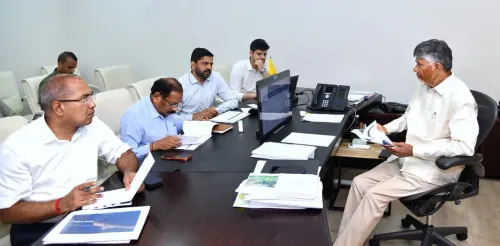
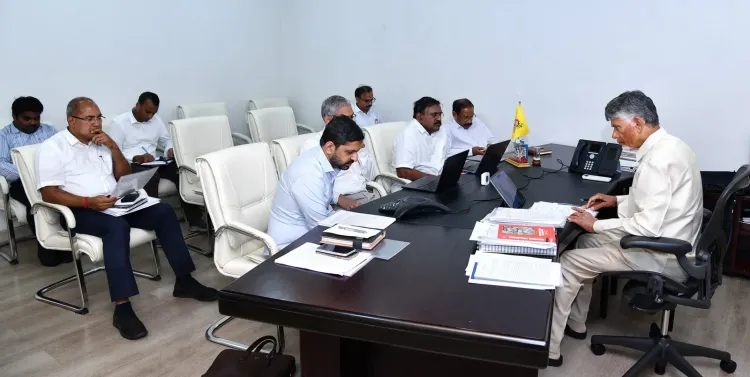
CM Naidu reviewed Cyclone Arnab preparedness four times on October 27, staying in constant contact with District Collectors.
2,199 cyclone shelters have been identified, with evacuations already prioritising elderly, children, disabled persons, and pregnant women.
2,360 pregnant women have been pre-emptively shifted to medical facilities ahead of landfall.
12 NDRF and 10 SDRF teams have been assigned to affected districts, with the Navy and Coast Guard on standby offshore.
Over 8,400 power restoration personnel have been mobilised to enable rapid post-cyclone infrastructure recovery.
Fishermen have been explicitly ordered not to venture into the sea until official clearance is issued.
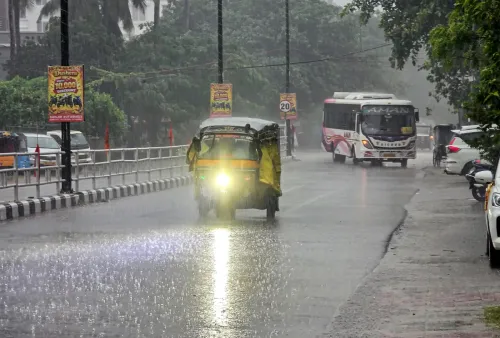
A cyclone bearing down on one of India's most storm-prone coastlines triggered a full-scale government mobilisation on Tuesday, October 27, 2026, as Andhra Pradesh Chief Minister N. Chandrababu Naidu announced he had reviewed the state's preparedness four times in a single day — a signal of how seriously the administration is treating the threat of Cyclone Arnab.
Four Reviews, 2,199 Shelters and 2,360 Pregnant Women Already Moved
The numbers tell the story of a machine in motion. 2,199 cyclone shelters have been identified across vulnerable districts, and evacuation plans are already being executed with an explicit focus on the most at-risk: the elderly, children, persons with disabilities, and pregnant women. Most strikingly, 2,360 pregnant women have already been shifted to medical facilities — a pre-emptive step that goes beyond routine cyclone protocol and reflects lessons learned from past disasters on this coastline.
Naidu confirmed he has remained 'in constant contact with District Collectors and senior officials' throughout the day, monitoring evacuations in real time. Twelve NDRF teams — units of the National Disaster Response Force, India's premier rapid-response disaster agency — and ten SDRF teams from the state's own disaster force have been assigned to affected districts, with deployment already underway.
Navy, Coast Guard and 8,400 Power Personnel on Standby
The multi-agency net stretches from the street level to the sea. Police, Fire Services, and medical teams are mobilised on the ground. The Indian Navy and Coast Guard are positioned to assist offshore. For the recovery phase — historically where lives are lost to downed infrastructure — over 8,400 power restoration personnel have been pre-deployed, an unusually large number that signals the administration's intent to restore electricity rapidly after the storm passes.
Control rooms are operating around the clock. Food, drinking water, medicines, and generators are being arranged for vulnerable areas ahead of landfall — not after.
Andhra Pradesh is no stranger to this calculus. The Bay of Bengal coastline, which the state shares, is among the world's most cyclone-active corridors. The devastating Cyclone Hudhud in 2014 — which struck Visakhapatnam with catastrophic force — recalibrated how the state prepares, embedding the kind of pre-positioning and vulnerable-population prioritisation now visible in the Arnab response. India's Disaster Management Act, 2005, provides the legal scaffolding for the coordinated NDRF-state-Navy response framework being activated today.
Naidu's Direct Appeal: Fishermen, Rumours and Vulnerable Neighbours
Beyond the machinery, Naidu's post carried a direct public appeal covering ground-level behaviour that can mean the difference between safety and tragedy. Fishermen were told explicitly: do not venture into the sea until official clearance is given. Residents were urged to avoid beaches, riverbanks, floodwaters, and fallen power lines — the everyday hazards that claim lives long after peak winds subside.
Two instructions stood out for their specificity. Citizens were asked to keep charged phones and essential supplies ready — practical, actionable, measurable. And in a line that reflects community-scale preparedness thinking, Naidu urged residents to 'check on vulnerable neighbours and inform local officials of anyone needing assistance.' The state is asking its citizens not just to protect themselves, but to be the last mile of its own warning system.
'The government machinery is working continuously for your safety,' he wrote. 'Your timely cooperation will help us protect lives. Together, we will face this challenge.'
The cyclone track, precise landfall timing, and the scale of relief operations that follow will define how this response is ultimately judged. For now, the state has done what good disaster governance demands: moved first, moved fast, and moved for the most vulnerable.
Point of View
400 power workers before landfall reflect a deliberate shift in Indian coastal disaster governance — from reactive relief to anticipatory infrastructure protection. The explicit evacuation of 2,360 pregnant women as a named metric also signals that 'vulnerable population prioritisation' has moved from policy language into measurable, reportable operational reality. For a CM who has staked his political identity on administrative efficiency, the Cyclone Arnab response is also a live demonstration of state capacity — one that will be closely watched against actual outcomes. The activation of Navy and Coast Guard alongside NDRF and SDRF shows the multi-tier federal coordination framework established under the Disaster Management Act, 2005, functioning as designed.
NationPress
27 Oct 2026
Frequently Asked Questions
What is Cyclone Arnab and where is it expected to hit?
Cyclone Arnab is a cyclonic storm approaching the Andhra Pradesh coast along the Bay of Bengal. The precise landfall location and timing are subject to official meteorological updates as the system develops.
How many cyclone shelters have been prepared in Andhra Pradesh for Cyclone Arnab?
2,199 cyclone shelters have been identified across Andhra Pradesh, with evacuation plans prioritising the elderly, children, persons with disabilities, and pregnant women.
How many NDRF teams have been deployed in Andhra Pradesh for the cyclone?
12 NDRF teams (National Disaster Response Force) and 10 SDRF teams (State Disaster Response Force) have been assigned to affected districts, with deployment underway as of October 27, 2026.
What should fishermen in Andhra Pradesh do during Cyclone Arnab?
Fishermen have been explicitly directed by CM Naidu not to venture into the sea until official clearance is issued by authorities. Fishing activity should remain suspended until the all-clear is given.
What precautions should Andhra Pradesh residents take during Cyclone Arnab?
Residents should move to designated cyclone shelters when advised, keep essential supplies and charged phones ready, avoid beaches, riverbanks, floodwaters and fallen power lines, follow only official updates, and check on vulnerable neighbours.