CM Fadnavis: Opposition plays politics on Karjat-Bhimashankar
Synopsis
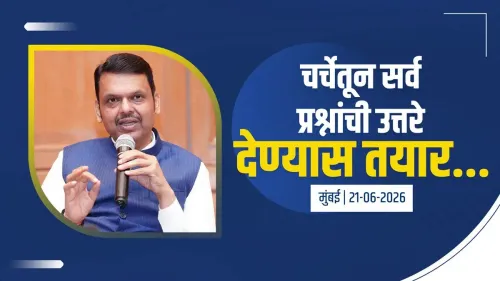
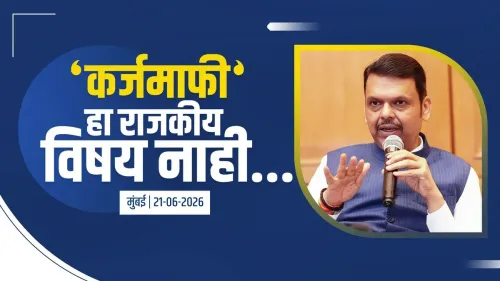
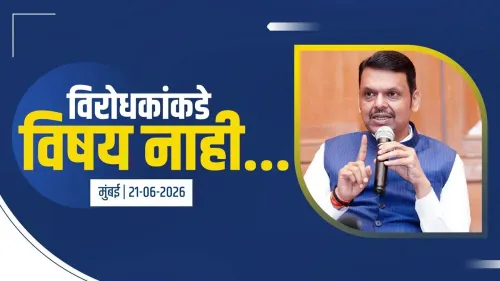
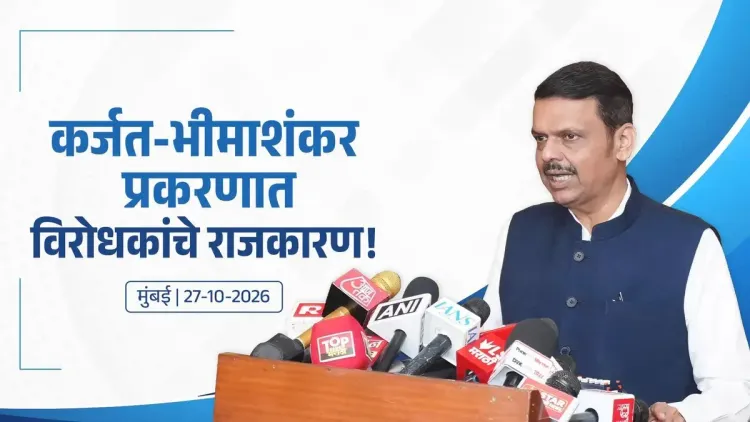
Maharashtra CM Devendra Fadnavis on October 27 publicly accused opposition parties of pursuing 'politics without any study' on the Karjat-Bhimashankar issue, framing the dispute as a governance challenge being exploited for political gain without technical basis.
Key Takeaways
CM Devendra Fadnavis posted on October 27, 2026 targeting opposition criticism of the Karjat-Bhimashankar matter.
He charged that opposition parties are doing 'only politics, no study' on the issue — a direct challenge to their technical credibility.
Karjat (Raigad district) and Bhimashankar (Pune district) sit in the ecologically and religiously sensitive Western Ghats belt.
The specific government decision at the centre of the row has not been publicly detailed in this communication.
The bilingual Marathi-Hindi post signals the government's intent to carry this narrative beyond Maharashtra's borders.
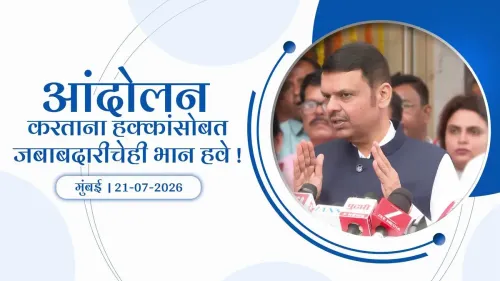
A sharp counter from the top — Maharashtra Chief Minister Devendra Fadnavis on Tuesday, October 27, 2026 accused the opposition of weaponising the Karjat-Bhimashankar matter for political gain while doing none of the homework that governance actually demands.
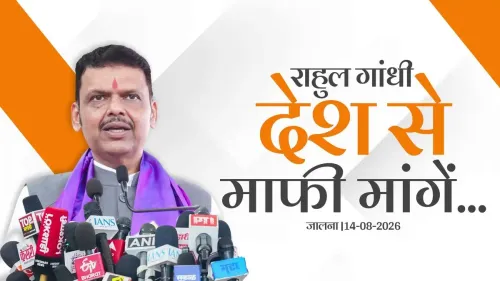
Posting in both Marathi and Hindi, Fadnavis put it plainly: 'विपक्ष कर्जत-भीमाशंकर मामले में बिना कोई स्टडी किए सिर्फ राजनीति कर रहा है' — 'The opposition is doing nothing but politics on the Karjat-Bhimashankar matter without any study.' The bilingual framing signals a message aimed well beyond Maharashtra's borders.
Karjat and Bhimashankar: why these two names matter
Karjat is a tehsil in Raigad district nestled against the Western Ghats — a corridor that has long attracted infrastructure, housing, and industrial proposals owing to its proximity to Mumbai. Bhimashankar, in neighbouring Pune district, is home to one of the twelve Jyotirlinga shrines and sits inside an ecologically sensitive zone. Any development or land-use question touching this belt carries immediate legal, environmental, and religious weight — making it prime territory for political contestation.
The specific administrative decision or proposal at the centre of the current dispute has not been formally detailed by the government in this communication. What Fadnavis has made unambiguously clear is his characterisation of the opposition's response: reactive, unstudied, and politically motivated.
A familiar playbook — but the framing is the message
Maharashtra's ruling alliance has been here before. Whenever development, land acquisition, or ecological-zone decisions surface in sensitive geographies, a familiar script plays out — opposition parties raise objections, the government accuses them of obstructionism, and the public waits for clarity. What makes Fadnavis's intervention notable is its bluntness: he is not defending a specific policy on its merits but directly questioning whether the critics have even read the file.
That framing — 'no study, only politics' — is a deliberate governance posture. It shifts the burden of proof onto the opposition to demonstrate technical engagement rather than just political opposition. For a chief minister managing a complex coalition and an ecologically and religiously charged constituency in the Western Ghats belt, controlling that narrative matters.
What the government has yet to spell out
The ball now sits in two courts. The opposition, if it wishes to rebut the charge, must produce the 'study' Fadnavis says is missing — a report, an expert opinion, a formal objection grounded in data. The government, for its part, owes the public a fuller account of what exactly is being proposed for the Karjat-Bhimashankar zone and on what technical basis.
Until those specifics arrive, the debate will remain exactly what Fadnavis accuses his critics of conducting — loud, and largely without evidence on either side.
Point of View
Only politics' framing is a calculated governance move — it reframes a land-use or development dispute into a question of competence, forcing the opposition to either produce technical evidence or look reactive. This fits a broader BJP-in-power pattern of presenting critics as obstructionists rather than engaging the substance of objections. With the Karjat-Bhimashankar belt straddling ecological sensitivity, religious significance, and infrastructure pressure, the CM is navigating real competing interests — but as long as the government withholds the specifics of the proposal, the charge of opacity is equally available to both sides.
NationPress
27 Oct 2026
Frequently Asked Questions
What is the Karjat-Bhimashankar issue in Maharashtra?
The exact nature of the dispute has not been officially detailed, but it involves a matter concerning the Karjat tehsil in Raigad district and the Bhimashankar area in Pune district — both in Maharashtra's ecologically sensitive Western Ghats — which has drawn opposition criticism of the state government.
What did CM Devendra Fadnavis say about the Karjat-Bhimashankar controversy?
Fadnavis stated on October 27, 2026 that the opposition is doing 'only politics, no study' on the Karjat-Bhimashankar matter, accusing them of criticising without any technical review.
Why is Bhimashankar environmentally significant?
Bhimashankar is a Jyotirlinga temple site in Pune district situated within an ecologically sensitive zone in the Western Ghats, making any development proposals there subject to strict environmental and legal scrutiny.
Which parties are opposing the government on the Karjat-Bhimashankar issue?
Fadnavis referred broadly to 'the opposition' without naming specific parties; in Maharashtra that typically includes Congress and various NCP factions that are not part of the ruling alliance.
What does Karjat have to do with the Western Ghats controversy?
Karjat is a tehsil in Raigad district located at the foothills of the Western Ghats, close to Mumbai, and has frequently been the site of infrastructure, housing, and industrial proposals that draw environmental and political scrutiny.