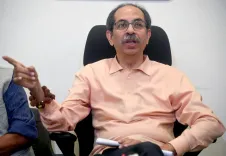
Tharoor backs PRS critique of women's quota-delimitation link
Synopsis
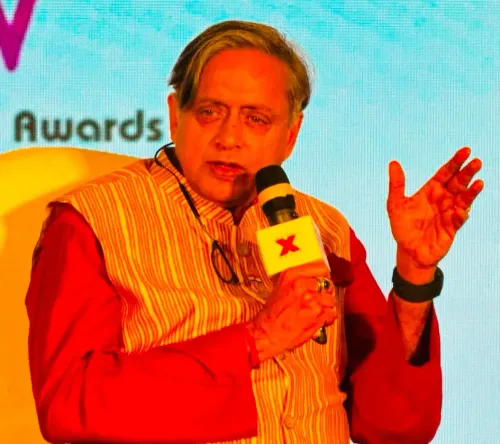
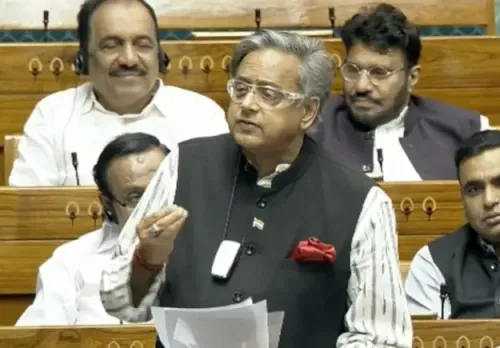
Congress MP Dr. Shashi Tharoor has publicly endorsed PRS Legislative Research's critique of the 106th Constitutional Amendment, which ties women's one-third reservation in Parliament to a future delimitation exercise. Tharoor confirmed he raised the broader constitutional objections during the Budget Session, while the current debate focuses on the numerical implications.
Key Takeaways
Shashi Tharoor on 30 July 2026 endorsed PRS Legislative Research 's critique of the women's reservation-delimitation linkage.
The 106th Constitutional Amendment (Nari Shakti Vandan Adhiniyam), 2023 reserves one-third of Lok Sabha and assembly seats for women, but only after the next census and delimitation.
Delimitation was last conducted in 2002 and remains frozen, potentially pushing women's reservation implementation into the 2030s .
Tharoor had raised the 'broader constitutional arguments' against this design in a Budget Session speech in Parliament.
The linkage intersects with a federal fault line: southern states that achieved lower population growth fear losing Lok Sabha seats under a population-based delimitation formula.
Women's parliamentary reservation has been sought since at least 2010 , when a bill passed the Rajya Sabha but lapsed before a Lok Sabha vote.
A constitutional knot tied in September 2023 continues to draw sharp scrutiny — and Congress MP Dr. Shashi Tharoor is now publicly aligning himself with independent legislative researchers who argue the numbers behind it don't add up. On Thursday, 30 July 2026, Tharoor confirmed on social media that he had already raised the broader constitutional objections in Parliament during the Budget Session, and that he agrees 'entirely' with the analysis put forward by PRS Legislative Research on the structural problems with tying women's reservation to delimitation.
The amendment that made women wait
The 106th Constitutional Amendment Act, 2023 — formally called the Nari Shakti Vandan Adhiniyam — was a landmark moment on paper: one-third of seats in the Lok Sabha and state assemblies reserved for women. But the fine print inserted a condition that critics have called a poison pill. The reservation kicks in only after the next national census and the delimitation exercise that follows it — a process that, given India's census delays, could push actual implementation well into the 2030s.
Tharoor pointed readers to a Budget Session speech in which he had laid out the 'broader arguments' against this constitutional design. His post on 30 July clarifies that today's conversation is specifically about the arithmetic — the numbers — rather than the constitutional philosophy, a distinction that signals a layered, ongoing debate rather than a one-time objection.
Why delimitation is the crux
Delimitation — the redrawing of constituency boundaries based on population — was last conducted in 2002 and has been frozen since. When it is eventually carried out using fresh census data, it is expected to significantly expand the seat count of high-population northern states while potentially reducing the relative weight of southern states that managed lower population growth. That demographic asymmetry has made delimitation one of the most politically charged exercises in Indian federalism.
Linking women's reservation to this exercise means the two controversies are now inseparable. Critics, including the researchers at PRS Legislative Research — a New Delhi-based non-profit known for rigorous, non-partisan legislative analysis — argue that the linkage does double duty: it delays a long-overdue gender equity measure while also deferring a politically explosive federal reckoning.
Decades of deferred promise
The demand for women's reservation in Parliament is not new. The 73rd and 74th Constitutional Amendments of 1992–93 had already mandated one-third reservation for women in panchayats and urban local bodies. A Women's Reservation Bill passed the Rajya Sabha in 2010 but lapsed without ever reaching a Lok Sabha vote. The 2023 amendment finally cleared both Houses — but the implementation trigger has effectively restarted the clock.
Tharoor's alignment with PRS on this point carries weight: he is one of Parliament's most prominent voices on constitutional matters, and his willingness to name a specific researcher and organisation — rather than issue a generic critique — signals that this debate is moving into a more technical, evidence-driven phase.
The next census and the Delimitation Commission's eventual orders will determine whether the Nari Shakti Vandan Adhiniyam becomes a historic milestone or a promise deferred yet again — and Parliament's scrutiny of that timeline is clearly not over.
Point of View
Anticipating that the census timeline will become a live political liability. With southern states already anxious about seat redistribution, the convergence of the gender equity and federal representation debates creates a coalition of critics that spans regional and ideological lines. If the next census is delayed further, the constitutional promise of the Nari Shakti Vandan Adhiniyam risks becoming the Opposition's most potent symbol of deferred governance.
NationPress
14 Sept 2026
Frequently Asked Questions
Why is women's reservation in Parliament linked to delimitation?
The 106th Constitutional Amendment of 2023 explicitly conditions the activation of one-third women's reservation in the Lok Sabha and state assemblies on the completion of the next national census and a subsequent delimitation exercise, meaning the law is on the books but cannot take effect until those processes conclude.
What did Shashi Tharoor say about the women's reservation amendment?
Tharoor confirmed on 30 July 2026 that he had raised constitutional objections to the delimitation-linked reservation design during the Budget Session of Parliament, and he publicly endorsed the analysis of PRS Legislative Research on the structural problems with the amendment.
When will women's reservation in Lok Sabha actually come into effect?
There is no fixed date. The reservation can only be implemented after India conducts its next national census — already delayed — and completes a delimitation exercise, a sequence that analysts suggest could push implementation into the 2030s .
What is PRS Legislative Research and why does it matter here?
PRS Legislative Research is a New Delhi -based non-partisan organisation that provides independent analysis of Indian legislation and policy. Its critique of the numerical implications of the delimitation-reservation linkage has now received explicit support from a sitting Opposition MP.
How does delimitation affect southern states?
Southern states that achieved lower population growth rates since the last delimitation in 2002 fear that a population-based redrawing of constituencies could reduce their representation in the Lok Sabha , making delimitation a deeply contentious federal issue alongside the women's reservation debate.