DMK pushes for women's quota clarity, opposes delimitation link at all-party meet
Synopsis
The DMK drew two sharp lines at Sunday's all-party meeting: implement women's 33% reservation now, on the current Lok Sabha strength, and don't let delimitation shrink southern India's voice in Parliament. With an opposition walkout adding early turbulence, the Monsoon Session is already off to a charged start.
Key Takeaways
DMK demanded a concrete roadmap for implementing 33% women's reservation in the Lok Sabha and state assemblies at the all-party meeting on 19 July .
Party spokesperson Tiruchi Siva insisted the quota be calculated on the existing Lok Sabha strength , not linked to a future delimitation exercise.
The DMK warned that proposed delimitation could reduce parliamentary seats for southern states that have successfully controlled population growth.
Siva called for delimitation to be kept 'in abeyance for 25 years ' if it disadvantages southern states.
Opposition parties including the DMK , Congress , and Samajwadi Party staged a walkout over the presence of NCPI members before returning to the meeting.
The Monsoon Session of Parliament is scheduled to begin on Monday .
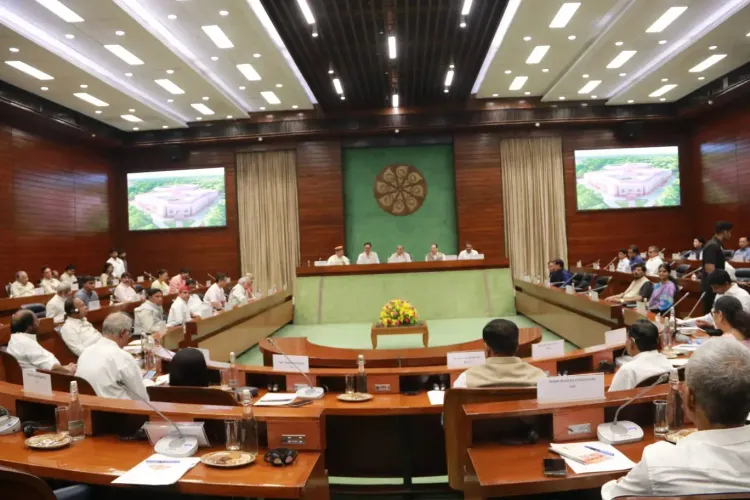
The Dravida Munnetra Kazhagam (DMK) on Sunday, 19 July demanded that the Centre lay out a concrete timeline for implementing the constitutional amendment guaranteeing 33% reservation for women in the Lok Sabha and State Legislative Assemblies, while firmly opposing any move to link the quota's activation to a future delimitation exercise. The demand was raised at the customary all-party meeting convened in New Delhi ahead of the Monsoon Session of Parliament, scheduled to begin on Monday.
What the DMK Demanded
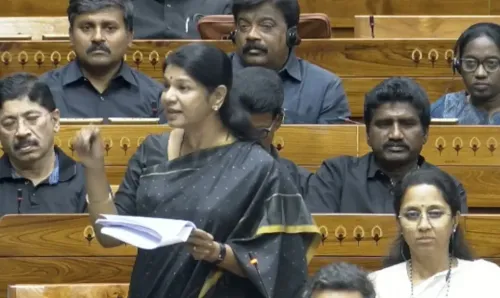
Tiruchi Siva, the DMK's Rajya Sabha member, was the party's voice at the meeting. Speaking to reporters afterwards, Siva said the DMK fully endorses women's reservation but insists the Centre spell out precisely how and when the amendment will be operationalised. The party's position is that the 33% quota must be calculated on the current strength of the Lok Sabha — not deferred until after a delimitation exercise reshapes constituency boundaries.
Siva argued that tying reservation to delimitation would effectively delay the quota by years, leaving women underrepresented in Parliament for an extended period. This is a position the DMK has consistently held since the Constitution (One Hundred and Sixth Amendment) Act was passed.
The Delimitation Concern
Beyond the women's quota, the DMK raised a broader alarm about the proposed delimitation of parliamentary constituencies. Siva warned that a fresh delimitation — expected to be based on updated population data — could significantly reduce the parliamentary representation of southern states, which have outperformed the rest of the country on population stabilisation over the past several decades.
'If the delimitation exercise adversely affects the southern states, it should be kept in abeyance for 25 years,' Siva said, reiterating the DMK's long-standing argument that states should not be penalised in Parliament for successfully implementing family planning policies.
Opposition Walkout and Return
The all-party meeting was not without political drama. Several opposition parties — including the DMK, the Indian National Congress (Congress), and the Samajwadi Party — staged a walkout over the presence of members from the Nationalist Citizens Party of India (NCPI), described as a rebel faction of the All India Trinamool Congress (TMC). The protesting parties later returned to the meeting venue, allowing discussions to resume.
Other parties represented at the meeting included the All India Anna Dravida Munnetra Kazhagam (AIADMK), whose delegation was led by M. Thambidurai.
Why the Monsoon Session Matters
The Centre convened the all-party meeting to build cross-party consensus for the smooth conduct of the Monsoon Session, during which several key Bills and national issues are expected to come up for debate. The women's reservation question and the delimitation timeline are among the most politically charged items likely to surface during the session.
With the DMK anchoring southern India's concerns and the opposition already signalling friction before the session has even begun, the Monsoon Session is set to open on a contentious note. How the Centre responds to demands for a clear implementation roadmap on women's reservation will be closely watched by parties across the political spectrum.
Point of View
But its operational trigger was quietly tied to delimitation, effectively deferring it by a decade. Southern states have a legitimate grievance: they were rewarded for population control with slower growth, and are now being told that slower growth will cost them seats. The walkout drama, however minor, signals that the opposition is in no mood to hand the government a smooth session. How the Centre navigates these two linked but distinct demands will test its political dexterity heading into a session already loaded with high-stakes legislation.
NationPress
18 Oct 2026
Frequently Asked Questions
What did the DMK demand at the all-party meeting ahead of the Monsoon Session?
The DMK demanded that the Centre provide a clear implementation timeline for the constitutional amendment granting 33% reservation for women in Parliament and state assemblies. The party also insisted the quota be calculated on the current Lok Sabha strength, not deferred to after a delimitation exercise.
Why does the DMK oppose linking women's reservation to delimitation?
The DMK argues that tying the 33% women's quota to a future delimitation exercise would delay its implementation by years. The party wants the reservation activated immediately based on the existing number of Lok Sabha seats.
What is the DMK's concern about parliamentary delimitation?
The DMK fears that a fresh delimitation — expected to reflect updated population data — could reduce the number of parliamentary seats for southern states, which have successfully managed population growth. Tiruchi Siva called for delimitation to be kept in abeyance for 25 years if it disadvantages southern India.
Why did opposition parties walk out of the all-party meeting?
The DMK, Congress, and Samajwadi Party walked out in protest over the presence of members from the Nationalist Citizens Party of India (NCPI), described as a rebel faction of the Trinamool Congress. The parties later returned to the meeting.
When does the Monsoon Session of Parliament begin?
The Monsoon Session of Parliament is scheduled to commence on Monday, 20 July, the day after the all-party meeting was held in New Delhi.