PM Modi says India's critics left disappointed amid global crisis
Synopsis
Prime Minister Narendra Modi on 4 July 2026 declared on X that those who hoped India would fail during a recent global crisis have been left deeply disappointed, continuing the government's long-running narrative of India's economic resilience amid successive global shocks since 2020.
Key Takeaways
PM Modi posted on X on 4 July 2026 asserting that India's critics who hoped for its failure during a recent global crisis stand disappointed.
The post, written in Hindi and accompanied by a video, uses a deliberate ellipsis suggesting it is part of a larger communication.
The statement continues a government narrative established since 2020 , when the Atmanirbhar Bharat package was launched to insulate India from external shocks.
The message targets both domestic audiences seeking reassurance and international observers who questioned India's policy choices.
Analysts and opposition parties are expected to seek specific data to substantiate the claim, with the next Economic Survey or RBI report a key watch point.
Prime Minister Narendra Modi on Saturday, 4 July 2026, took to X to assert that those who wished to see India fail during recent global turbulence have been left deeply disappointed by the country's resilience and performance.
Context
In the post, Modi wrote in Hindi: 'हाल के वैश्विक संकट के दौरान जो लोग भारत को असफल होते देखना चाह रहे थे, वे आज इसलिए निराशा की गर्त में पडे़ होंगे…' — translated: 'Those who wanted to see India fail during the recent global crisis must today be sinking into disappointment.' The statement, though left deliberately open-ended with an ellipsis, is a pointed rejoinder to domestic critics and international commentators who had questioned India's policy choices during a period of global economic stress.
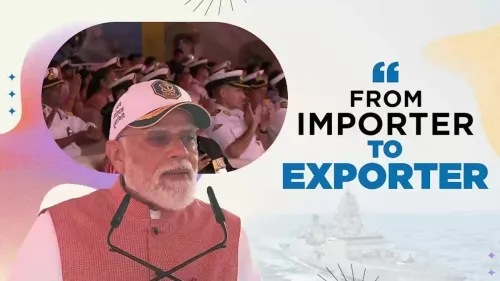
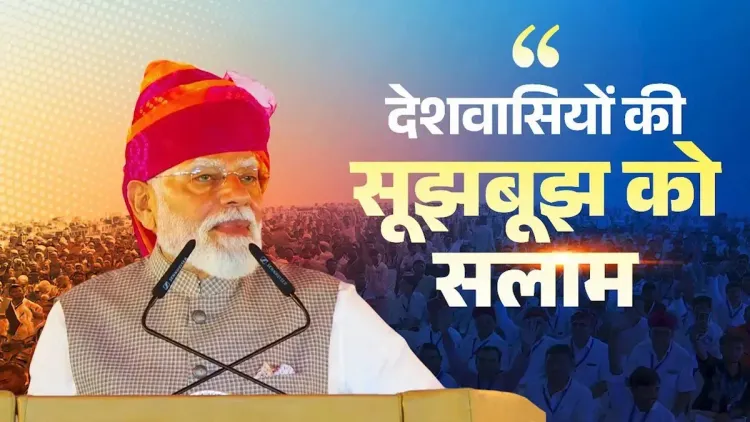
The post was accompanied by a video, the contents of which form part of the broader communication. Modi has consistently used his personal X account to frame India's economic narrative directly to citizens, bypassing traditional intermediaries.
Policy Backdrop
The remark fits squarely within a communication pattern that the Indian government has maintained since 2020, when successive global shocks — the pandemic, supply-chain disruptions, and commodity-price spikes following the 2022 Russia-Ukraine conflict — tested major economies worldwide. India responded with the Atmanirbhar Bharat package, a large-scale fiscal and structural initiative combining direct support with production-linked incentive schemes aimed at reducing the country's dependence on external supply chains.
In the years that followed, government messaging repeatedly highlighted India's relatively stronger growth trajectory, stable foreign-exchange reserves, and expanding manufacturing base as evidence that the policy framework had delivered. Modi's latest post continues that line of argument, invoking an unspecified recent global crisis as the latest test that India is said to have passed.
Stakeholders and Impact
The message is calibrated to reach two distinct audiences simultaneously. For domestic audiences, it serves as reassurance that the government's economic stewardship has held firm even as global headwinds intensified. For international observers, it is a rebuttal to any narrative that cast doubt on India's institutional or economic capacity to weather external shocks.
Opposition parties and independent economists are likely to scrutinise the claim closely, particularly in the absence of specific data points. The next Economic Survey or Reserve Bank of India monetary policy report is expected to supply the granular figures that would either substantiate or complicate the assertion. Civil society voices and market analysts will watch whether follow-up communications attach concrete metrics to the broader claim.
What's Next
The ellipsis at the end of Modi's post signals that this may be the opening line of a larger address or a series of communications unpacking India's recent economic record. With the video attached to the post yet to be fully contextualised in public discourse, the government's messaging machinery is likely to amplify the theme across official channels in the coming days. The framing — India outperforming sceptics' expectations — has historically preceded major policy announcements or the release of favourable macroeconomic data, making the timing and sequencing of any follow-up significant.
Frequently Asked Questions
What did PM Modi say about India and the global crisis on 4 July 2026?
PM Modi posted on X saying that those who wanted India to fail during the recent global crisis must now be sinking in disappointment, asserting India's resilience.
Which global crisis is Modi referring to in his July 2026 post?
The post does not specify the crisis by name. It refers broadly to a 'recent global crisis,' and the accompanying video is expected to provide further context.
What is Atmanirbhar Bharat and how does it relate to Modi's statement?
Atmanirbhar Bharat is a government initiative launched in 2020 combining fiscal support and production-linked incentives to reduce India's dependence on external supply chains. Modi's messaging on India's crisis resilience is directly linked to this policy framework.
How has India performed economically during recent global shocks?
India recorded relatively strong growth metrics compared to many peers after the 2020 pandemic and 2022 supply-chain disruptions, a performance the government has consistently highlighted in its communications.
What should we watch after Modi's 4 July 2026 post?
Key items to watch include the full video attached to the post, any follow-up government statements, and the next Economic Survey or Reserve Bank of India monetary policy report that may supply supporting data.