India a stakeholder in Tibet's future, says ICT amid Beijing border moves
Synopsis
A new ICT report reveals that non-Tibetans hold nearly 75% of senior posts in Tibetan governance — and that Beijing is placing loyalist officials specifically at borders adjoining India. The group's senior researcher is now urging New Delhi to treat Tibet's political future as a direct national security matter, ahead of the CCP's 2027 Party Congress.
Key Takeaways
Bhuchung Tsering of the International Campaign for Tibet said India must see itself as a stakeholder in Tibet's future due to Himalayan security concerns.
Beijing is reportedly placing non-Tibetan, loyalist officials in governance roles at border areas adjoining India , according to the ICT 2026 report .
Tibetans hold only 62 of 240 senior posts examined — just 25.8% — across party, government, security, and judicial institutions in Tibetan areas.
No Tibetan serves as party secretary in any of the five provincial-level administrations covering Tibetan areas; no Tibetan holds a military commander post.
China's 'Promoting Ethnic Unity and Progress Law' , effective 1 July , is expected to further restrict Tibetan language, culture, and political representation.
The Central Tibetan Administration is based in Dharamsala , India, where the Dalai Lama set up the Tibetan government-in-exile in 1959 .
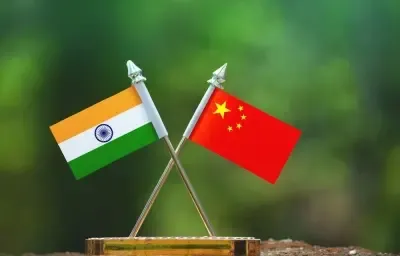
India must recognise itself as a direct stakeholder in Tibet's political future, a senior official of the International Campaign for Tibet (ICT) has said, citing the Himalayan frontier's centrality to Indian national security. The warning comes as the Washington-based advocacy group released its 2026 annual report on Tibetan leadership, ahead of the Chinese Communist Party's 21st Party Congress scheduled for 2027.
India's Security Stake in Tibet
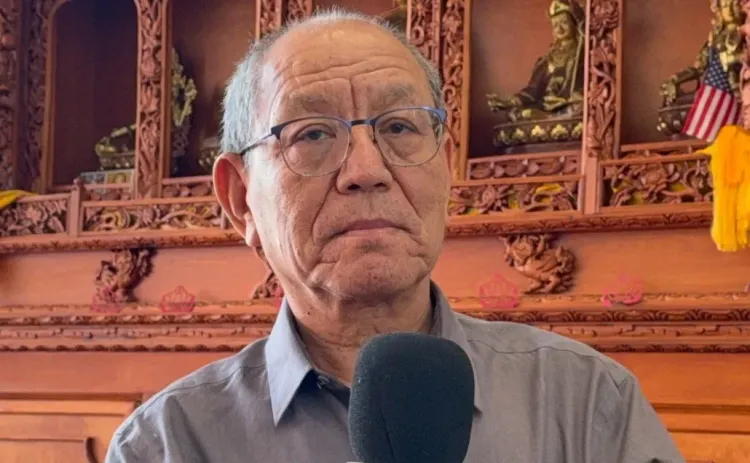
Bhuchung Tsering, Head of Research and Monitoring at the International Campaign for Tibet, said in an interview that New Delhi should actively support a future for Tibet that upholds Tibetan freedom and dignity while protecting Indian security interests. 'We believe that India is a stakeholder in the future of Tibet,' Tsering said. 'I think India only has to think about its own interests and its own security,' he added.
Tsering flagged a pattern of particular concern for India: Beijing is reportedly placing non-Tibetan officials it can 'completely control' in governance positions at the border level in southern Tibetan areas adjoining India — a development he said carries direct implications for New Delhi.
Tibetans Marginalised in Senior Posts, Report Finds
The ICT's 2026 report examined 240 senior posts across party, government, security, and judicial institutions at provincial, prefectural, and county levels in Tibetan areas. According to the report, Tibetans occupy only 62 posts — just 25.8% of the total — while non-Tibetans hold 178 posts, or 74.2%.
The representation gap is especially stark at the top. No Tibetan serves as party secretary in any of the five provincial-level administrations covering Tibetan areas. Only four of 19 prefectural-level and county-level administrations have Tibetan party secretaries. No Tibetan holds a military commander or political commissar post, according to the report.
'For effective decision-making and for real power in determining the will of the Tibetan people, these people don't have any power,' Tsering said. He attributed the pattern to a trust deficit: 'China clearly doesn't trust Tibetans enough to be giving them effective positions,' he said.
Beijing's Legislative Push and Its Implications
The report also flagged China's 'Promoting Ethnic Unity and Progress Law', which took effect on 1 July, and directives centred on 'Xi Jinping Thought on Party Building' as forces that will shape the next generation of Tibetan leadership. According to the ICT, these measures prioritise political reliability, ideological conformity, and forced assimilation over meaningful Tibetan representation, and could further narrow space for Tibetan language, culture, and identity.
The report argues that Beijing is cultivating a more repressive leadership structure in Tibet, with loyalty to the party placed above all other considerations.
Call for Deeper International Engagement
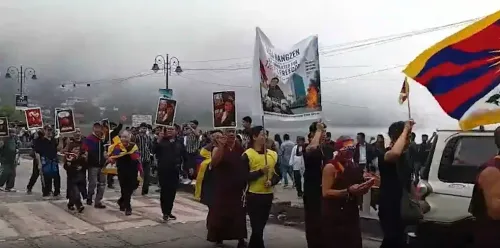
Tsering urged governments worldwide to deepen engagement with the Central Tibetan Administration (CTA), based in Dharamsala, Himachal Pradesh, where the Dalai Lama established the Tibetan government-in-exile after fleeing Tibet in 1959. He acknowledged that India already provides 'concrete support' to the CTA, but called on other governments to do more.
With the CCP's 21st Party Congress approaching in 2027, the ICT report positions the coming leadership transition in Tibet as a critical juncture — one that, according to the group, carries consequences well beyond China's borders, including for India's Himalayan security calculus.
Point of View
Party-loyal officials at the Himalayan border. This is a governance architecture designed for control, not administration, and it sits directly on India's northern frontier. New Delhi has long avoided framing Tibet as a bilateral variable, preferring to keep it insulated from the broader China relationship. That posture grows harder to sustain as Beijing's border-governance choices become more structural. The 2027 Party Congress will likely consolidate this leadership model further, making the window for any diplomatic signalling on Tibet narrower than it has been in decades.
NationPress
3 Oct 2026
Frequently Asked Questions
Why does the ICT say India is a stakeholder in Tibet's future?
The International Campaign for Tibet argues that Tibet's political future is directly tied to India's national security because the two share a long Himalayan border. ICT's Bhuchung Tsering specifically warned that Beijing is placing non-Tibetan, loyalist officials in governance roles at border areas adjoining India, giving China tighter control over that frontier.
What does the ICT 2026 report say about Tibetan representation in leadership?
The report found that Tibetans hold only 62 of 240 senior posts — 25.8% — across party, government, security, and judicial institutions in Tibetan areas. Non-Tibetans hold the remaining 178 posts, or 74.2%. No Tibetan serves as party secretary at the provincial level, and no Tibetan holds a military commander or political commissar post.
What is China's 'Promoting Ethnic Unity and Progress Law' and why does it matter?
It is a Chinese law that took effect on 1 July and, according to the ICT, prioritises political reliability and ideological conformity over meaningful Tibetan representation. The ICT warns the law could further restrict Tibetan language, culture, and identity, and will shape the next generation of leadership in Tibetan areas.
What is the Central Tibetan Administration and where is it based?
The Central Tibetan Administration is the Tibetan government-in-exile, established in Dharamsala, Himachal Pradesh, India, after the Dalai Lama fled Tibet in 1959. The ICT has called on governments worldwide to deepen engagement with it, noting that India already provides concrete support.
Why is the CCP's 2027 Party Congress significant for Tibet?
The 21st Party Congress in 2027 is expected to consolidate the current leadership model in Tibet, which the ICT describes as increasingly repressive and loyalty-driven. The ICT released its 2026 report specifically ahead of this transition to draw attention to the trajectory of Tibetan governance before the next leadership cycle is set.