China 'deliberately' denying Tibet genuine autonomy, report finds

Synopsis
A report in the European Times, authored by the Dalai Lama's nephew, makes a pointed case that China has not merely failed to grant Tibet genuine autonomy — it has deliberately refused to. With 3,000+ Tibetans rallying in Washington during Xi Jinping's US visit and a new Ethnic Unity law taking effect in July, the gap between Beijing's autonomy claims and Tibetan reality is drawing sharper international scrutiny.
Key Takeaways
A report in the European Times argues China has 'consciously, consistently, and deliberately' refused genuine autonomy to Tibet .
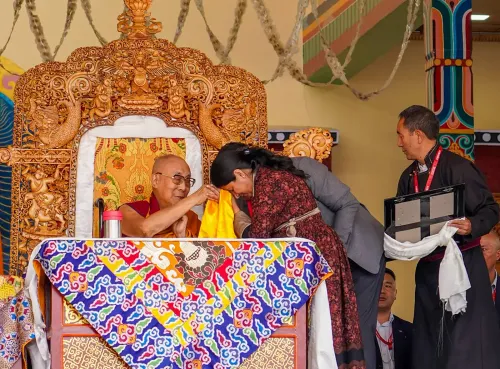
Khedroob Thondup , nephew of the Dalai Lama , wrote that decades of appeals and negotiations have failed to produce meaningful self-governance for Tibetans.
Beijing maintains Tibet already has autonomy under its 'regional ethnic autonomy' framework, but the report says this is fundamentally incompatible with the CCP 's centralised governing philosophy.
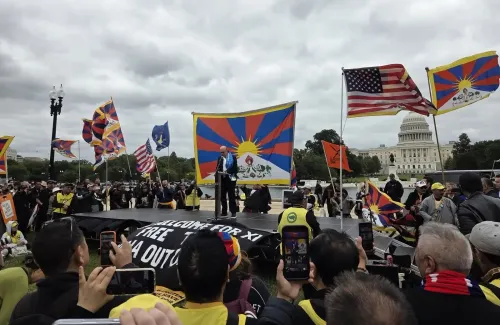
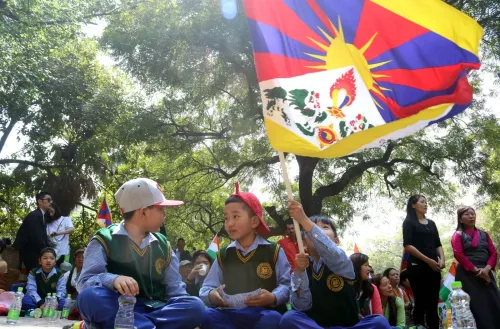
More than 3,000 Tibetans protested in Washington during Xi Jinping 's state visit, in what organisers called the largest-ever Tibetan rally in North America .
Protesters demanded repeal of China 's new Ethnic Unity and Progress Promotion Law , which took effect in July .
Beijing has consciously, consistently, and deliberately refused to grant genuine autonomy to Tibet, according to a detailed report published in the European Times, which argues that if China insists Tibet is part of its territory, it is obligated to allow Tibetans meaningful control over their culture, religion, language, education, and local governance.
The Core Argument
Khedroob Thondup, nephew of the Dalai Lama, wrote in the European Times that years of appeals, negotiations, and proposals have yielded little. 'The problem is that this vision rests on a fundamental misunderstanding of how the Chinese state views Tibet,' he wrote, adding: 'After years of failed appeals, negotiations, and proposals, continuing to ask for genuine autonomy increasingly resembles barking up the wrong tree.'
Thondup's assessment challenges the assumption held by many Tibet supporters that China could eventually be persuaded to adopt a more flexible interpretation of autonomy.
China's Official Position on Autonomy
Beijing maintains that Tibet already enjoys autonomy through its system of 'regional ethnic autonomy.' Chinese government white papers cite the Tibet Autonomous Region as an example of minority governance within the framework of the Chinese state, with people of Tibet said to participate in local administration under the leadership of the central government.
However, the report argues this framework is fundamentally different from genuine self-governance. The Chinese Communist Party (CCP), it notes, is not constructing a federal state and does not regard regional self-government as an intrinsic democratic value. Rather, the CCP's legitimacy rests on centralised authority, political unity, and full control over what it describes as sovereign territory.
Beijing's Security Calculus Over Tibet
According to the report, Chinese leaders have long viewed meaningful local control in Tibet not as an administrative question but as a security question. The fear, as articulated in the report, is that if Tibetans gain control over religion, education, historical narratives, cultural policy, and local governance, demands for greater self-determination could follow.
This calculus, critics argue, makes genuine autonomy structurally incompatible with the CCP's governing philosophy — a point that renders decades of dialogue largely ineffective.
Protests and International Pressure
The report comes against a backdrop of growing diaspora activism. In September, thousands of Tibetan protesters marched through Washington during Chinese President Xi Jinping's state visit to the United States. More than 3,000 Tibetans gathered in what organisers described as the largest-ever Tibetan rally in North America, organised by the Tibetan Youth Congress (TYC) with support from other Tibetan activist groups, according to a separate report in online magazine The Diplomat.
The demonstration brought together a broader coalition including Uyghur, Southern Mongolian, Chinese democracy, Taiwanese, Burmese, Falun Gong, and Chinese Christian groups, all of whom reportedly share grievances against the CCP. Protesters carried placards reading 'Xi Jinping is guilty of genocide' and 'Tibet was never a part of China.'
Among the specific demands raised: that the US press China on human rights, that political and religious prisoners be released, that Tibetans be allowed to preserve their language and culture, and that China repeal its new Ethnic Unity and Progress Promotion Law — which took effect in July and promotes what Beijing calls a shared sense of identity among China's 56 ethnic groups.
What This Signals Going Forward
The convergence of diaspora protests, analytical reports, and civil society pressure suggests that the Tibet issue is once again gaining international visibility at a time of heightened scrutiny of China's domestic minority policies. Whether this renewed attention translates into diplomatic leverage — or is absorbed into the broader US-China relationship without structural consequence — remains to be seen.
Point of View
However large and symbolically significant, face the same wall. The real test for Western governments is whether they are willing to treat Tibet not as a humanitarian footnote to US-China relations, but as a core governance accountability issue — and so far, the evidence for that is thin.
NationPress
10 Nov 2026
Frequently Asked Questions
What does the report say about China's stance on Tibetan autonomy?
The report, published in the European Times, argues that Beijing has not merely failed to grant genuine autonomy to Tibet — it has consciously, consistently, and deliberately refused to do so. The author, Khedroob Thondup, nephew of the Dalai Lama, contends that China views Tibetan self-governance as a security threat rather than an administrative option.
What is China's official position on Tibet's autonomy?
China maintains that Tibet already enjoys autonomy through the system of 'regional ethnic autonomy,' with Tibetans said to participate in local administration under central government leadership. Chinese government white papers cite the Tibet Autonomous Region as an example of minority governance within the Chinese state framework.
What happened at the Tibetan protest in Washington?
More than 3,000 Tibetans gathered in Washington during Chinese President Xi Jinping's state visit to the United States in September, in what organisers described as the largest-ever Tibetan rally in North America. The protest was organised by the Tibetan Youth Congress and included groups from Uyghur, Taiwanese, Burmese, and other communities affected by CCP policies.
What is China's Ethnic Unity and Progress Promotion Law?
It is a law that took effect in July, which promotes what Beijing describes as a shared sense of identity among China's 56 ethnic groups. Tibetan protesters and rights groups have called for its repeal, arguing it suppresses distinct cultural and linguistic identities.
Why do Tibet supporters believe genuine autonomy is structurally unachievable under the CCP?
According to the report, the CCP's legitimacy rests on centralised authority and political unity, meaning regional self-government is not seen as a democratic value but as a potential security risk. This makes genuine Tibetan autonomy — covering religion, education, culture, and governance — fundamentally incompatible with the party's governing philosophy.