Xi Jinping turned Tibet into 'crucible of authoritarian control', warns report
Synopsis
A report published in Brussels argues that Xi Jinping has systematically transformed Tibet into a 'crucible of authoritarian control' — deploying AI surveillance, boarding schools, religious crackdowns, and a new ethnic unity law that UN experts warn could entrench forced assimilation and transnational repression. The analysis frames Tibet not merely as a human rights crisis but as a blueprint for Beijing's approach to all contested spaces.
Key Takeaways
Xi Jinping has been accused of turning Tibet into a 'crucible of authoritarian control' since taking power in 2012–2013 .
China's Law on Promoting Ethnic Unity and Progress , adopted in March 2025 , is due to take effect in July 2026 ; UN experts warn it risks 'entrenching forced assimilation and encouraging transnational repression.' Surveillance tools including DNA collection , facial recognition , and AI-enabled monitoring have made Tibetan communities among the most closely watched populations in the world, according to the report.
Tibetan children have reportedly been separated from families and placed in boarding schools where Mandarin replaces Tibetan as the language of instruction.
The report, authored by Khedroob Thondup , nephew of the Dalai Lama , argues Tibet serves as a geopolitical warning of the governance model Beijing intends to export globally.
Chinese President Xi Jinping has been accused of weaponising legislation to extend repression beyond Tibet's borders, with a new analysis warning that Beijing's policies of surveillance, forced assimilation, and legal warfare now pose a threat to diaspora communities worldwide. The findings were published in the European Times by Khedroob Thondup, the nephew of the Dalai Lama, and were highlighted in a report circulated in Brussels on 6 June 2025.
The New Law Drawing International Concern
China's Law on Promoting Ethnic Unity and Progress, adopted in March 2025 and scheduled to come into force in July 2026, has drawn sharp criticism from UN experts. According to reports, the experts warned that the legislation risks 'entrenching forced assimilation and encouraging transnational repression.' Critics argue the legal framework is designed not merely to reshape identity within China but also to intimidate diaspora communities and redefine sovereignty, legitimacy, and cultural rights on Beijing's own terms.
How Xi's Tibet Policy Differs From His Predecessors
'When Xi Jinping rose to power as Chinese Communist Party General Secretary in 2012 and state president in 2013, he inherited a Tibet already under tight control. Yet what distinguishes his tenure is the transformation of Tibet from a contested periphery into a laboratory of authoritarian consolidation. Xi's Tibet policy is not reactive. It is deliberate, systematic, and emblematic of his broader project to secure China's borders while erasing cultural pluralism,' Thondup wrote.
According to the analysis, Xi has consistently framed Tibet as a national security issue, citing the region's proximity to India, its symbolic connection to the Dalai Lama, and its history of resistance as factors that make it, in Beijing's view, a potential fault line. Under his leadership, Tibet has reportedly been subjected to deepening securitisation.
Surveillance, Boarding Schools, and Religious Crackdowns
The report details an extensive surveillance apparatus deployed across Tibetan communities, including DNA collection, facial recognition, AI-enabled monitoring, and border surveillance — measures it describes as making Tibet 'one of the most closely monitored populations in the world.' Refugee flows from Tibet have reportedly been curtailed amid tightened militarised border controls and restrictions on traditional escape routes through Nepal.
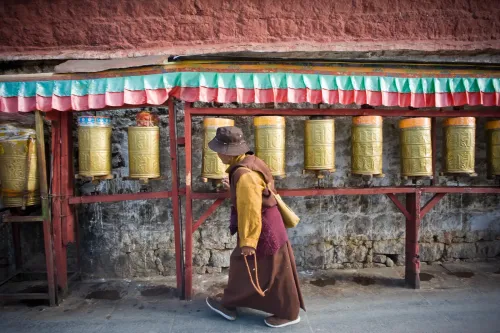
On the cultural front, the report states that Chinese education policies have led to the separation of many Tibetan children from their families, placing them in boarding schools and preschools where Mandarin has replaced the Tibetan language of instruction. Monasteries have faced raids and surveillance, images of the Dalai Lama are banned, and monks have reportedly been subjected to detention and political indoctrination. 'These measures are not incidental. They reflect Xi's conviction that cultural distinctiveness is a threat to national unity,' the report states.
Sinicisation and Its Broader Reach
Xi's Sinicisation campaign — which mandates that religious groups align their doctrines, customs, and morality with Chinese culture — extends beyond Tibet, but the report argues its impact in the region is particularly severe. The analysis connects this campaign to a wider strategic objective: consolidating control over China's frontier regions and, critics argue, projecting an authoritarian governance model internationally.
'Tibet is therefore not only a human rights tragedy, but also a geopolitical warning: Xi's Tibet is the future he envisions for contested spaces worldwide,' the report concludes.
Geopolitical Implications
Since 2012–2013, according to the report, Xi has transformed Tibet into a 'crucible of authoritarian control.' The analysis argues that his policies of 'surveillance, assimilation, securitisation, and legal warfare' are not merely domestic measures but form part of a strategic effort to consolidate control over frontier regions and portray China's authoritarian model on the global stage. This assessment comes as scrutiny of China's human rights record intensifies ahead of the new law's enforcement in July 2026.
Point of View
Which is harder for Beijing to dismiss as Western interference. The new ethnic unity law, timed for July 2026, signals that Xi is codifying what were once informal repression mechanisms into durable legal architecture, making rollback structurally more difficult. The UN's transnational repression warning is the thread mainstream coverage tends to underplay: this is no longer only about what happens inside Tibet's borders but about how Beijing disciplines its diaspora globally. India, which shares a contested border with Tibet and hosts the Tibetan government-in-exile in Dharamsala, has a direct strategic stake in this legal and surveillance escalation that Indian foreign policy commentary has yet to fully interrogate.
NationPress
24 Oct 2026
Frequently Asked Questions
What is China's Law on Promoting Ethnic Unity and Progress?
It is a Chinese law adopted in March 2025 and scheduled to come into force in July 2026, which critics say mandates forced cultural assimilation of ethnic minorities including Tibetans. UN experts have warned it risks entrenching forced assimilation and encouraging transnational repression of diaspora communities.
Who is Khedroob Thondup and why does his analysis matter?
Khedroob Thondup is the nephew of the Dalai Lama and the author of the analysis published in the European Times that forms the basis of this report. His account draws on direct knowledge of Tibetan political and cultural concerns, giving the analysis a perspective that supplements formal UN and diplomatic assessments.
How has surveillance been used against Tibetans under Xi Jinping?
According to the report, Beijing has deployed DNA collection, facial recognition, AI-enabled monitoring, and border surveillance across Tibet and Tibetan communities, reportedly making them among the most closely monitored populations in the world. Dissent, including in private digital spaces, has been criminalised under an expanding legal and security framework.
What is Xi Jinping's Sinicisation campaign?
The Sinicisation campaign mandates that religious groups — including Tibetan Buddhist institutions — align their doctrines, customs, and morality with Chinese culture. In Tibet, it has reportedly led to monastery raids, bans on images of the Dalai Lama, and the detention and political indoctrination of monks.
Why does the report describe Tibet as a 'geopolitical warning'?
The report argues that Xi's policies in Tibet — surveillance, forced assimilation, securitisation, and legal warfare — are not purely domestic but form a strategic model Beijing intends to apply to other contested regions globally. It concludes that 'Xi's Tibet is the future he envisions for contested spaces worldwide.'