Tibet under Xi Jinping: Report calls China's rule 'tyrannical' amid surveillance surge

Synopsis
A new report labels China's rule over Tibet under Xi Jinping as tyrannical in the 'purest sense' — backed by AI surveillance, boarding schools stripping children of Tibetan language, and a law that now criminalises Tibetan cultural expression even outside China's borders. The International Campaign for Tibet says abuses are escalating, and global pressure to restart Dalai Lama negotiations is growing.
Key Takeaways
A report in the European Times describes China's rule in Tibet under Xi Jinping as a 'comprehensive system of tyranny.' Authorities are using DNA collection , facial recognition , and AI-driven tracking to monitor Tibetans.
Children are placed in state boarding schools where Tibetan language is replaced by Mandarin and Communist Party loyalty is enforced.
China's Ethnic Unity and Progress Law , effective 1 July , criminalises Tibetan cultural expression abroad and codifies forced assimilation into law.
Ryan Fioresi of the International Campaign for Tibet has called on the US and other governments to press Beijing to resume dialogue with the Dalai Lama .
China's rule over Tibet has intensified into what a new report describes as a comprehensive system of tyranny under President Xi Jinping, who has not only maintained the repressive policies of his predecessors but systematically expanded them through technology, legislation, and cultural erasure. The findings, published in the European Times, draw on testimony from Tibetan advocates and international human rights observers.
Surveillance State and Digital Control
According to the report, Chinese authorities have deployed DNA collection, facial recognition, and Artificial Intelligence (AI)-driven tracking systems across Tibet to monitor residents around the clock. People in the region reportedly live under constant suspicion, with their private lives effectively criminalised by the state apparatus.
The scale of digital surveillance in Tibet, critics argue, mirrors and in some respects exceeds what has been documented in Xinjiang — making Tibet, in the assessment of human rights groups, a laboratory for authoritarian governance tools.
Cultural Erasure: Language, Religion, and Identity
The report details a systematic dismantling of Tibetan identity across multiple fronts. Children are reportedly separated from their families and enrolled in state-run boarding schools, where instruction in the Tibetan language is replaced by Mandarin and loyalty to the Communist Party of China is instilled in place of cultural heritage.
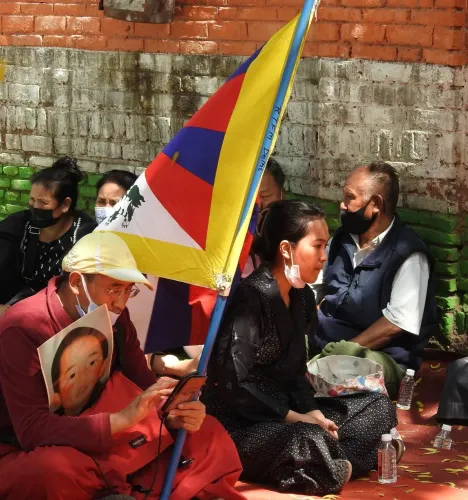
Images of the Dalai Lama — Tibet's exiled spiritual leader — remain banned. Monks have been arrested and monasteries shut down. Khedroob Thondup, nephew of the Dalai Lama, wrote in the European Times: 'China's rule in Tibet has always been heavy-handed, but under Xi Jinping it has become tyrannical in the purest sense. Xi is not just another authoritarian leader — he is the worst tyrant Tibet has ever faced, wielding surveillance, assimilation, and law as weapons of cultural annihilation. Tibet today is a frontier of darkness, and Xi its architect.'
Ethnic Unity Law: Legalising Assimilation
A significant development flagged by the report is China's Ethnic Unity and Progress Law, which came into effect on 1 July. The legislation codifies Beijing's forced assimilation policies into domestic law and, notably, criminalises the celebration of Tibetan culture even abroad — extending Beijing's reach to diaspora communities worldwide.
Ryan Fioresi, Executive Director of the International Campaign for Tibet (ICT), said the law provides legal cover to policies aimed at weakening Tibet's distinct identity. 'The Chinese government just implemented on July 1st the Ethnic Unity and Progress Law, which codifies many of Beijing's forced assimilation policies into Chinese law,' he said. Fioresi added that 'many of the stipulations in the Ethnic Unity and Progress Law contravene China's own constitution and its international human rights commitments.'
International Response and Calls for Dialogue
Fioresi described the situation inside Tibet as 'quite grim,' stating that 'the human rights abuses are escalating from the Chinese government.' He urged the United States and other governments to press Beijing to resume negotiations with the Dalai Lama or his representatives — talks that have remained stalled for over a decade.
The International Campaign for Tibet has called on governments, the United Nations, and interfaith leaders to publicly condemn the Ethnic Unity and Progress Law and pressure Beijing to reverse course. Whether those calls translate into diplomatic action remains to be seen, as major powers have historically balanced human rights concerns against economic ties with China.
Point of View
But the more consequential development is the Ethnic Unity and Progress Law — a piece of legislation that transforms what were once ad hoc repressive practices into enforceable state policy with extraterritorial reach. That Beijing is now criminalising Tibetan cultural expression in diaspora communities signals a qualitative escalation, not merely a continuation. The international community's response has so far been rhetorical; no major economy has imposed Tibet-specific sanctions. Until the cost of repression rises for Beijing, the gap between condemnation and accountability will remain the defining feature of this crisis.
NationPress
11 Oct 2026
Frequently Asked Questions
What does the report say about China's rule in Tibet under Xi Jinping?
The report, published in the European Times, describes China's rule in Tibet under Xi Jinping as 'tyrannical,' arguing that Xi has not only continued his predecessors' repressive policies but intensified them into a systematic programme of surveillance, cultural erasure, and legal coercion. It cites AI-driven tracking, forced boarding schools, and the banning of the Dalai Lama's image as key examples.
What is China's Ethnic Unity and Progress Law and why does it matter for Tibet?
The Ethnic Unity and Progress Law came into effect on 1 July and codifies Beijing's forced assimilation policies into Chinese domestic law. Critically, it also criminalises the celebration of Tibetan culture abroad, extending Beijing's reach to diaspora communities and drawing condemnation from international human rights groups who say it contradicts China's own constitutional commitments.
How is China using technology to monitor Tibetans?
According to the report, Chinese authorities have deployed DNA collection, facial recognition systems, and AI-driven tracking tools across Tibet. Residents reportedly live under constant surveillance, with their private lives effectively criminalised by the state.
What is the International Campaign for Tibet calling for?
The International Campaign for Tibet, led by Executive Director Ryan Fioresi, is urging the United States and other governments to press Beijing to resume negotiations with the Dalai Lama or his representatives. The organisation has also called on the United Nations and interfaith leaders to publicly condemn the Ethnic Unity and Progress Law.
Who is Khedroob Thondup and what did he write?
Khedroob Thondup is the nephew of the Dalai Lama. Writing in the European Times, he described Xi Jinping as 'the worst tyrant Tibet has ever faced,' accusing Beijing of using surveillance, assimilation, and law as 'weapons of cultural annihilation.'