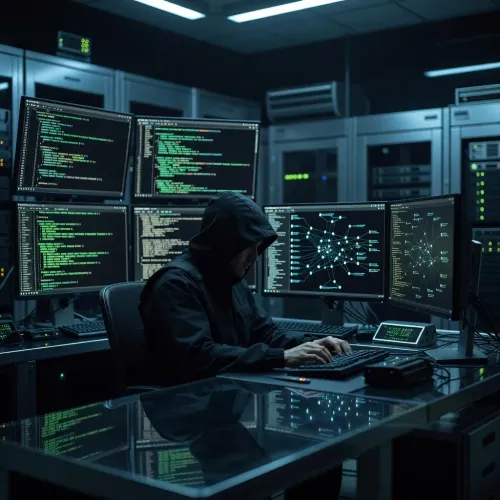
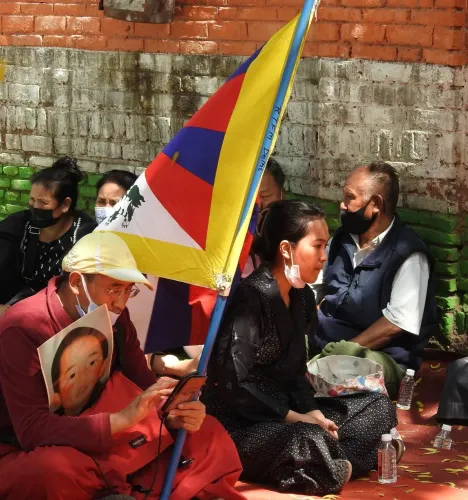
China deploys AI tool DeepZang for narrative control in Tibet
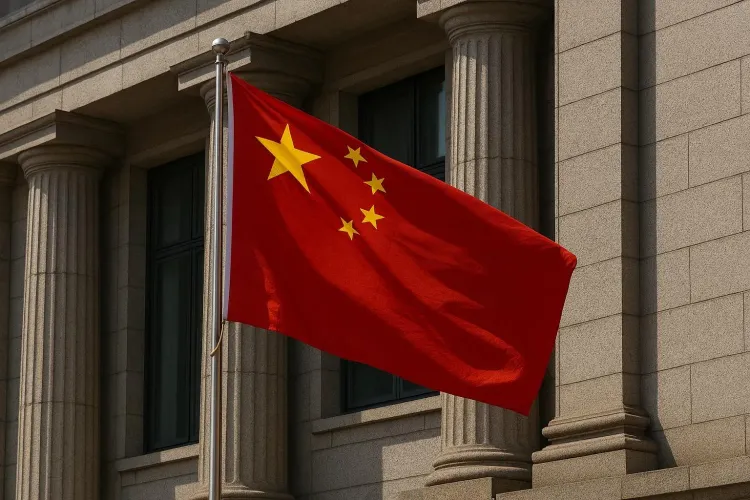
Synopsis
China has moved beyond blocking information in Tibet — it is now generating it. DeepZang, a state-aligned Tibetan-language AI platform launched in March 2025, produces complete, state-approved narratives and systematically replaces 'Tibet' with 'Xizang', marking a new frontier in Beijing's information-control strategy that analysts warn is far harder to detect and counter than traditional censorship.
Key Takeaways
DeepZang , a Tibetan-language AI platform , was launched by China in March 2025 to shape narratives in Tibet .
The tool generates state-approved responses, consistently using 'Xizang' instead of 'Tibet' to normalise Beijing's preferred terminology.
Unlike traditional censorship, DeepZang does not block content — it replaces it with coherent, state-sanctioned narratives.
Analysts warn the platform could be integrated into schools , government services , and public digital infrastructure across Tibet.
A separate report flagged China's lithium production in Tibet since 2025 as a 'quiet erosion of Tibetan autonomy', with economic benefits flowing to mainland China.
China has begun deploying a Tibetan-language artificial intelligence platform called DeepZang across Tibet, with the tool reportedly designed to shape how information about the region is created, accessed, and understood — reinforcing Beijing's political authority through digital means. Launched in March 2025, the platform has drawn scrutiny from security analysts and international observers tracking China's expanding information-control apparatus.
What DeepZang Does
Unlike conventional censorship tools that block or suppress content, DeepZang takes a generative approach — producing complete explanations, summaries, and contextually framed narratives that align with official state positions. The platform offers services in the Tibetan language, ostensibly to promote linguistic inclusion, but analysts note it embeds state-approved terminology and perspectives into everyday digital interactions.
Notably, the application consistently generates responses using the term 'Xizang' rather than 'Tibet' — Beijing's preferred designation for the region. According to sources cited in reports, 'over time, linguistic framing can alter both perception and political understanding.' In this sense, DeepZang reportedly represents the evolution of traditional information-control strategies into the age of artificial intelligence.
Why This Differs from Traditional Censorship
Security establishment sources have flagged that the platform's design creates a single coherent AI-generated response, reducing the likelihood that users will seek out competing viewpoints. This marks a qualitative shift from earlier digital-control methods: rather than creating an absence of information, DeepZang fills that space with state-sanctioned content. Analysts describe it as a tool engineered for narrative dominance rather than mere suppression.
The Chinese government has introduced multiple AI-driven applications in the region as part of a broader push to deliver state services digitally, with the administration ensuring that such services align with official positions on politically sensitive topics including religion and governance.
Broader Context: Tibet Under Digital Surveillance
This development comes amid long-standing concerns about China's administrative, technological, and coercive control over Tibet. Analysts remain watchful of how deeply DeepZang will eventually be integrated into schools, government services, and public digital infrastructure across the region.
A separate report in European Times flagged that China's large-scale lithium production in Tibet since 2025 amounts to a 'quiet erosion of Tibetan autonomy', with economic benefits reportedly flowing eastward to mainland China rather than remaining in the region. Together, these developments paint a picture of deepening structural control — economic, linguistic, and informational.
What Analysts Are Watching
Observers note that the platform's long-term impact will depend on its penetration into everyday Tibetan digital life. If integrated into schools and public services, DeepZang could shape the political vocabulary of an entire generation. The tool's architecture — generative rather than restrictive — makes it harder to identify and counter than traditional censorship infrastructure, raising distinct challenges for international human rights monitoring.
Point of View
And that distinction matters enormously. Beijing has historically struggled to suppress Tibetan identity through blocking alone; a generative AI that fills the information space with state-approved content is a structurally different challenge for monitors and advocates. The systematic substitution of 'Xizang' for 'Tibet' is not a linguistic quirk — it is a sovereignty claim baked into an algorithm. What mainstream coverage underplays is the compounding effect: when AI-generated language becomes the default medium for education and public services, the political vocabulary of the next generation is shaped before any conscious choice is made.
NationPress
28 Jul 2026
Frequently Asked Questions
What is DeepZang, the AI platform China has deployed in Tibet?
DeepZang is a Tibetan-language artificial intelligence platform launched by China in March 2025, designed to generate state-approved information, summaries, and narratives about Tibet. It embeds Beijing's preferred terminology and political perspectives into digital interactions, consistently using 'Xizang' instead of 'Tibet'.
How is DeepZang different from traditional censorship tools?
Traditional censorship tools block or suppress content, creating an absence of information. DeepZang instead generates complete, coherent, state-sanctioned responses, filling the information space with Beijing-aligned narratives. Analysts say this makes it harder to identify and counter than conventional content-blocking methods.
Why does DeepZang use 'Xizang' instead of 'Tibet'?
'Xizang' is Beijing's official designation for the region. By embedding this term into every AI-generated response, DeepZang systematically normalises China's preferred political and territorial framing. According to sources cited in reports, linguistic framing of this kind can, over time, alter both perception and political understanding.
Who is raising concerns about DeepZang?
Security establishment sources and international analysts have flagged the platform, with reports from Greece City Times and European Times highlighting its implications. Observers are particularly concerned about its potential integration into Tibetan schools, government services, and public digital infrastructure.
What is the broader context of China's control over Tibet?
China has long maintained tight control over Tibet through administrative oversight, technological surveillance, and coercive policies. Alongside DeepZang, a separate report noted that China's large-scale lithium production in Tibet since 2025 has been described as a 'quiet erosion of Tibetan autonomy', with economic benefits reportedly flowing to mainland China rather than the region.