CM Sai Hails ₹7,395 Cr PM Viksit Gram Swaraj Yojana
Synopsis
The Union Cabinet approved the ₹7,395.55 crore PM Viksit Gram Swaraj Yojana to strengthen local self-governance and build administrative capacity among 32 lakh elected representatives across 2.55 lakh-plus panchayats. Chhattisgarh CM Vishnu Deo Sai welcomed the decision as a major step for rural development.
Key Takeaways
The Union Cabinet approved the PM Viksit Gram Swaraj Yojana with a budget of ₹7,395.55 crore .
The scheme targets 32 lakh elected representatives in panchayats and local bodies across India.
More than 2.55 lakh panchayats and local bodies , including those in Chhattisgarh , are set to benefit.
The scheme focuses on strengthening administrative and governance capacity of elected local-body members.
It continues a policy lineage that includes the 73rd Constitutional Amendment (1992) and the Rashtriya Gram Swaraj Abhiyan (2018) .
State-level action plans and training modules will determine how effectively funds reach the ground.
A ₹7,395.55 crore scheme aimed at transforming how India's villages govern themselves cleared the Union Cabinet on Wednesday, 28 October 2026 — and Chhattisgarh Chief Minister Vishnu Deo Sai wasted no time calling it a landmark step for grassroots democracy.
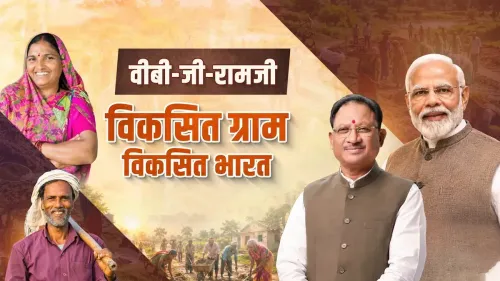
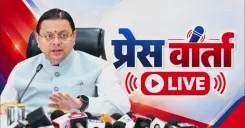
Posting on X, CM Sai welcomed the Cabinet's approval of the 'Pradhan Mantri Viksit Gram Swaraj Yojana', describing it as 'an important step towards strengthening gram self-governance and accelerating rural development.' He noted that the scheme will benefit 32 lakh elected representatives across 2.55 lakh-plus panchayats and local bodies nationwide — including those in Chhattisgarh.
What the Scheme Promises for 32 Lakh Elected Representatives
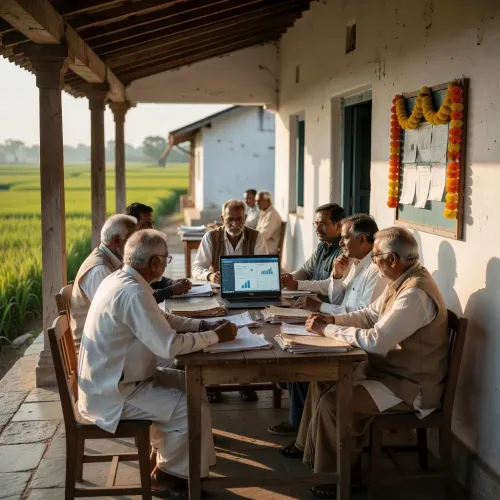
At its core, the yojana is a capacity-building wager: pour resources into the people who actually run India's villages, and better governance follows. The 32 lakh elected panchayat and local body representatives targeted by the scheme range from ward members in remote tribal hamlets to sarpanches in densely populated gram sabhas. CM Sai specifically highlighted that the scheme will 'make local governance stronger and promote the development of administrative capabilities of public representatives' — a pointed acknowledgement that holding office and running an office are two very different skills.A Policy Line Running Back to 1992
This approval does not arrive in a vacuum. The 73rd Constitutional Amendment of 1992 gave panchayats their constitutional backbone, mandating elected local bodies at the village, intermediate, and district levels. What followed was decades of successive central schemes trying to close the gap between constitutional mandate and on-the-ground administrative capacity. The Rashtriya Gram Swaraj Abhiyan, approved by the Union Cabinet in 2018, was the most recent large-scale predecessor — providing financial and technical support to states for panchayat strengthening. The PM Viksit Gram Swaraj Yojana now steps into that lineage with a sharper focus on elected-representative training and a significantly scaled budget.Chhattisgarh's Stake in the Scheme
For Chhattisgarh, a state with a substantial rural population and a dense network of panchayati raj institutions — particularly in its forested and tribal belts — the scheme carries direct operational weight. CM Sai's endorsement signals that the state government intends to align its own rural governance push with the central scheme's framework. The next test will be in the detail: state-level action plans, training modules, and how quickly the funds actually reach the gram panchayat level. Thirty-four years after the Constitution handed villages the tools to govern themselves, India is still refining the instruction manual. This scheme is the latest chapter — and ₹7,395 crore is a serious bet that the right training can finally close the gap.Point of View
395 crore central commitment ahead of ongoing administrative consolidation in the state. The scheme's predecessor, the Rashtriya Gram Swaraj Abhiyan, showed that scale of funding alone does not guarantee ground-level impact — the quality of training modules and state implementation machinery will be the real differentiators. Analysts will watch whether this iteration builds a verifiable, outcome-linked framework or remains primarily a capacity-infusion exercise without measurable governance benchmarks.
NationPress
28 Oct 2026
Frequently Asked Questions
What is PM Viksit Gram Swaraj Yojana?
The PM Viksit Gram Swaraj Yojana is a central government scheme approved by the Union Cabinet with a budget of ₹7,395.55 crore. It aims to strengthen gram self-governance and build the administrative capacity of elected representatives in over 2.55 lakh panchayats and local bodies across India.
How many people will benefit from PM Viksit Gram Swaraj Yojana?
According to CM Vishnu Deo Sai's post, the scheme will benefit 32 lakh elected representatives across more than 2.55 lakh panchayats and local bodies, including those in Chhattisgarh.
What did Chhattisgarh CM Vishnu Deo Sai say about the scheme?
CM Vishnu Deo Sai welcomed the Cabinet approval, calling it 'an important step towards strengthening gram self-governance and accelerating rural development,' and thanked Prime Minister Narendra Modi for the decision.
How is this scheme different from Rashtriya Gram Swaraj Abhiyan?
The Rashtriya Gram Swaraj Abhiyan, approved in 2018, provided financial and technical support to states for panchayat strengthening. The PM Viksit Gram Swaraj Yojana appears to place a sharper focus on training elected representatives and carries a specifically allocated budget of ₹7,395.55 crore.
What is the significance of panchayat capacity building in India?
Since the 73rd Constitutional Amendment of 1992, panchayats have had a constitutional mandate to govern at the local level. However, administrative skill gaps among elected representatives have long hampered delivery. Capacity-building schemes aim to close that gap by training sarpanches, ward members, and other local officials.