CM Vishnu Deo Sai Launches Viksit Bharat G-Ramji Yojana for Rural CG
Synopsis
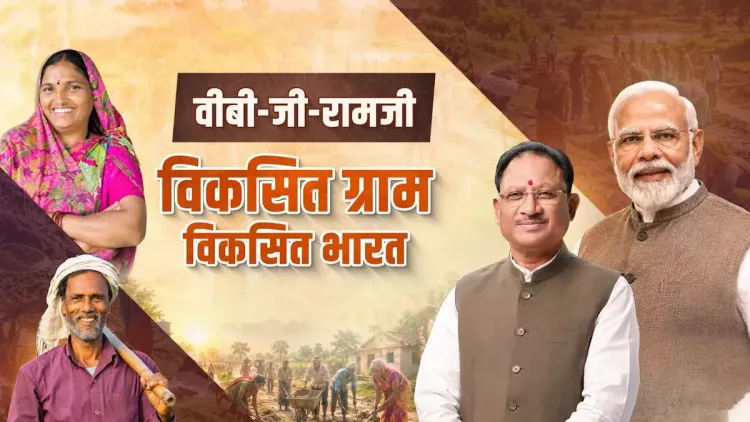
Chhattisgarh Chief Minister Vishnu Deo Sai announced the Viksit Bharat G-Ramji Yojana on 9 August 2026, committing to village self-reliance, dignified livelihoods for labourers, and universal basic amenities — positioning rural prosperity as the foundation of a developed India.
Key Takeaways
Vishnu Deo Sai announced the Viksit Bharat G-Ramji Yojana on 9 August 2026 to accelerate rural development in Chhattisgarh.
The scheme targets three pillars: village self-reliance (Aatmanirbhar) , dignified livelihoods for shramveers (labourers) , and basic amenities for every family .
The initiative is framed as the state-level expression of PM Modi's national Viksit Bharat@2047 vision.
CM Sai has led Chhattisgarh since December 2023 , with rural infrastructure and livelihoods as stated government priorities.
Exact provisions, budget allocations, and implementation timelines for the yojana are yet to be officially detailed.
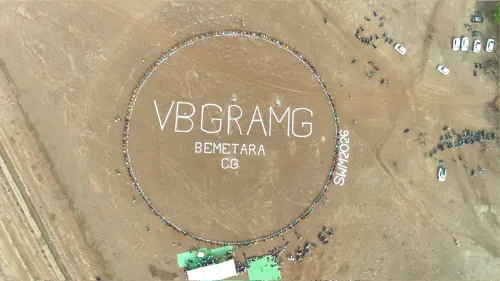
Rural prosperity as the engine of a developed India — that is the frame Chhattisgarh Chief Minister Vishnu Deo Sai placed around a significant state announcement on Sunday, 9 August 2026, unveiling the Viksit Bharat G-Ramji Yojana as a new vehicle to drive self-reliance, dignified livelihoods, and basic amenities to every village in the state.
Posting in Hindi, CM Sai declared: 'गांवों की समृद्धि बनेगी विकसित भारत की शक्ति' — 'The prosperity of villages will become the strength of a developed India.' The post frames the scheme as the operational expression of a 'Viksit Gram, Viksit Bharat' (Developed Village, Developed India) vision that the state government says it has been pursuing continuously since taking office.
What the G-Ramji Yojana promises rural Chhattisgarh
The scheme, as described by the Chief Minister, rests on three explicit commitments: making every village self-reliant (Aatmanirbhar), ensuring dignified livelihoods for labourers — referred to with the respectful term shramveer (labour heroes) — and guaranteeing that basic amenities reach every family. The post describes the yojana as a 'new momentum' and a 'strong foundation' for the comprehensive development of rural Chhattisgarh.
Exact provisions, implementation timelines, and budget allocations for the scheme have not been officially detailed in the public domain as of this announcement. What is clear is the political and developmental ambition: to localise the national Viksit Bharat@2047 framework — Prime Minister Narendra Modi's vision for India to achieve developed-nation status by the centenary of Independence — at the village level in Chhattisgarh.
Chhattisgarh's rural push within the Viksit Bharat arc
Vishnu Deo Sai took charge as Chief Minister in December 2023 following the BJP's return to power in Chhattisgarh, with rural infrastructure and village livelihoods as stated priorities from the outset. The G-Ramji Yojana fits a pattern visible across BJP-governed states since 2014: translating the central Viksit Bharat narrative into state-branded schemes that target measurable rural indicators — employment, connectivity, sanitation, and household income.
Chhattisgarh, a state with a large tribal and agrarian population spread across forested districts, presents a particular challenge and opportunity for such schemes. Village-level self-reliance programs here must contend with geography, connectivity gaps, and the livelihoods of communities heavily dependent on forest produce and agriculture — making implementation design crucial.
The announcement, accompanied by a video, signals that a formal rollout or detailed policy communication is likely imminent. State assembly sessions and budget disclosures will be the next test of whether the yojana's ambitions translate into funded, measurable targets — and that is exactly what rural Chhattisgarh will be watching for.
Point of View
And state governments across the political spectrum have struggled with precisely that gap between vision and village-level reality.
NationPress
23 Sept 2026
Frequently Asked Questions
What is the Viksit Bharat G-Ramji Yojana?
The Viksit Bharat G-Ramji Yojana is a Chhattisgarh state scheme announced by Chief Minister Vishnu Deo Sai on 9 August 2026, aimed at making villages self-reliant, providing dignified livelihoods to labourers, and ensuring basic amenities reach every rural family.
Who announced the G-Ramji Yojana and when?
Chhattisgarh Chief Minister Vishnu Deo Sai announced the scheme on Sunday, 9 August 2026, via a post on X accompanied by a video.
How does the G-Ramji Yojana connect to Viksit Bharat@2047?
The yojana is framed as the state-level implementation of Prime Minister Narendra Modi's national Viksit Bharat@2047 vision, which aims for India to achieve developed-nation status by the centenary of Independence in 2047.
What are the main goals of the Viksit Bharat G-Ramji Yojana?
The scheme has three stated goals: achieving village-level self-reliance (Aatmanirbhar), ensuring dignified livelihoods for labourers (shramveers), and guaranteeing basic amenities for every household in rural Chhattisgarh.
When did Vishnu Deo Sai become Chief Minister of Chhattisgarh?
Vishnu Deo Sai became Chief Minister of Chhattisgarh in December 2023, following the BJP's victory in the state assembly elections, with rural development and village infrastructure as key priorities of his government.