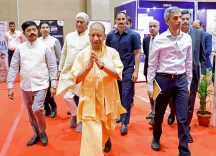
Gadkari: Cabinet clears PM VGSY worth ₹7,395 crore for panchayats
Synopsis
The Union Cabinet has approved PM Viksit Gram Swaraj Yojana, a ₹7,395.55 crore centrally sponsored scheme running from 2026–27 to 2030–31, aimed at strengthening over 2.55 lakh panchayats through digital governance, capacity building, and revenue mobilisation.
Key Takeaways
The Union Cabinet chaired by Prime Minister Narendra Modi approved the Pradhan Mantri Viksit Gram Swaraj Yojana (PM VGSY) on 28 October 2026 .
Total outlay is ₹7,395.55 crore : central share ₹4,869.48 crore , state share ₹2,526.07 crore .
The scheme runs for five years, from 2026–27 to 2030–31 .
It will cover over 2.55 lakh Panchayats and Traditional Local Bodies and benefit around 32 lakh elected representatives and functionaries .
Key pillars include participatory planning, digital governance, capacity building, improved auditing, and revenue mobilisation for financial self-reliance.
PM VGSY builds on the 73rd Constitutional Amendment (1992) and the Rashtriya Gram Swaraj Abhiyan (2018) , aligning with the Viksit Bharat 2047 vision.
A ₹7,395.55 crore scheme targeting the deepest roots of Indian democracy cleared the Union Cabinet on Wednesday, 28 October 2026 — and Union Road Transport and Highways Minister Nitin Gadkari was among the first to flag its significance, announcing the approval of the Pradhan Mantri Viksit Gram Swaraj Yojana (PM VGSY) across the country's vast network of rural local bodies.
The Cabinet, chaired by Prime Minister Narendra Modi, approved the centrally sponsored scheme with a central share of ₹4,869.48 crore and a state share of ₹2,526.07 crore, to be implemented over five years from 2026–27 to 2030–31. The funding split — roughly a 65:35 centre-to-state ratio — follows the established architecture for major centrally sponsored schemes.
Over 2.55 lakh panchayats in the frame
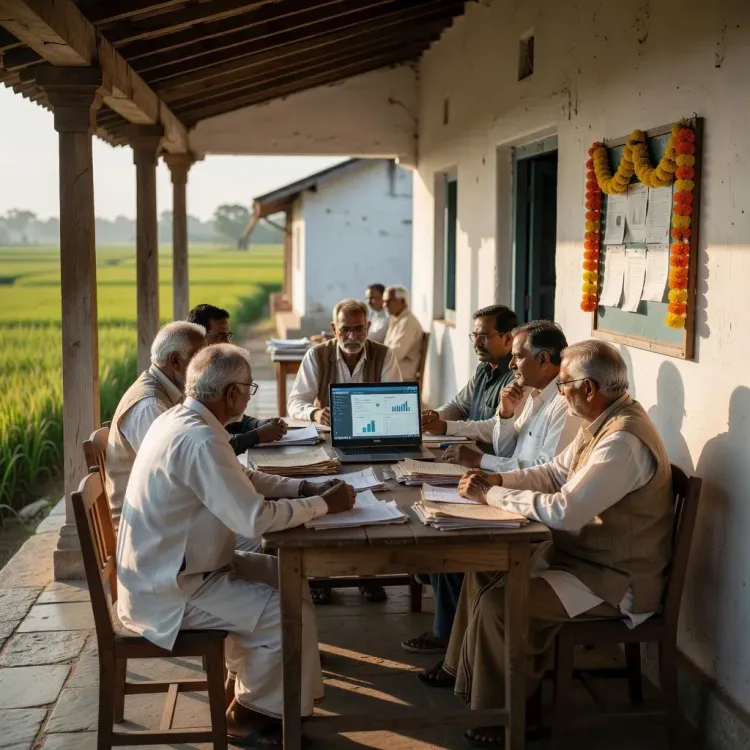
The scheme's reach is sweeping. It will cover more than 2.55 lakh Panchayats and Traditional Local Bodies and is designed to benefit approximately 32 lakh elected representatives and functionaries — the foot soldiers of village democracy. The stated pillars are participatory planning, capacity building, digital governance, improved auditing, and revenue mobilisation. In plain terms: teach village bodies how to plan better, account for every rupee, and earn more of their own money.
That last ambition — financial self-reliance for gram panchayats — is the most consequential. India's panchayats have long been constitutionally empowered but fiscally dependent, drawing the bulk of their budgets from central and state grants rather than own-source revenue. PM VGSY explicitly targets that structural weakness.
Building on three decades of panchayati raj reform
The constitutional foundations go back to 1992, when the 73rd Constitutional Amendment Act gave panchayats formal status, mandated regular elections, and set out a framework for devolving functions and finances. Since then, successive governments have tried to give that framework operational muscle. The Rashtriya Gram Swaraj Abhiyan, launched in 2018, pushed training and infrastructure support for gram panchayats — PM VGSY now extends and deepens that lineage, adding a sharper digital and revenue focus that reflects the realities of 2026.
The scheme also carries an explicit ideological anchor: the Viksit Bharat 2047 vision, the government's long-range blueprint for a developed India by the centenary of independence. The argument is straightforward — no macro ambition survives a weak grassroots tier, and stronger panchayats mean better delivery of health, water, roads, and welfare at the last mile.
What the ₹7,395 crore will actually do
Beyond the headline number, the scheme's design carries several trackable commitments. Digital governance components should generate auditable trails for spending at the panchayat level — a long-standing demand of fiscal watchdogs. Capacity-building programmes targeting 32 lakh representatives would be one of the largest such exercises in the country's administrative history. And the revenue-mobilisation strand, if executed, could gradually shift village bodies from grant-dependence toward financial agency.
State-level implementation guidelines and the first tranche of fund releases are expected ahead of the 2026–27 financial year, when the scheme formally begins. Performance reviews — by Parliament's Public Accounts Committee or the Comptroller and Auditor General — will be the real test of whether the ambition translates.
India has drafted ambitious panchayat-empowerment blueprints before. The difference this time, the government argues, is a unified scheme that links training, technology, and treasury in one framework — and backs it with nearly ₹7,400 crore over five focused years. Whether village India's most basic institutions are finally ready to stand on their own feet is a question 2.55 lakh panchayats will begin answering next financial year.
Point of View
The scheme implicitly acknowledges that grant dependency remains panchayati raj's central structural failure. The five-year timeline ending in 2030–31 creates a measurable accountability window ahead of the 2047 Viksit Bharat milestone, raising the political stakes for state governments who co-fund and must co-implement. The real test will be whether the scheme's design survives contact with India's notoriously uneven state-level administrative capacity.
NationPress
28 Oct 2026
Frequently Asked Questions
What is PM Viksit Gram Swaraj Yojana?
PM Viksit Gram Swaraj Yojana (PM VGSY) is a new centrally sponsored scheme approved by the Union Cabinet to strengthen over 2.55 lakh panchayats and traditional local bodies through capacity building, digital governance, improved auditing, and revenue mobilisation, with a total outlay of ₹7,395.55 crore over 2026–27 to 2030–31.
What is the total budget for PM VGSY?
The total outlay for PM VGSY is ₹7,395.55 crore, of which the central government will contribute ₹4,869.48 crore and state governments will contribute ₹2,526.07 crore.
How many panchayats will benefit from PM VGSY?
The scheme will strengthen over 2.55 lakh panchayats and traditional local bodies across India, benefiting approximately 32 lakh elected representatives and functionaries.
How is PM VGSY different from Rashtriya Gram Swaraj Abhiyan?
Rashtriya Gram Swaraj Abhiyan, launched in 2018, focused on training and infrastructure support for panchayats. PM VGSY extends that foundation by adding an explicit focus on digital governance, revenue mobilisation, and financial self-reliance for village bodies, under the broader Viksit Bharat 2047 framework.
When will PM VGSY be implemented?
PM VGSY will be implemented from the financial year 2026–27 through 2030–31, with state-level guidelines and initial fund releases expected ahead of the first year of implementation.