Cabinet Clears PMVGSY With ₹7,395 Cr for Village Governance
Synopsis
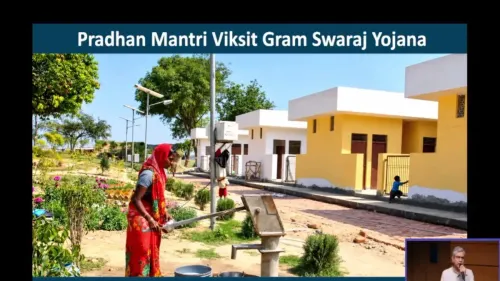
The Modi Cabinet approved the Pradhan Mantri Viksit Gram Swaraj Yojana (PMVGSY) on October 28, 2026, with an outlay of ₹7,395.55 crore. The scheme aims to strengthen Panchayati Raj institutions and drive holistic rural development, extending a policy lineage dating to the 73rd Constitutional Amendment of 1992.
Key Takeaways
The Union Cabinet, chaired by PM Narendra Modi , approved the Pradhan Mantri Viksit Gram Swaraj Yojana (PMVGSY) on October 28, 2026 .
The scheme carries a financial outlay of ₹7,395.55 crore to strengthen grassroots governance and holistic village development.
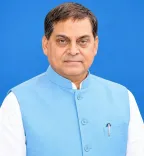
Union Minister Sarbananda Sonowal announced the Cabinet decision on X, highlighting its significance for rural India.
PMVGSY builds on a policy lineage rooted in the 73rd Constitutional Amendment of 1992 , which constitutionalised Panchayati Raj institutions.
The scheme follows the Rashtriya Gram Swaraj Abhiyan (2018) , which focused on capacity building for panchayat bodies.
Implementation guidelines and state-government co-operation will be critical to translating the approved outlay into on-ground outcomes.
A cabinet decision with deep roots in India's constitutional history landed on Wednesday, October 28, 2026: the Union Cabinet, chaired by Prime Minister Narendra Modi, approved the Pradhan Mantri Viksit Gram Swaraj Yojana (PMVGSY) with a financial outlay of ₹7,395.55 crore, targeting stronger grassroots governance and holistic village development. Union Ports and Shipping Minister Sarbananda Sonowal announced the decision on X, flagging it as a landmark step for rural India.
What PMVGSY Sets Out to Do
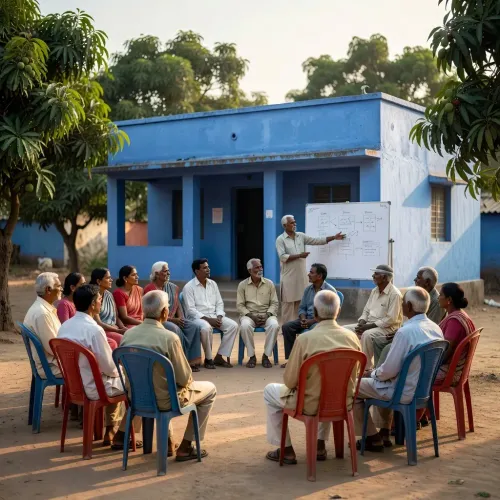
The scheme's name signals its ambition directly — Viksit Gram Swaraj, or 'developed village self-rule.' The combined thrust is two-fold: build the administrative muscle of village panchayats and channel investment toward holistic development at the local level. With ₹7,395.55 crore in approved outlay, the programme is positioned as one of the larger single-ticket investments in the Panchayati Raj ecosystem in recent years.
The Cabinet's green light arrives against the backdrop of a governance architecture that traces its constitutional legitimacy to the 73rd Constitutional Amendment of 1992 — the landmark reform that formally empowered Panchayati Raj institutions as a third tier of Indian democracy. Three decades on, successive governments have layered new schemes onto that foundation; PMVGSY is the latest and, in financial scale, among the most significant.
A Policy Line Running from 1992 to 2026
The direct predecessor in spirit was the Rashtriya Gram Swaraj Abhiyan, approved in 2018, which focused on capacity building and infrastructure support for panchayat bodies. PMVGSY appears to extend and deepen that logic — from building institutions to actively driving village-level development outcomes. The government's consistent return to this policy space underscores a political and administrative bet: that empowered local bodies, backed by central funding, can close rural infrastructure gaps faster than top-down delivery alone.
Rural communities across India's approximately 2.5 lakh gram panchayats stand as the primary intended beneficiaries — a constituency both numerically vast and historically under-served by administrative reach.
Sonowal's Signal and What Follows
That a senior minister from the Ports and Shipping portfolio chose to amplify this Cabinet call reflects the cross-government ownership the Modi administration routinely projects around flagship welfare decisions. Sonowal — a former Chief Minister of Assam and a figure with deep rural-constituency roots — lent the announcement the weight of personal political conviction, not just bureaucratic relay.
The immediate watch-point: the release of implementation guidelines and fund-flow frameworks that will determine how quickly the ₹7,395.55 crore reaches panchayat accounts — and whether state governments, the essential delivery partners, move at matching speed.
India's villages have heard big numbers before. The question PMVGSY must now answer isn't the outlay — it's the architecture of accountability that makes the money move.
Point of View
Funded local bodies are the fastest route to closing India's rural development gap. The ₹7,395.55 crore outlay is sizeable but not transformative in isolation; the real test lies in implementation architecture and state-level co-ownership, historically the weakest link in Panchayati Raj funding chains. Coming in 2026, the timing also signals the government's intent to consolidate its rural-governance narrative ahead of state election cycles in key agrarian states. Whether PMVGSY graduates beyond its predecessor's capacity-building frame into measurable village outcomes will determine its legacy.
NationPress
28 Oct 2026
Frequently Asked Questions
What is Pradhan Mantri Viksit Gram Swaraj Yojana (PMVGSY)?
PMVGSY is a central government scheme approved by the Union Cabinet on October 28, 2026, with an outlay of ₹7,395.55 crore. It aims to strengthen Panchayati Raj institutions and promote holistic village-level development across India.
What is the budget outlay for PMVGSY?
The Cabinet has approved a financial outlay of ₹7,395.55 crore for the Pradhan Mantri Viksit Gram Swaraj Yojana.
Who approved PMVGSY and when?
The Union Cabinet chaired by Prime Minister Narendra Modi approved PMVGSY on Wednesday, October 28, 2026.
How is PMVGSY different from Rashtriya Gram Swaraj Abhiyan?
The Rashtriya Gram Swaraj Abhiyan, approved in 2018, focused on capacity building and infrastructure support for panchayat bodies. PMVGSY appears to extend that mission by adding a broader holistic village development mandate, backed by a larger central outlay.
Who are the beneficiaries of PMVGSY?
Rural communities and village panchayats across India are the primary beneficiaries, with the scheme designed to empower grassroots governance institutions and improve local-level public services.