CM Vishnu Deo Sai Unveils Larang Sai Statue in Balrampur
Synopsis
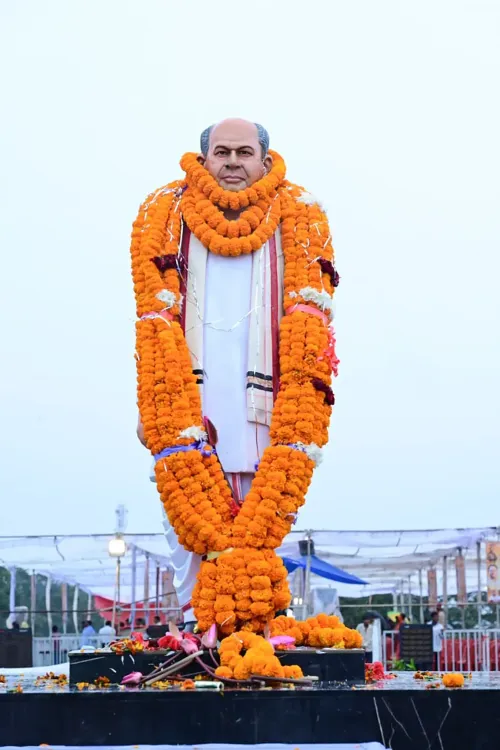
Chhattisgarh Chief Minister Vishnu Deo Sai joined virtually from Raipur the unveiling of a statue of revered leader Larang Sai in Balrampur-Ramanujganj's Chirai-Jaswantpur, calling it a proud moment and linking the tribute to the government's last-mile development mission for tribal communities.
Key Takeaways
CM Vishnu Deo Sai joined the statue unveiling of revered leader Larang Sai virtually from Raipur on October 28, 2026 .
The statue is located in Chirai and Jaswantpur in Balrampur-Ramanujganj district , a tribal-majority northern district of Chhattisgarh.
Multiple development project inaugurations and foundation-laying ceremonies were held alongside the statue unveiling.
CM Sai framed the event as the government's commitment to reaching the 'last person in line' of society — its truest tribute to Larang Sai's ideals.
The event reflects the Chhattisgarh BJP government's approach of linking cultural memorials with governance delivery in tribal districts.
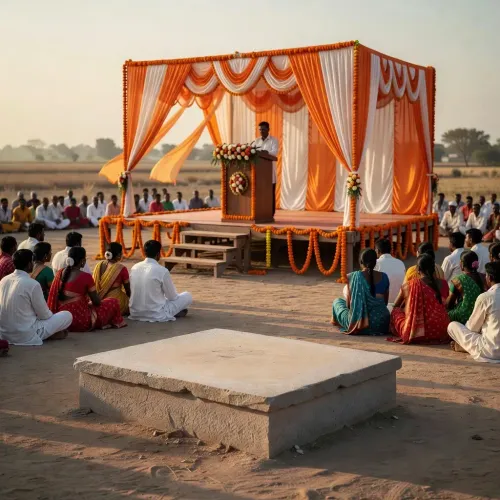
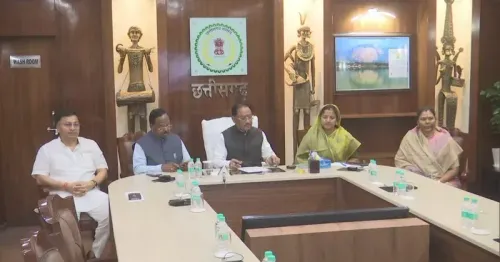
A moment of pride and public memory unfolded in Balrampur-Ramanujganj district on Wednesday, October 28, 2026, as Chhattisgarh Chief Minister Vishnu Deo Sai joined — virtually from Raipur — the unveiling of a statue of revered leader Larang Sai in the villages of Chirai and Jaswantpur. The ceremony was more than a tribute; it paired the statue's inauguration with the launch and foundation-laying of multiple development projects for the region.
A Tribute Cast in Stone at Chirai-Jaswantpur
CM Sai, posting in Hindi after the virtual ceremony, described witnessing the unveiling as 'garv ka kshan' — 'a moment of pride.' He said the statue of the venerable Larang Sai, now standing in Chirai and Jaswantpur, would inspire generations to come 'to live for society, stand firm on one's values, and make public service the purpose of life.' The event carried genuine emotional weight in a district with deep tribal roots and a long history of community leadership.
Development Works Alongside the Statue Unveiling
The occasion was not ceremonial alone. The Chief Minister noted that 'vibhinn vikas karyon ka lokarpan evam shilanyas' — the inauguration and foundation-laying of various development works — were also completed during the event. While the specific projects were not detailed in his post, the pairing of a public memorial with infrastructure announcements is a deliberate signal: that honouring a leader's legacy means delivering on the promise of last-mile development.
Reaching the 'Last Person in Line'
Balrampur-Ramanujganj is one of Chhattisgarh's northernmost districts, bordering Jharkhand and Uttar Pradesh, with a significant tribal population that has historically been among the last to receive state welfare benefits. CM Sai framed the government's work in this region as a living tribute — 'samaj ki antim pankti mein khade vyakti tak vikas ka labh pahunchakr', or 'by delivering the benefits of development to the person standing in the last row of society.' That, he said, is the truest homage to Larang Sai's ideals. It is a message calibrated as much for policy intent as for public memory.
Point of View
The 'last person in line' framing is politically pointed — it is an implicit benchmark the administration is publicly setting for itself. Statue unveilings of local leaders also serve to deepen community ownership of governance, especially among tribal constituencies who see little of their own heritage in mainstream political memory. Whether the development works announced alongside the tribute translate into measurable change in Balrampur-Ramanujganj will be the real test of that promise.
NationPress
28 Oct 2026
Frequently Asked Questions
Who was Larang Sai and why was a statue unveiled in his honour?
Larang Sai was a revered leader honoured by Chhattisgarh Chief Minister Vishnu Deo Sai as an icon of public service and social values. A statue was unveiled in Chirai and Jaswantpur in Balrampur-Ramanujganj district on October 28, 2026, to preserve his legacy and inspire future generations. Specific historical details of his life could not be independently verified.
Where exactly was the Larang Sai statue installed?
The statue was installed in the villages of Chirai and Jaswantpur in Balrampur-Ramanujganj district, a northern district of Chhattisgarh bordering Jharkhand and Uttar Pradesh.
Did CM Vishnu Deo Sai attend the ceremony in person?
No. CM Vishnu Deo Sai participated virtually from Raipur, the state capital, and described witnessing the unveiling as 'a moment of pride.'
What development works were announced alongside the statue unveiling?
CM Sai stated that the inauguration and foundation-laying of various development works were completed during the same event, though the specific projects were not detailed in his public post.
What is Balrampur-Ramanujganj known for in Chhattisgarh?
Balrampur-Ramanujganj is a northern Chhattisgarh district with a significant tribal population, bordering Jharkhand and Uttar Pradesh. It is a focus area for rural and tribal welfare delivery under the state government's last-mile development programmes.