CM Sai adds 360 paddy centres ahead of Nov 15 procurement
Synopsis
Chhattisgarh CM Vishnu Deo Sai announces 360 new paddy procurement centres for the season beginning 15 November, maintaining the state's ₹3,100-per-quintal purchase rate for the third consecutive year.
Key Takeaways
360 new paddy procurement centres will be added across Chhattisgarh ahead of the season opening on 15 November 2026 .
The state government has maintained a procurement rate of ₹3,100 per quintal — above the central MSP — for three consecutive years .
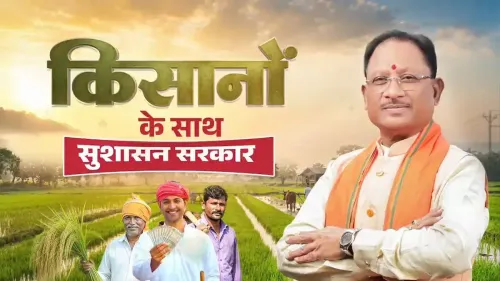
Chief Minister Vishnu Deo Sai framed farmer welfare as the government's 'highest priority' in the announcement.
The expanded centre network is designed to reduce travel burden on farmers, particularly in interior and tribal regions.
The BJP government in Chhattisgarh has held office since December 2023 , treating price-support continuity as a core rural policy plank.
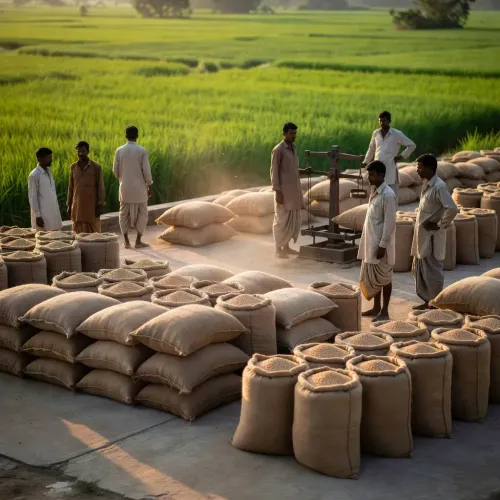
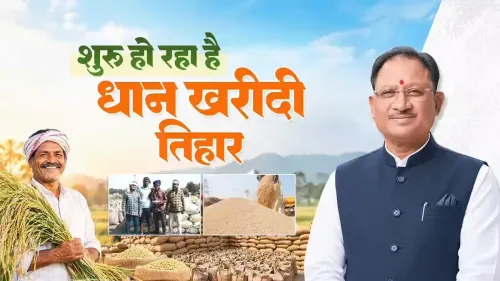
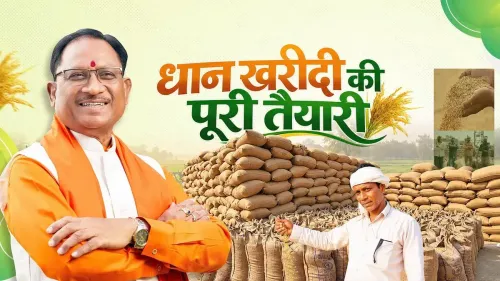
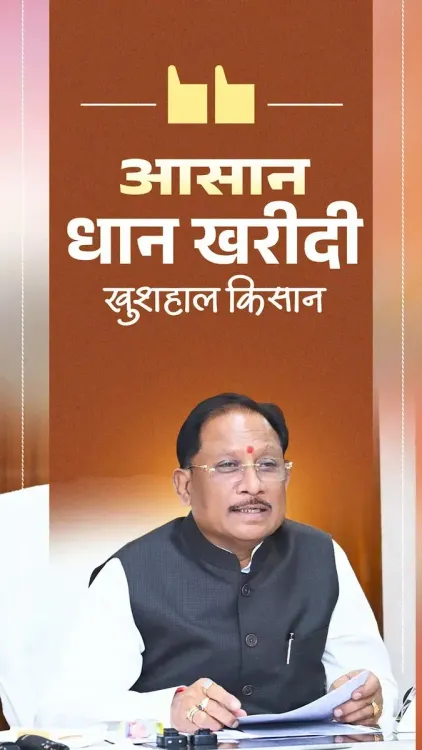
With the paddy harvest season weeks away, Chhattisgarh Chief Minister Vishnu Deo Sai announced on Wednesday, 28 October 2026 that 360 new procurement centres will be operational from 15 November — a direct bid to shorten the distance between a farmer's threshing floor and a government weighing scale.
Posting in Hindi, CM Sai said: 'अन्नदाताओं का हित और उनकी खुशहाली हमारी सर्वोच्च प्राथमिकता है' ('The welfare and prosperity of the food-providers is our highest priority'). He reiterated that the state government has been purchasing paddy at ₹3,100 per quintal for the past three years and will continue at that rate in the current season.
₹3,100 per quintal — what it means for Chhattisgarh's farmers
Chhattisgarh is one of central India's largest paddy-producing states, with an agrarian economy where procurement pricing is not merely a policy instrument but a livelihood guarantee for millions of rural households. The state's procurement rate of ₹3,100 per quintal sits above the central government's Minimum Support Price, reflecting a deliberate state-level top-up that successive Chhattisgarh governments have deployed to shore up farm incomes.
The BJP government under Sai, which took office in December 2023 after winning the state assembly elections, has maintained this enhanced rate through three procurement seasons. Indian states with heavy paddy output routinely supplement the central MSP through such price-support measures — and in Chhattisgarh, the practice carries both welfare weight and considerable electoral resonance.
360 new centres — expanding the procurement net
The addition of 360 procurement centres targets a persistent structural problem: farmers in interior and tribal belt areas of Chhattisgarh often travel long distances to sell their produce, eroding the effective benefit of a higher support price through transport costs and time lost. More centres mean shorter queues, fewer middlemen, and faster payment cycles — at least in principle.
The season opens on 15 November 2026. The real test will come in the volume of arrivals, farmer registration numbers, and whether the expanded infrastructure absorbs demand without the bottlenecks that have plagued earlier seasons. Those figures, expected in the weeks following the season's launch, will tell the fuller story.
For now, CM Sai's government is signalling that agrarian welfare remains the front-and-centre narrative of its second year in office — and it is betting on a wider procurement net to prove it.
Frequently Asked Questions
What is the paddy procurement price in Chhattisgarh in 2026?
The Chhattisgarh government is purchasing paddy at ₹3,100 per quintal in the 2026 season, a rate the state has maintained for three years.
When does paddy procurement start in Chhattisgarh in 2026?
The paddy procurement season in Chhattisgarh is set to begin on 15 November 2026 , as announced by Chief Minister Vishnu Deo Sai.
How many new paddy procurement centres has Chhattisgarh added?
360 new paddy procurement centres have been added by the Chhattisgarh government to ease the sale of produce for farmers in the current season.
Who is Vishnu Deo Sai and what is his role?
Vishnu Deo Sai is the Chief Minister of Chhattisgarh and a BJP leader who took office in December 2023 after the BJP's victory in the state assembly elections.
Why is Chhattisgarh's paddy price higher than the central MSP?
Chhattisgarh supplements the central Minimum Support Price with a state-level top-up to boost farm incomes — a practice common among large paddy-producing states to support their predominantly agrarian rural economies.