Odisha CM Majhi Reviews Cyclone Arnab Damage, Orders War-Footing Relief
Synopsis
Chief Minister Mohan Charan Majhi chaired a high-level meeting at Odisha's SRC office on 28 October 2026 to review Cyclone Arnab's damage and ongoing rescue efforts, ordering ODRAF, NDRF, and fire services on full alert and mandating war-footing restoration of power, water, and communication links.
Key Takeaways
CM Mohan Charan Majhi held a high-level review at the Special Relief Commissioner's office on 28 October 2026 focused on Cyclone Arnab.
The meeting assessed storm status, damage extent, active rescue operations, and relief distribution logistics.
ODRAF, NDRF, and state fire services were ordered to remain on full alert with no stand-down.
CM Majhi specifically directed rapid restoration of electricity, drinking water, and communication in affected areas.
The CM ordered 'war-footing' inter-departmental coordination for relief delivery across affected districts.
Odisha's disaster response framework — built after the devastating 1999 super cyclone — underpins the current mobilisation.
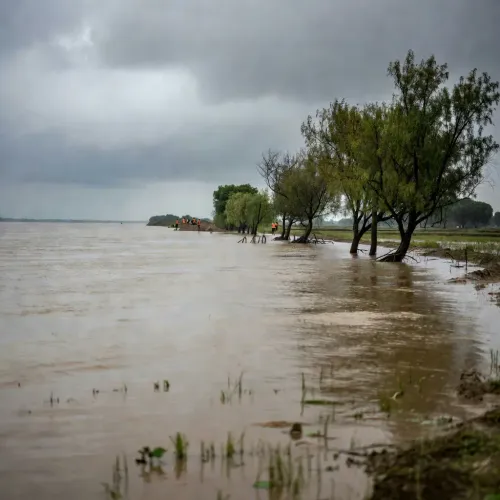
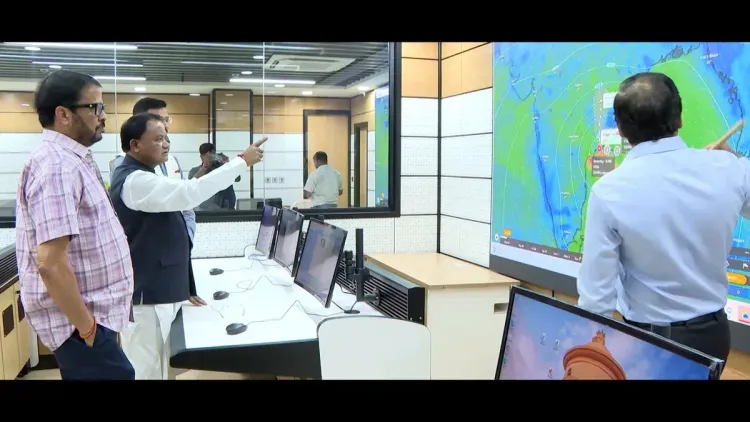
With Cyclone Arnab battering Odisha's coast, Chief Minister Mohan Charan Majhi pulled together a high-level review meeting at the Special Relief Commissioner (SRC) office on Wednesday, 28 October 2026 — taking direct stock of damage, ongoing rescue operations, and relief distribution while issuing blunt orders: restore power, drinking water, and connectivity to affected areas without delay.
What the SRC meeting room looked like in real terms
The Chief Minister's Office confirmed that CM Majhi chaired the high-level review covering the full breadth of Cyclone Arnab's impact — status of the storm, extent of damage, live rescue operations, and the mechanics of relief distribution. Officials from multiple departments were present, and the language from the CMO was unambiguous: coordinate or be held accountable.
Majhi directed that ODRAF (Odisha Disaster Rapid Action Force), NDRF (National Disaster Response Force), and the state fire services be kept on purna sajaga — full alert — with no stand-down until the situation normalises. He also demanded 'war-footing' inter-departmental coordination, a phrase that signals the administration is treating restoration as a time-critical emergency, not a routine post-storm exercise.
Why Odisha runs its cyclone machine differently
The state's institutional muscle on cyclone response was forged in tragedy. The 1999 super cyclone killed over 10,000 people, exposing catastrophic gaps in early warning, evacuation, and relief delivery. What followed was two decades of deliberate institutional investment — the creation of ODRAF, pre-positioned relief stockpiles, hardened communication infrastructure, and a Special Relief Commissioner framework built specifically to coordinate across agencies without bureaucratic lag.
The payoff was visible during Cyclone Fani in 2019, when authorities evacuated roughly 1.2 million people in under 48 hours, limiting fatalities despite the storm's Category 4-equivalent intensity. That operational template — rapid evacuation, multi-force deployment, and immediate restoration of essential services — is precisely what CM Majhi invoked on Wednesday.
Restoration of essentials: the first 72-hour test
CM Majhi specifically flagged three restoration priorities: electricity supply, drinking water, and communication links. These are not incidental amenities — in a post-cyclone environment, each directly determines survival. Power outages disable water pumps. Broken communication lines cut off remote coastal communities from emergency services. Contaminated water sources trigger secondary health crises that can outlast the storm by weeks.
By naming these three explicitly in his directives, the CM is signalling to department heads that these are measurable, time-bound deliverables — not aspirational targets. Affected districts along Odisha's Bay of Bengal coastline will be watching how fast those metrics move.
Odisha has learned, the hardest way possible, that a cyclone's death toll is only partly determined by the storm itself. The rest is decided in the 72 hours that follow — and Wednesday's review meeting is the state betting it has learned that lesson well enough to prove it again.
Point of View
Projecting command authority over a situation that historically defines a chief minister's legacy in Odisha. The BJP government, in power since mid-2024, faces its first major cyclone test; how it manages the restoration window will directly shape public perception ahead of future electoral cycles. Odisha's institutional disaster-response machinery is among the most developed in India, but machinery only performs if political leadership sustains pressure — which is precisely what Wednesday's directives appear designed to do.
NationPress
28 Oct 2026
Frequently Asked Questions
What is Cyclone Arnab and which areas of Odisha did it affect?
Cyclone Arnab is a tropical storm that struck Odisha's Bay of Bengal coastline, prompting a state-level emergency review on 28 October 2026. Specific affected districts were under assessment at the time of the CM's high-level meeting.
What is ODRAF and what role does it play in Odisha cyclone relief?
ODRAF — the Odisha Disaster Rapid Action Force — is a state-level specialised unit trained for rapid rescue and disaster response. CM Majhi ordered it to remain on full alert alongside NDRF during Cyclone Arnab relief operations.
What did CM Mohan Charan Majhi order at the cyclone review meeting?
CM Majhi directed the immediate restoration of electricity, drinking water, and communication links in cyclone-affected areas, ordered ODRAF, NDRF, and fire services on full alert, and demanded war-footing inter-departmental coordination for relief delivery.
How has Odisha built its cyclone disaster response system?
Odisha developed its disaster management framework after the catastrophic 1999 super cyclone that killed over 10,000 people. The state created ODRAF, strengthened early-warning systems, and built inter-agency coordination protocols — a model that proved effective during Cyclone Fani in 2019.
What is the Special Relief Commissioner's office in Odisha?
The Special Relief Commissioner's (SRC) office is the nodal government body in Odisha responsible for coordinating disaster relief, rehabilitation, and emergency management activities across the state during cyclones and other natural disasters.