Goa CM's Office reaffirms Panchayat push for Viksit Bharat 2047
Synopsis
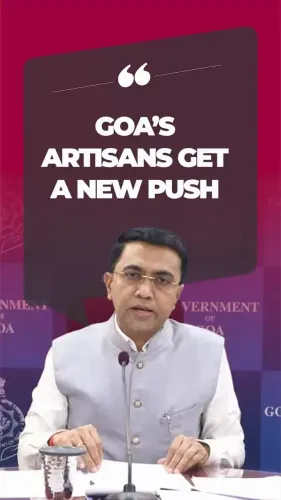
The Chief Minister's Office of Goa on 6 August 2026 reaffirmed the state's commitment to empowering Panchayats through capacity building, technology, and scheme convergence, linking the Swayampurna Goa initiative directly to the national Viksit Bharat @2047 vision for grassroots-driven development.
Key Takeaways
The Chief Minister's Office of Goa posted on 6 August 2026 reaffirming commitment to Panchayat empowerment.
The state's approach centres on capacity building, technology, and convergence of schemes at the local level.
Swayampurna Goa is the state initiative targeting self-reliance through strengthened local bodies.
The statement explicitly links Goa's Panchayat agenda to the national Viksit Bharat @2047 framework.
The 73rd Constitutional Amendment of 1992 established the Panchayati Raj foundation this policy builds on.
Key watch point: whether formal convergence mechanisms between state and central rural development programmes are announced.
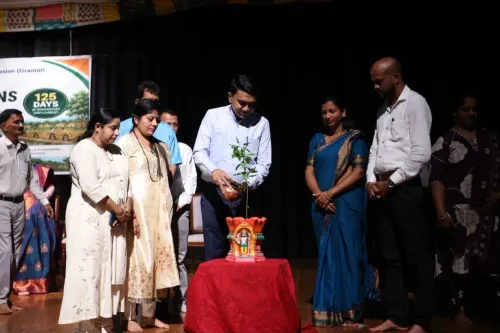
Rural self-governance is back at the centre of Goa's policy conversation. The Chief Minister's Office of Goa reaffirmed on 6 August 2026 the state's commitment to empowering Panchayats through capacity building, technology, and convergence of schemes — tying local governance directly to the twin goals of Swayampurna Goa and Viksit Bharat @2047.
The statement, posted in reply on X, declared: 'The Government of Goa remains committed to empowering Panchayats through capacity building, technology and convergence of schemes to realise the vision of Swayampurna Goa and Viksit Bharat @2047.' The framing is deliberate — community-led planning is not a side note but the stated engine of both state and national ambition.
Panchayats as the delivery front line
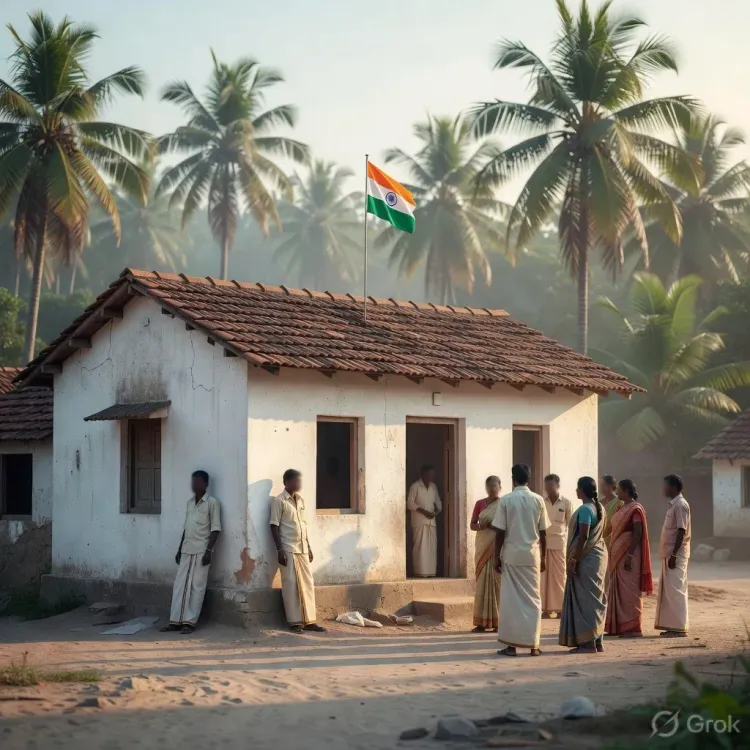
The emphasis on Panchayats is not new in Indian governance, but it carries renewed weight. The 73rd Constitutional Amendment of 1992 mandated Panchayati Raj institutions across India, decentralising power to the village level. More than three decades on, the persistent challenge has been translating constitutional mandate into functional capacity — trained elected representatives, integrated budgets, and technology access that actually reaches gram panchayats. Goa's Swayampurna Goa initiative is the state's answer to that gap: a programme aimed at achieving self-reliance by strengthening local bodies and converging multiple welfare and infrastructure schemes at the Panchayat level rather than running them in parallel silos.Where Goa's plan meets the national 2047 framework
The explicit linkage to Viksit Bharat @2047 — the Government of India's vision for a fully developed economy by the centenary of independence — is the broader signal here. Several states have begun anchoring their local governance programmes to the 2047 framework, positioning grassroots delivery as the foundation, not the footnote, of long-term development. For Goa, a small state with a relatively dense Panchayat network, the convergence of centrally-sponsored rural development schemes with state-level capacity programmes could yield measurable results faster than in larger states. The question is whether formal mechanisms — joint planning calendars, technology platforms, training pipelines — follow the political commitment. Watch for progress reports on Panchayat capacity programmes and any announced convergence structures between Goa's schemes and central rural development funds. Statements are the starting line, not the finish.Point of View
Aligning state identity with national ambition while keeping local credit visible. The real test, as with most Panchayati Raj commitments since 1992, is whether the capacity-building and scheme-convergence rhetoric is backed by budgetary allocations and measurable delivery targets. Without those, the statement remains aspirational framing rather than policy movement.
NationPress
20 Sept 2026
Frequently Asked Questions
What is Swayampurna Goa?
Swayampurna Goa is a Goa state initiative aimed at achieving self-reliance by empowering local bodies and integrating development schemes at the Panchayat level.
What is Viksit Bharat 2047?
Viksit Bharat @2047 is the Government of India's national vision to transform India into a fully developed economy by 2047, the centenary of independence, with grassroots participation as a key pillar.
What role do Panchayats play in Goa's development plans?
Panchayats are the primary delivery front line for Goa's development schemes; the state aims to strengthen them through capacity building, technology access, and convergence of multiple welfare and infrastructure programmes.
What is Panchayati Raj and when was it established?
Panchayati Raj refers to India's system of rural local self-government. It was constitutionally mandated by the 73rd Amendment of 1992 , which required states to establish elected Panchayat institutions at the village, block, and district levels.
What does scheme convergence at the Panchayat level mean?
Scheme convergence means coordinating multiple government welfare and infrastructure programmes — often run in separate silos — so that they are planned and implemented together at the Panchayat level for greater efficiency and impact.