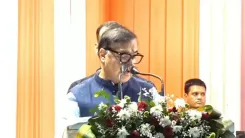
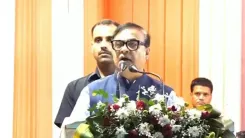
CM Rekha Gupta Hails PM-VGSY, Rs 7,395-Cr Rural Push
Synopsis
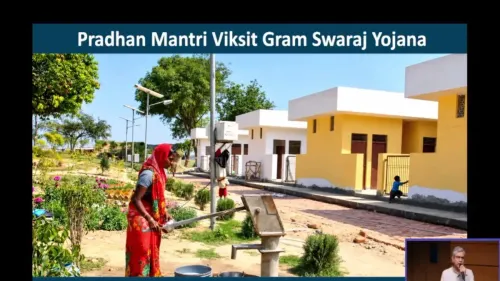
Delhi Chief Minister Rekha Gupta has hailed the Union Cabinet's approval of the Pradhan Mantri Viksit Gram Swaraj Yojana (PM-VGSY), a ₹7,395.55-crore scheme aimed at strengthening Panchayati Raj institutions and delivering comprehensive rural development as part of PM Narendra Modi's Viksit Bharat vision.
Key Takeaways
The Union Cabinet approved the Pradhan Mantri Viksit Gram Swaraj Yojana (PM-VGSY) with a total outlay of ₹7,395.55 crore .
Delhi CM Rekha Gupta welcomed the decision on 28 October 2026 , calling it a historic step toward rural empowerment.
The scheme targets strengthening Panchayati Raj institutions for decentralised local governance in villages.
PM-VGSY is positioned as a structural pillar of PM Narendra Modi's overarching Viksit Bharat development agenda.
Detailed scheme guidelines, fund-disbursement mechanisms, and coordination with state Panchayati Raj departments are yet to be released.
The 73rd Constitutional Amendment Act, 1992 forms the foundational legal basis for Panchayati Raj institutions that PM-VGSY seeks to empower.
A ₹7,395.55-crore bet on India's villages just cleared the Union Cabinet — and Delhi Chief Minister Rekha Gupta is calling it historic. On Wednesday, 28 October 2026, Gupta took to X to welcome the Cabinet's approval of the 'Pradhan Mantri Viksit Gram Swaraj Yojana' (PM-VGSY), framing the scheme as the structural backbone of the Viksit Bharat vision championed by Prime Minister Narendra Modi.
Posting in Hindi, Gupta declared: 'Gaanvon ka sashaktikaran hi Viksit Bharat ka aadhar hai' — 'The empowerment of villages is the very foundation of a Developed India.' She credited the Central Cabinet, under Modi's leadership, with taking what she described as an 'aithasik kadam' — a landmark step — toward the holistic and all-round development of rural India through strengthened Panchayati Raj institutions and local governance.
PM-VGSY and the Panchayati Raj bet
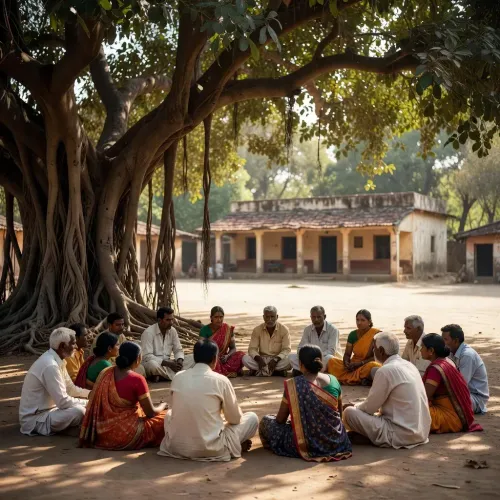
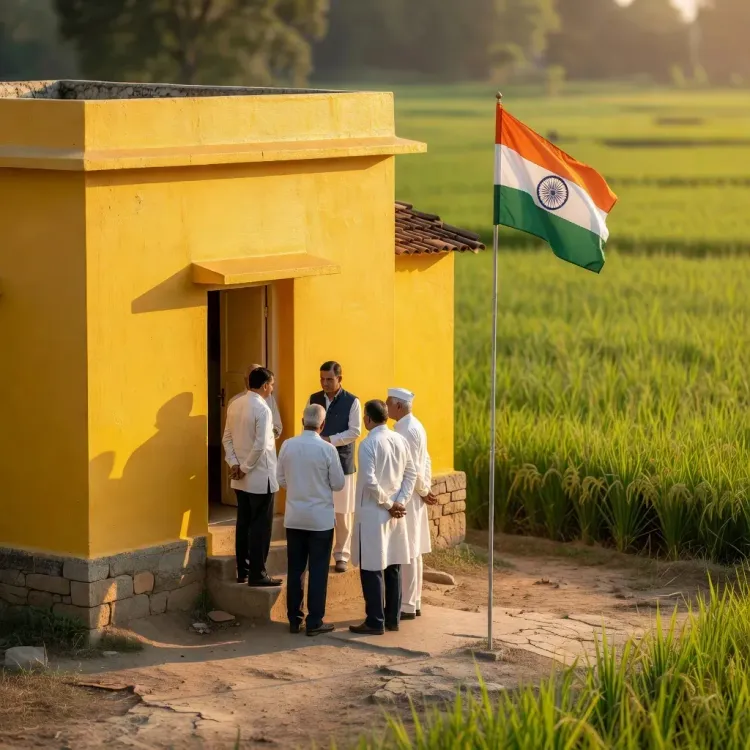
The scheme's declared intent is to energise governance at the village level — the last mile of the Indian state where policy either lands or evaporates. Panchayati Raj institutions (PRIs) received their constitutional mandate through the landmark 73rd Constitutional Amendment Act of 1992, which embedded decentralised self-governance into the framework of the republic. Decades later, the gap between constitutional promise and on-the-ground capacity in many gram panchayats remains the central challenge PM-VGSY appears designed to address.
A dedicated outlay of ₹7,395.55 crore signals a serious resource commitment to closing that gap — funding that, if channelled effectively through state Panchayati Raj departments, could translate into trained gram pradhan offices, upgraded digital infrastructure, and faster delivery of welfare schemes at the block level. The details on fund-disbursement mechanisms and state-level coordination are expected to follow in scheme guidelines.
Viksit Bharat's rural arithmetic
The Modi government's Viksit Bharat — 'Developed India' — framework has consistently positioned rural prosperity as non-negotiable arithmetic: nearly 65 per cent of India's population still lives in villages, and no development index can read green while that majority lags. PM-VGSY fits into a pattern of schemes targeting decentralisation — from digital gram panchayats to rural broadband — that have been rolled out in successive budget cycles.
Gupta's endorsement, voiced from the national capital, underlines the BJP's political messaging calculus: that urban administrators championing village schemes bridges the optics gap between a party with its strongest electoral roots in rural India and its current governance perch in metro Delhi.
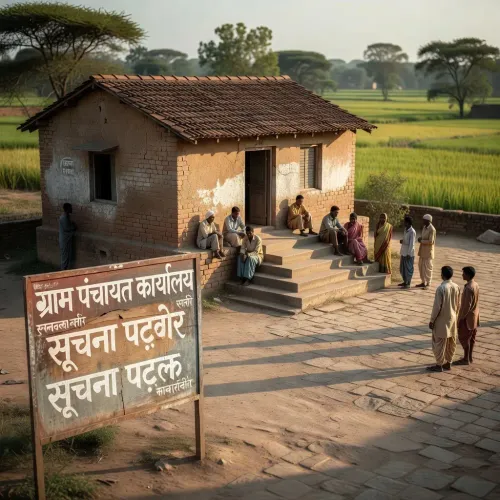
The real test of PM-VGSY will arrive not in Cabinet halls but in the sarpanch's office — the moment a gram sabha actually gains the budget authority, the trained staff, and the digital backbone to govern without waiting for orders from the district collector.
Point of View
395.55-crore outlay is substantial, but the scheme's true impact will hinge on implementation architecture: whether funds flow directly to PRIs or get filtered through state bureaucracies. Rekha Gupta's vocal endorsement from Delhi is also a political signal — the BJP is keen to reinforce its rural identity even as its governance profile becomes increasingly urban-metro. The scheme lands at a moment when rural distress, agrarian employment, and village infrastructure remain live fault lines ahead of multiple state election cycles.
NationPress
28 Oct 2026
Frequently Asked Questions
What is the Pradhan Mantri Viksit Gram Swaraj Yojana (PM-VGSY)?
PM-VGSY is a Central Cabinet-approved scheme with an outlay of ₹7,395.55 crore, aimed at strengthening Panchayati Raj institutions and empowering local governance in rural India as part of the Viksit Bharat vision.
How much money has been allocated to PM-VGSY?
The Union Cabinet has approved a financial outlay of ₹7,395.55 crore for the Pradhan Mantri Viksit Gram Swaraj Yojana.
Why did Delhi CM Rekha Gupta comment on a rural village scheme?
As a BJP leader and Delhi Chief Minister, Rekha Gupta welcomed the Cabinet decision to highlight the party's rural development agenda and PM Modi's Viksit Bharat framework.
What is Viksit Bharat and how does PM-VGSY relate to it?
Viksit Bharat, or 'Developed India', is PM Narendra Modi's long-term vision for India's comprehensive development; PM-VGSY is positioned as a cornerstone of this vision by targeting grassroots rural empowerment.
What is the role of Panchayati Raj institutions in India?
Panchayati Raj institutions are constitutionally recognised local self-government bodies in rural India, established under the 73rd Constitutional Amendment Act of 1992, responsible for planning and implementing development at the village level.