Are Chinese Policies Undermining Tibetan Civilization?
Synopsis
A new UN report exposes how Chinese state policies are systematically dismantling Tibetan civilization and threatening the survival of Tibetans as a unique cultural group. Discover the alarming findings and their implications for minority rights and identity preservation.
Key Takeaways
UN report highlights the erosion of Tibetan civilization.
State policies target the language and identity of Tibetans.
Boarding schools are a form of cultural assimilation .
Minority rights are under threat from political agendas .
Religious practices are strictly controlled by the state.
Geneva, Feb 6 (NationPress) A recent report from the United Nations (UN) has highlighted that state policies enacted by China in Tibet are significantly undermining the core aspects of Tibetan civilization and jeopardizing the survival of Tibetans as a unique ethnic group.
The findings were shared by the Special Rapporteur on minority issues, Nicolas Levrat, during a presentation to the UN Human Rights Council. The report points out that Tibet represents a scenario where state-led strategies are not just discriminatory but also constitute what the UN expert describes as a more insidious form of eradication.
At the heart of this alarm is China's extensive boarding school system that is enforced upon Tibetan children. The report clearly states that 'the boarding school education system implemented by China in Tibet is aimed at erasing the Tibetan language and identity'. Tibetan children are removed from their families and communities, educated in environments dominated by Mandarin Chinese, state ideology, and cultural assimilation. This policy hinders the intergenerational transfer of cultural, linguistic, or religious elements that define minority identities, putting the survival of these distinct groups at risk, as noted by the Central Tibetan Administration (CTA).
Levrat emphasized that eradication does not necessitate mass killings to constitute severe violations of human rights. He cautioned that targeting the language, culture, and religion of minority groups can be equally damaging as physical violence. The report asserts that such actions contravene Article 27 of the International Covenant on Civil and Political Rights, which secures the rights of minorities to enjoy their culture, practice their religion, and communicate in their language within their communities.
The report also positions these policies within a larger political agenda. It indicates that China has pursued a nation-building initiative since 2012, resulting in the 'marginalization of minority communities' and leading to 'serious discrimination' against non-Han minorities, such as Tibetans. The findings underscore that Tibetan identity is being subordinated to a singular state-defined national identity.
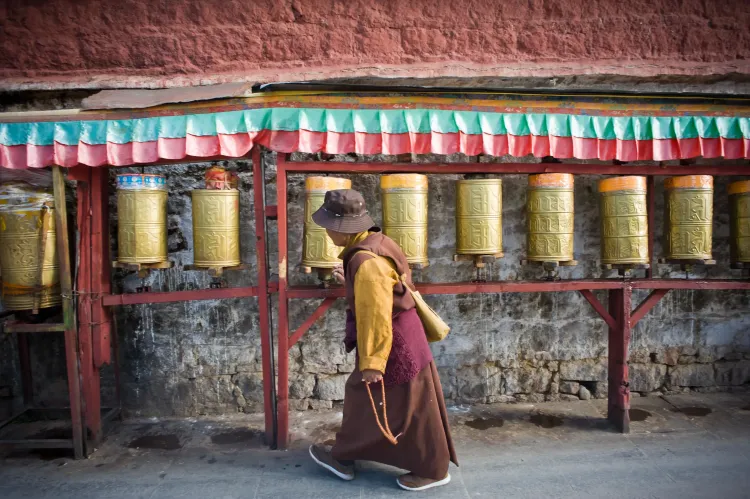
Moreover, the report reveals that all religious groups are mandated to register with state-controlled 'patriotic' religious associations, with communities that do not comply facing legal repercussions, criminalization, and increased surveillance, which includes the closure of places of worship. This policy effectively places monasteries, religious education, and spiritual authority under state oversight.
The Central Tibetan Administration remarked, 'Importantly, the Special Rapporteur denounces assimilation policies that promise equality only if minorities forsake their identity. Such practices contradict the principle that states must acknowledge the existence and identity of individuals belonging to a minority.'
Point of View
It is crucial to highlight the ongoing challenges faced by minority groups in the context of state policies. This report sheds light on the systematic erosion of Tibetan identity, raising concerns about human rights and cultural preservation. It is imperative for governments and organizations around the world to address these issues and advocate for the rights of all individuals, particularly those belonging to vulnerable communities.
NationPress
26 Sept 2026
Frequently Asked Questions
What does the UN report say about Tibetan policies?
The UN report indicates that Chinese state policies are undermining Tibetan civilization and threatening the survival of Tibetans as a unique ethnic group.
How do the boarding schools affect Tibetan children?
The boarding school system separates Tibetan children from their families and communities, promoting Mandarin and state ideology while erasing Tibetan language and identity.
What are the broader implications of these policies?
These policies contribute to the marginalization of minority communities, threatening their cultural, linguistic, and religious identities.