China's New Law Threatens Ethnic Minority Identities: A Deep Dive
Synopsis
Amid rising tensions, China has introduced laws that threaten the identities of ethnic minorities, particularly in Tibet. This shift marks a critical moment in Beijing's governance strategies. Discover how these changes could impact cultural heritage and identity.
Key Takeaways
China's new legislation threatens ethnic minority identities.
Policies aim to enforce a unified national identity.
Restrictions on language and culture are increasing.
The international community is raising alarms over potential cultural genocide.
Legal provisions extend China's ethnic policy influence internationally.
Beijing, March 15 (NationPress) China is systematically tightening its grip on minority autonomy regarding education, language, and religious practices through a mix of political initiatives and legal changes. By enshrining assimilation policies into legislation, Beijing is embarking on a new phase of governance that seeks not only to manage ethnic diversity but to fundamentally transform it, as highlighted in a recent report.
"In recent times, the Chinese government has escalated its efforts in Tibetan regions, aiming to redefine Tibetan identity through stringent controls on language, education, and culture. These actions are not mere isolated administrative measures; they are part of a comprehensive national strategy focused on what Beijing terms 'forging a robust sense of the Chinese national community,'" the report from the international publication The Diplomat elaborated.
Within this context, the report indicates that the Chinese Communist Party (CCP) aims to "fortify a cohesive national identity by undermining ethnic identities that could challenge the political narrative of the 'Chinese nation.'"
"These assimilation policies are increasingly being formalized into law, rather than remaining as mere administrative actions," it further noted.
Historically, Chinese authorities have maintained stringent political oversight over Tibet, particularly concerning Tibetan Buddhism and its institutions. However, a marked shift occurred following the ascension of Chinese President Xi Jinping.
"Under the guise of achieving the 'great rejuvenation of the Chinese nation,' Beijing has come to regard minority languages, including Tibetan, as potential threats to national cohesion. This policy alteration indicates a profound evolution in China's approach to ethnic governance," the report stated.
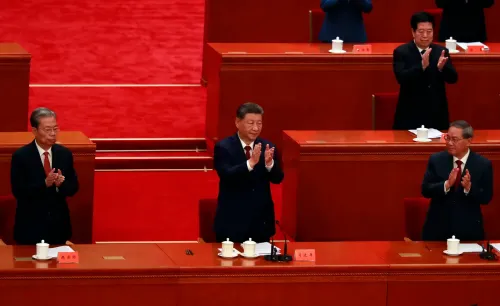
The report also highlighted the 'Ethnic Unity and Progress Promotion Law,' which was enacted during the National People's Congress annual session on March 12, further solidifying Beijing's assimilationist agenda toward ethnic minorities.
"According to a draft version, the legislation mandates that preschoolers start learning Mandarin and requires students to 'essentially master the national common language by the conclusion of compulsory education.' Concurrently, it dilutes the protections previously afforded to minority language rights under the Regional Ethnic Autonomy Law," it emphasized.
"This law introduces new provisions allowing authorities to seek legal action against individuals abroad accused of 'undermining ethnic unity.' These clauses extend China's ethnic policy influence beyond its borders, intertwining identity issues with national security concerns," it pointed out.
Referring to a 2026 report, The Diplomat noted that the United Nations Special Rapporteur on minority issues cautioned that Beijing's systematic restrictions on minority language education could lead to "linguistic erasure" and pose a significant threat to cultural heritage.
The UN report remarked that "policies aimed at eradicating a language from public life may verge on what international law defines as cultural genocide."
Point of View
It is crucial to recognize that these developments reflect a significant shift in China's governance approach. The legal codification of assimilation policies reveals an intention to suppress ethnic identities in favor of a singular national narrative, raising important questions about cultural preservation and human rights.
NationPress
14 Sept 2026
Frequently Asked Questions
What are the new laws affecting ethnic minorities in China?
The new laws codify assimilation policies that restrict minority autonomy in education, language, and religion, aiming to promote a unified national identity.
How do these laws impact Tibetan culture?
The laws threaten the preservation of Tibetan culture by emphasizing Mandarin language education and reducing protections for minority language rights.
What is the international response to these policies?
International organizations, including the UN, have raised concerns that these policies may lead to cultural genocide and linguistic erasure.
Why is the Chinese government enacting these laws now?
The Chinese government, under Xi Jinping, aims to strengthen national unity and sees minority languages as potential threats to this goal.
What can individuals do to support minority rights in China?
Raising awareness, supporting advocacy organizations, and engaging in discussions about cultural rights can help highlight the issues faced by ethnic minorities in China.