China's Ethnic Unity Law targets minorities: integrate or face consequences
Synopsis
China's new Ethnic Unity and Progress Promotion Law, active from 1 July 2025, goes far beyond a political slogan — it makes producing a single CCP-defined national identity a legally binding duty for schools, families, media, and security organs. With the UN already warning of cultural erasure and transnational repression, and over 100 alleged overseas police stations already documented, this law signals a sharp escalation in Beijing's decades-long assimilation drive.
Key Takeaways
China's Ethnic Unity and Progress Promotion Law came into force on 1 July 2025 , mandating assimilation of all 56 recognised ethnicities into a CCP-defined national identity.
The law requires parents to guide children to 'love' the Chinese Communist Party and directs school curricula to build party allegiance.
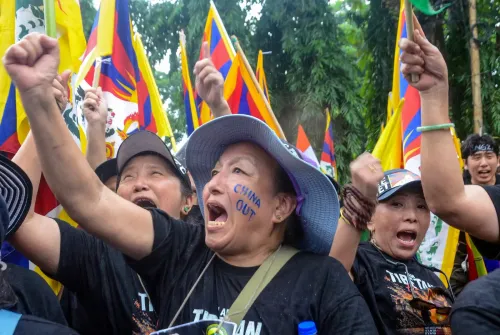
UN human rights experts warned in April 2025 that the law threatens linguistic, cultural, and religious autonomy of Tibetans , Uyghurs , and Mongols .
The law grants Beijing extraterritorial reach to act against individuals abroad who violate its provisions — raising fears of transnational repression.
A 2022 report by Safeguard Defenders documented more than 100 alleged Chinese overseas police stations used to monitor and harass citizens in exile.
Professor James Leibold of La Trobe University says the law makes minority identity 'acceptable only when subordinated to a party-defined Chinese identity.'
China's new Ethnic Unity and Progress Promotion Law, which came into force on 1 July 2025, is compelling the country's ethnic minorities to assimilate into a singular Chinese Communist Party (CCP)-defined national identity — and mandates that parents actively guide their children to 'love' the ruling party. The law applies across all 56 officially recognised ethnicities in China, including groups such as Tibetans, Uyghurs, and Mongols.
What the Law Mandates
The legislation bans any acts that 'undermine ethnic unity or create ethnic division' among China's recognised ethnic groups. The Han Chinese majority accounts for over 90 per cent of the country's 1.4 billion population. The law further directs that school curricula forge a 'strong sense of the community of the Chinese people,' embedding party allegiance into formal education from an early age.
Notably, the law is not merely symbolic. It assigns binding responsibilities across schools, families, media institutions, museums, government cadres, technology platforms, and security organs to produce what Beijing frames as a unified national identity.
UN Experts Raise Red Flags
In April 2025, United Nations human rights experts wrote formally to Beijing warning that the law 'could have serious implications for the linguistic, cultural, and religious autonomy of ethnic communities, including Tibetans, Uyghurs, and Mongols.' The experts also flagged the risk of 'transnational repression' — a concern rooted in the law's provisions granting Beijing the right to act against individuals outside its borders whom it deems to be in violation of its rules.
This comes amid longstanding allegations against China's Communist Party of operating overseas enforcement infrastructure. A 2022 report by human rights organisation Safeguard Defenders documented evidence of more than 100 so-called overseas police stations across the globe, reportedly used to monitor, harass, and in some cases forcibly repatriate Chinese citizens living abroad.
Scholars and Critics Sound the Alarm
James Leibold, Professor of Chinese Politics and Asian Studies at La Trobe University in Melbourne, said Beijing is no longer treating ethnic unity as a general political slogan or a matter of local propaganda. 'It is making the production of a single Chinese national identity a binding responsibility across schools, families, media, museums, cadres, budgets, technology platforms and security organs,' Leibold said. He added that the message is unambiguous: 'minority identity is acceptable only when it is subordinated to a party-defined Chinese identity.'
Critics argue the law will have a chilling effect on activists, academic researchers, and international discourse on ethnic minority issues in China and beyond.
A Decade-Long Policy Trajectory
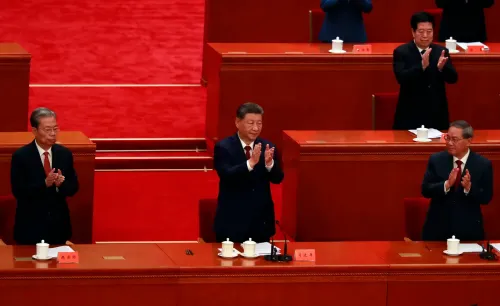
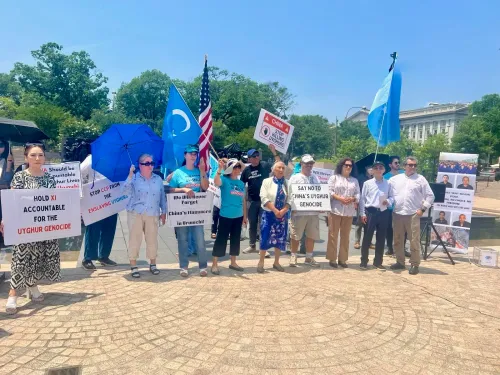
The new legislation is the formal codification of a direction Chinese leader Xi Jinping has pursued for years. Tibetans and Uyghurs in particular have faced sustained pressure to adopt an identity rooted in Chinese nationality and party allegiance. The Uyghur community has been at the centre of international scrutiny over alleged mass detentions in Xinjiang, which Beijing characterises as vocational training. The new law extends and institutionalises this assimilationist drive into a legally enforceable national framework.
Global Implications
The extraterritorial reach of the law is drawing particular concern among diaspora communities and international civil society. If enforced aggressively, it could expose researchers, journalists, and overseas Chinese nationals who discuss ethnic minority issues to legal jeopardy under Chinese law. With the UN already on record opposing the legislation before it even took effect, international pressure on Beijing is likely to intensify in the months ahead.
Point of View
Enforceable statute with extraterritorial reach. That shift from political campaign to legal obligation is consequential: it creates a framework under which overseas diaspora members, foreign researchers, and even international media could theoretically be targeted. The UN's pre-emptive warning before the law even took effect is unusually pointed. Yet international pressure has historically done little to alter Beijing's minority policies. The harder question is whether the law's domestic enforcement mechanisms will deepen cultural erasure in ways that are harder to document than detention camps — and therefore easier for the world to ignore.
NationPress
2 Oct 2026
Frequently Asked Questions
What is China's Ethnic Unity and Progress Promotion Law?
It is a new Chinese law that came into effect on 1 July 2025, requiring all 56 officially recognised ethnic groups to integrate into a singular CCP-defined national identity. It bans acts deemed to 'undermine ethnic unity or create ethnic division' and assigns binding responsibilities to schools, families, media, and security organs to enforce this identity.
Which ethnic groups are most affected by the new law?
Tibetans, Uyghurs, and Mongols have been specifically cited by UN human rights experts as communities facing the most serious implications. These groups have historically faced the greatest pressure under Xi Jinping's assimilationist policies.
Why are UN experts concerned about the law?
In April 2025, UN human rights experts warned that the law could seriously undermine the linguistic, cultural, and religious autonomy of ethnic minorities. They also flagged the risk of transnational repression, given the law's provisions allowing Beijing to act against people outside China's borders.
What is transnational repression and how does this law enable it?
Transnational repression refers to a government's efforts to silence or control dissidents and diaspora communities abroad. The new law gives Beijing legal grounds to target individuals outside China who it believes violate its ethnic unity rules. A 2022 Safeguard Defenders report found evidence of more than 100 alleged Chinese overseas police stations used to monitor and harass citizens living in exile.
What do independent experts say about the law's broader significance?
Professor James Leibold of La Trobe University in Melbourne says the law transforms ethnic unity from a political slogan into a legally binding national project. He argues that minority identity is now 'acceptable only when it is subordinated to a party-defined Chinese identity,' marking a structural escalation in Beijing's decades-long assimilation drive.