China's ethnic unity law targets Uyghurs: Global action urged
Synopsis
China's ethnic unity law is no longer a threat on paper — it is operational and already producing detentions, cultural erasure, and cross-border repression of Uyghurs. With Article 63 extending its reach to diaspora communities worldwide, rights groups warn that without urgent international pushback, forced assimilation and transnational intimidation will become structurally entrenched.
Key Takeaways
China's Law on Promoting Ethnic Unity and Progress came into effect on 1 July 2025 , mandating CCP loyalty in schools, homes, and religious institutions.
Just three days after the law took effect, two Uyghur sisters and their mother were reportedly detained in China for sending goods to a relative in Turkey .
Article 63 allows China to pursue individuals and organisations abroad for activities deemed to undermine 'ethnic unity,' raising fears of global transnational repression.
Prominent Uyghur activist Dolkun Isa was arrested and deported from Morocco while attending a religious freedom conference.
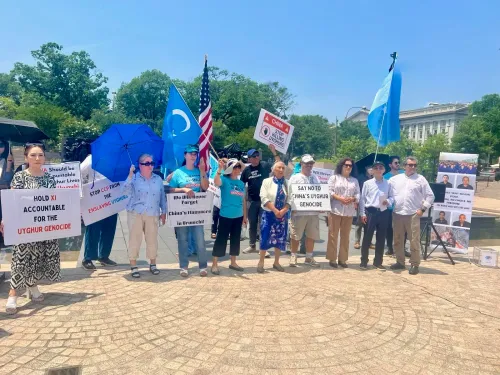
Over 50 Uyghur civil society organisations have condemned the law as a 'legislative instrument of forced assimilation' and called for its repeal.
Uyghur-language signs are reportedly being removed from city streets in China and replaced with Chinese script under the law's enforcement.
China's Law on Promoting Ethnic Unity and Progress, which came into effect on 1 July 2025, has already begun inflicting measurable harm on Uyghurs, Tibetans, Mongolians, and other ethnic minorities — and the international community must act urgently to challenge it, according to a detailed report published in The Diplomat. The legislation extends the reach of the Chinese Communist Party (CCP) into schools, homes, religious institutions, and diaspora communities abroad.
What the Law Mandates
Under the new law, all levels of government, schools, religious institutions, and families are legally responsible for instilling the CCP's definition of 'ethnic unity.' Parents are required to educate children to love the CCP, bilingual education is to be replaced with Mandarin-only instruction from preschool, and religious institutions must continue efforts toward the 'Sinicisation' of religion — meaning any faith is permitted only insofar as it is reshaped to serve the state.
The joint statement issued by over 50 Uyghur civil society organisations in July 2025 described the law not as a 'technical administrative measure' but as a 'legislative instrument of forced assimilation.' The statement noted that the legislation explicitly conflates the Chinese nation with the CCP and demands that ethnic groups abandon distinct identities in favour of loyalty to the Party and Han-defined cultural norms.
Impact Already Visible on the Ground
The consequences have been swift and documented. Videos circulating on Chinese social media platforms show Uyghur-language signs being removed from city streets and replaced with Chinese script. Affected communities reportedly cannot express grief over these changes — CCP cadres monitor public behaviour, and any negative comment risks being classified as resistance to 'ethnic unity,' potentially resulting in questioning or arrest.
Just three days after the law took effect, two Uyghur sisters and their mother in China were reportedly detained for sending merchandise to a sister living in Turkey. Authorities accused them of 'supporting terrorism' for assisting a family member's business — an indication of how broadly the law's provisions are being applied.
Transnational Repression Under Article 63
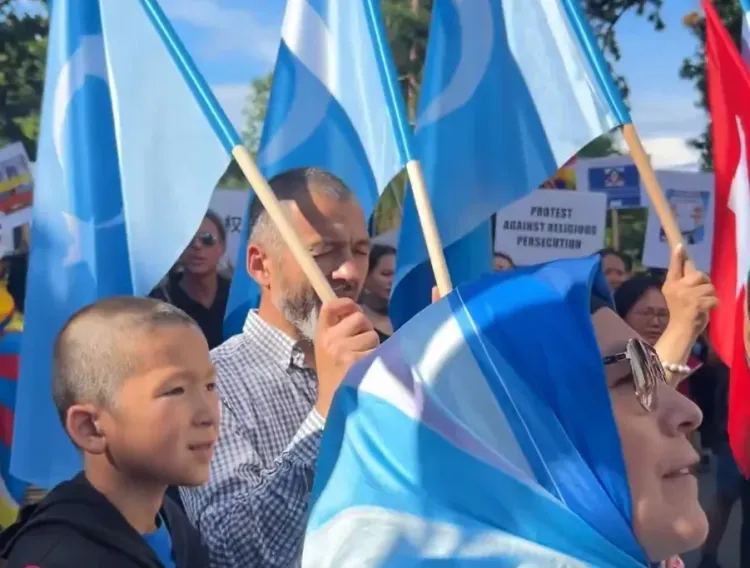
Article 63 of the law extends its jurisdiction beyond China's borders, allowing the state to pursue organisations and individuals abroad for activities deemed to undermine 'ethnic unity' or cause 'ethnic division.' Uyghurs and others with ties to East Turkestan living in Kazakhstan have reportedly described 'feeling the pressure' since the law's implementation.
In a high-profile case, prominent Uyghur activist Dolkun Isa was arrested and deported from Morocco while travelling to attend a religious freedom conference — a development critics say illustrates China's growing capacity to pressure third countries into restricting or intimidating Uyghur diaspora communities.
What Rights Groups and Civil Society Are Demanding
Omer Kanat, Executive Director of the Uyghur Human Rights Project, stated in The Diplomat: 'The damage caused by China's ethnic unity law is no longer hypothetical. Governments must respond with urgency before forced assimilation and transnational repression become even more deeply entrenched.'
The coalition of over 50 Uyghur civil society organisations has urged the international community to take 'meaningful action' to repeal the legislation. They argue that under the law's framework, Uyghur, Tibetan, Mongolian, and other non-Han identities are permitted to exist only insofar as they are absorbed into a single, CCP-defined Chinese national identity.
What Comes Next
With the law now fully operational and enforcement cases already emerging, rights organisations are calling on democratic governments and multilateral bodies to formally challenge the legislation — both through bilateral diplomacy and international legal mechanisms. The cases of detained family members and deported activists suggest that the window for preventive action may be narrowing rapidly.
Point of View
Extraterritorial, and enforceable against diaspora communities in third countries. The deportation of Dolkun Isa from Morocco signals that Beijing is testing how far its legal reach can extend, and finding few limits. What mainstream coverage underplays is Article 63's implications: it effectively exports Chinese domestic law into sovereign jurisdictions, creating a compliance pressure on host governments. Democratic governments that have not yet formally responded are implicitly normalising a framework that criminalises minority identity at a global scale.
NationPress
22 Sept 2026
Frequently Asked Questions
What is China's Law on Promoting Ethnic Unity and Progress?
It is a Chinese law that came into effect on 1 July 2025, requiring schools, families, religious institutions, and all levels of government to instil the CCP's definition of 'ethnic unity.' Rights groups describe it as a legislative instrument of forced assimilation targeting Uyghurs, Tibetans, Mongolians, and other non-Han minorities.
How does the law affect Uyghurs inside China?
The law mandates Mandarin-only education from preschool, requires the 'Sinicisation' of religion, and prohibits public dissent against CCP cultural policies. Within days of its enforcement, Uyghur-language signs were reportedly removed from streets, and at least three family members were detained for sending goods abroad.
What is Article 63 and why does it matter for diaspora communities?
Article 63 of the law allows China to pursue individuals and organisations living outside its borders for activities deemed to undermine 'ethnic unity' or cause 'ethnic division.' This gives Beijing a legal basis to pressure foreign governments to restrict or detain Uyghur diaspora members, as seen in the case of activist Dolkun Isa's deportation from Morocco.
Who is Dolkun Isa and what happened to him?
Dolkun Isa is a prominent Uyghur activist and Executive Director of the World Uyghur Congress. He was reportedly arrested and deported from Morocco while travelling to attend a religious freedom conference — a case rights groups cite as evidence of China's growing transnational repression under the new law.
What is the international community being asked to do?
Over 50 Uyghur civil society organisations and the Uyghur Human Rights Project have urged governments and multilateral bodies to take 'meaningful action' to challenge and repeal the law. They are calling for formal diplomatic responses and the use of international legal mechanisms before forced assimilation becomes further entrenched.