China's Ethnic Unity Law: Xi Jinping's political vision in legal form
Synopsis
China's new Ethnic Unity Law, in force since 1 July, is more than legislation — analysts say it is the legal architecture of Xi Jinping's push to dissolve distinct ethnic identities into a single CCP-defined national community. With over 50 Uyghur groups calling it forced assimilation and UN bodies being urged to intervene, the law has become a flashpoint in the global debate over minority rights in China.
Key Takeaways
China's Law on Promoting Ethnic Unity and Progress came into effect on 1 July 2025 , mandating state institutions, schools, and religious bodies to promote a unified national identity.
Analysts describe the law as a constitutional expression of Xi Jinping's political vision , prioritising national unity over ethnic autonomy.
The law gives Beijing powers to pursue foreign organisations or individuals deemed to undermine ethnic unity, raising extraterritorial concerns.
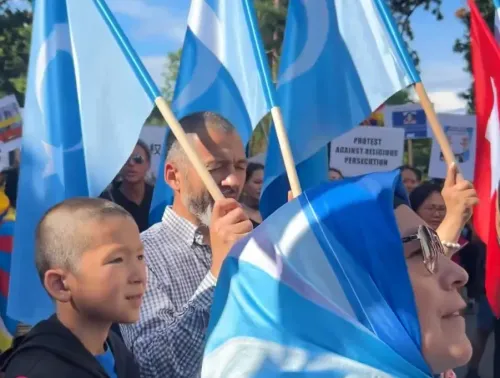
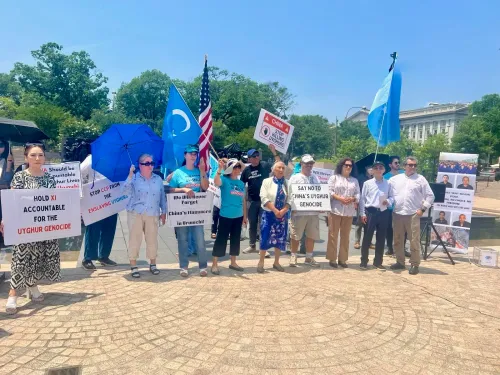
More than 50 Uyghur civil society organisations jointly condemned the law in July 2025, calling it a 'legislative instrument of forced assimilation.' The organisations allege the law displaces Uyghur, Tibetan, and Southern Mongolian languages from education and mandates the sinicisation of religion.
A coalition of groups has urged UN Special Rapporteurs and the Committee on the Elimination of Racial Discrimination (CERD) to monitor implementation and press for repeal.
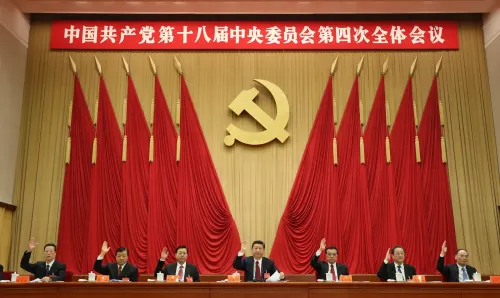
China's Law on Promoting Ethnic Unity and Progress, which came into effect on 1 July 2025, should be understood not as a conventional legislative instrument but as a constitutional expression of President Xi Jinping's political vision — one that places national unity above differentiated autonomy and seeks to forge a single political identity transcending ethnic distinctions, according to a detailed analysis by Mekong News.
What the Law Establishes
The legislation departs sharply from earlier Chinese frameworks that centred on ethnic autonomy and differentiated governance. Instead, it repeatedly emphasises the need to forge what Xi has called a 'strong sense of community for the Chinese nation' — a phrase that has become, according to the analysis, the organising principle of Beijing's contemporary ethnic policy over the past decade.
The law mandates that state institutions, schools, religious organisations, businesses, and social organisations actively cultivate identification with the Chinese nation, Chinese culture, the Chinese Communist Party (CCP), and socialism with Chinese characteristics. Government departments, neighbourhood committees, enterprises, religious institutions, and the armed forces are all assigned responsibility for promoting ethnic unity under the new framework.
Security and Extraterritorial Reach
Notably, the law includes provisions enabling China to pursue legal action against foreign organisations or individuals deemed to undermine ethnic unity. Whether Beijing will actively invoke these extraterritorial clauses remains to be seen, but analysts say the provisions signal that questions of ethnic identity have been formally linked to national security and ideological governance — a significant escalation in legal framing.
Uyghur and Minority Rights Groups Condemn the Law
In July 2025, more than 50 Uyghur civil society organisations jointly condemned the legislation, describing it not as a technical administrative measure but as a 'legislative instrument of forced assimilation.' Their joint statement argued that the law explicitly conflates the Chinese nation with the CCP and demands that ethnic groups abandon distinct identities in favour of loyalty to the Party and a Han-defined conception of the motherland.
The organisations stated that under this framework, Uyghur, Tibetan, Mongolian, and other non-Han identities are permitted to exist only insofar as they are absorbed into a single, CCP-defined Chinese nation. The statement further alleged that the law entrenches Mandarin as the language of education, displacing Uyghur, Tibetan, and Southern Mongolian languages from classrooms and public life, mandates the 'sinicisation' of religion, and instructs parents and teachers to raise children in loyalty to the CCP rather than to their own culture, religion, or language.
'These are not incidental effects; they are the law's stated purpose, and they build directly on policies that have already devastated our communities — mass internment, cultural and religious destruction, and the forced separation of children from their families,' the joint statement read.
International Community Called to Act
The coalition of organisations called on UN human rights experts and mechanisms — including Special Rapporteurs on freedom of religion or belief, minority issues, and the situation of human rights defenders, as well as the Committee on the Elimination of Racial Discrimination (CERD) — to formally monitor the law's implementation and extraterritorial application, and to press Beijing to repeal it.
Whether the law ultimately strengthens national cohesion or generates new tensions over identity, observers say, will become evident only over time — but the international scrutiny it has already drawn suggests the debate is far from settled.
Point of View
But this law makes that framing harder to sustain internationally. By legislating a single political identity and arming the state with extraterritorial reach against perceived dissenters, the CCP has moved from administrative assimilation to legal assimilation — a distinction that UN treaty bodies will find difficult to ignore. The law's passage also coincides with growing documentation of cultural erasure in Xinjiang and Tibet, meaning its international optics are already compromised before a single enforcement action is taken. The real question is not whether the law reflects Xi's vision — it plainly does — but whether the international community has the institutional will to hold Beijing accountable beyond strongly worded statements.
NationPress
16 Sept 2026
Frequently Asked Questions
What is China's Law on Promoting Ethnic Unity and Progress?
It is a Chinese law that came into effect on 1 July 2025, requiring state institutions, schools, religious organisations, and businesses to actively promote a unified national identity centred on the CCP and Chinese culture. Analysts describe it as a legal codification of President Xi Jinping's vision to forge a single political identity that transcends ethnic distinctions.
Why have Uyghur groups condemned the law?
More than 50 Uyghur civil society organisations issued a joint statement in July 2025 calling the law a 'legislative instrument of forced assimilation.' They argue it demands that ethnic groups abandon distinct identities, displaces minority languages from education, mandates the sinicisation of religion, and builds on existing policies they describe as mass internment and cultural destruction.
Does the law have extraterritorial reach?
Yes. The law includes provisions enabling China to take legal action against foreign organisations or individuals it considers to be undermining ethnic unity. Whether Beijing will actively invoke these clauses remains unclear, but their inclusion signals a formal link between ethnic identity and national security.
Which ethnic minorities are most affected by the law?
According to civil society groups, Uyghurs, Tibetans, and Mongolians are among the most affected communities. The joint statement specifically cited the displacement of Uyghur, Tibetan, and Southern Mongolian languages from classrooms and the subordination of their religious practices to Party ideology.
What international action has been called for?
The coalition of over 50 organisations has urged UN Special Rapporteurs on freedom of religion, minority issues, and human rights defenders, as well as the Committee on the Elimination of Racial Discrimination (CERD), to formally monitor the law's implementation and press Beijing to repeal it.