Uyghur groups urge global action against China's Ethnic Unity Law
Synopsis
More than 50 Uyghur civil society organisations have jointly condemned China's Ethnic Unity Law — in force since 1 July 2026 — as a legislative tool of forced assimilation. The most alarming clause: it asserts Chinese legal jurisdiction over diaspora activists living abroad, a move critics say directly challenges the sovereignty of host nations.
Key Takeaways
More than 50 Uyghur civil society organisations jointly condemned China's Ethnic Unity Law on 21 July 2026 .
The law entered into force on 1 July 2026 and, critics argue, mandates the 'sinicisation' of religion and displaces Uyghur , Tibetan , and Southern Mongolian languages from education.
A contested extraterritorial clause could hold individuals outside mainland China legally responsible under Chinese law for 'undermining ethnic unity.' The organisations have called on the UN , including CERD and Special Rapporteurs, to monitor the law and press Beijing for repeal.
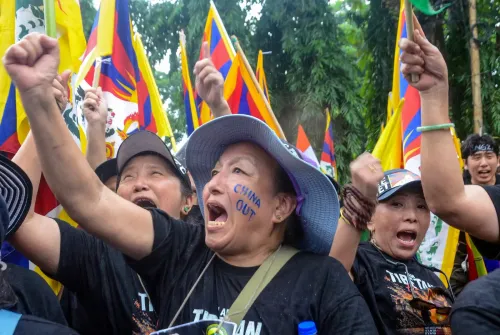
Governments worldwide have been urged to publicly condemn the law and adopt safeguards for Uyghur , Tibetan , and Mongolian diaspora communities.
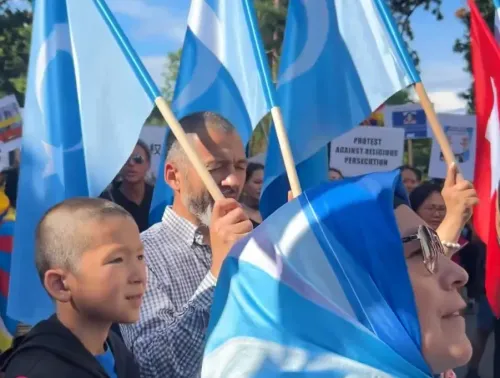
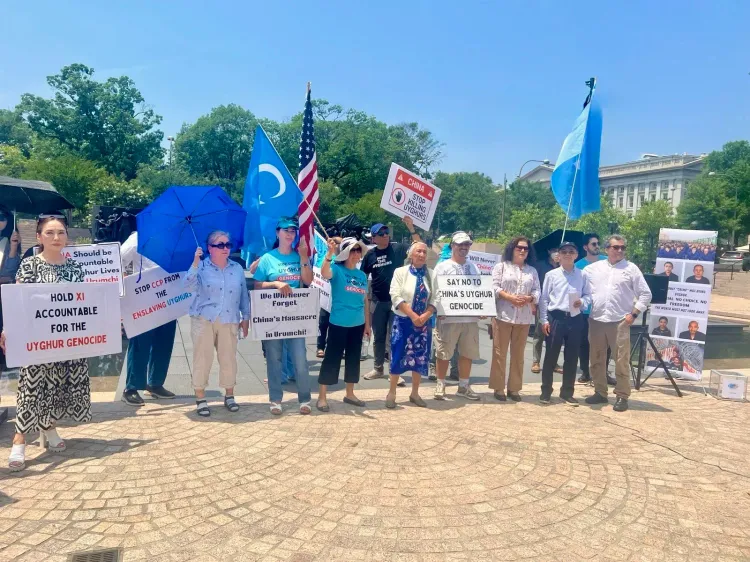
More than 50 Uyghur civil society organisations on Tuesday, 21 July 2026, issued a joint condemnation of China's Law on the Promotion of Ethnic Unity and Progress — commonly referred to as the Ethnic Unity Law — calling on governments, the United Nations, and international institutions to press Beijing to repeal the legislation, which entered into force on 1 July 2026.
What the Law Does
According to the joint statement, the Ethnic Unity Law is not a routine administrative measure but, in the signatories' characterisation, a 'legislative instrument of forced assimilation.' The law explicitly conflates the Chinese nation with the Chinese Communist Party (CCP) and, critics argue, demands that ethnic minorities abandon distinct identities in favour of loyalty to the Party, the Han-defined 'motherland,' and 'Socialism with Chinese Characteristics.'
Under this framework, the organisations said, the Uyghur, Tibetan, Mongolian, and other non-Han identities are permitted to exist only insofar as they are absorbed into a single, CCP-defined Chinese nation.
Key Provisions Under Scrutiny
The joint statement highlighted several provisions that the organisations describe as particularly alarming. The law entrenches Mandarin as the exclusive language of education, displacing Uyghur, Tibetan, and Southern Mongolian languages from classrooms and public life. It also mandates the 'sinicisation' of religion, subordinating faith to Party ideology, and instructs parents and teachers to raise children in loyalty to the CCP rather than to their own culture, religion, or language.
'These are not incidental effects; they are the law's stated purpose, and they build directly on policies that have already devastated our communities — mass internment, cultural and religious destruction, and the forced separation of children from their families,' the statement read.
Extraterritorial Reach Raises Sovereignty Concerns
Among the most contested provisions are clauses stipulating that individuals and organisations outside mainland China who 'undermine ethnic unity and progress' could be held legally responsible under Chinese law. The organisations described this as a direct assertion of extraterritorial jurisdiction over lawful speech and activity conducted in other countries.
'Any state that allows this provision to stand unanswered accepts, in effect, that Beijing's jurisdiction extends into its own territory, over its own residents and citizens. That is a direct challenge to state sovereignty and to the rule of law itself,' the signatories stressed. Critics argue this provision formalises, in statute, a policy of transnational repression targeting Uyghurs, Tibetans, Mongolians, and Chinese dissidents in exile.
What the Organisations Are Demanding
The coalition urged UN human rights experts and mechanisms — including the Special Rapporteurs on freedom of religion or belief, the situation of human rights defenders, and minority issues, as well as the Committee on the Elimination of Racial Discrimination (CERD) — to formally monitor the law's implementation and extraterritorial application, and to press Beijing for its repeal.
They further called on governments worldwide to publicly condemn the law, raise it in bilateral and multilateral engagements with Beijing, and adopt concrete safeguards to protect Uyghur, Tibetan, and Mongolian diaspora communities residing within their jurisdictions from the law's extraterritorial reach.
The statement represents one of the broadest coordinated responses from diaspora civil society since the law's passage, and is likely to intensify pressure on Western governments ahead of upcoming UN Human Rights Council sessions.
Frequently Asked Questions
What is China's Ethnic Unity Law?
China's Law on the Promotion of Ethnic Unity and Progress, known as the Ethnic Unity Law, entered into force on 1 July 2026. Critics, including more than 50 Uyghur civil society organisations, describe it as a legislative instrument of forced assimilation that mandates Mandarin-only education, the 'sinicisation' of religion, and loyalty to the CCP over ethnic cultural identities.
Why are Uyghur groups condemning the Ethnic Unity Law?
The organisations argue the law builds on existing policies of mass internment, cultural destruction, and family separation, and now codifies those practices in statute. They also warn that its extraterritorial clause threatens diaspora activists living outside China with legal liability under Chinese law for speech that is entirely lawful in their countries of residence.
What does the extraterritorial clause in the law mean for diaspora communities?
The clause stipulates that individuals and organisations outside mainland China who 'undermine ethnic unity and progress' can be held legally responsible under Chinese law. The signatory organisations argue this formalises transnational repression and constitutes a direct challenge to the sovereignty of host nations.
What action are the organisations calling for?
The coalition is urging UN human rights mechanisms — including CERD and Special Rapporteurs on religion, minority issues, and human rights defenders — to monitor the law and press Beijing for its repeal. They are also calling on governments worldwide to publicly condemn the law and adopt concrete safeguards for Uyghur, Tibetan, and Mongolian diaspora communities.
Which ethnic groups are affected by the Ethnic Unity Law?
The law primarily affects non-Han ethnic minorities in China, including Uyghurs, Tibetans, and Mongolians. The joint statement notes that under the law's framework, these identities are permitted to exist only insofar as they are absorbed into a single, CCP-defined Chinese national identity.