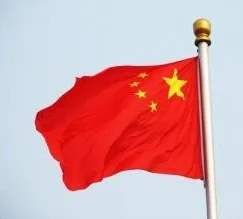
14 US lawmakers urge Rubio to condemn China's Ethnic Unity Law targeting Tibetans, Uyghurs
Synopsis
A bipartisan bloc of 14 US House members moved to put Secretary Rubio on the spot over China’s Ethnic Unity Law — effective 1 July 2026 — warning that its extraterritorial clauses give Beijing a legal pretext to target Tibetans, Uyghurs, and democracy advocates living inside the United States itself. The ask is unusually specific: public condemnation, direct diplomatic engagement, and coordinated multilateral pressure, all before the law’s ink dried.
Key Takeaways
14 bipartisan US House members wrote to Secretary of State Marco Rubio on 1 July 2026 urging condemnation of China’s new Ethnic Unity Law .
The law, adopted by China’s National People’s Congress on 12 March , came into force on 1 July 2026 .
Lawmakers say it codifies forced assimilation of Tibetans , Uyghurs , Southern Mongolians , and other non-Han minorities.
Articles 10 and 63 are flagged as giving Beijing a claimed legal basis to target minority communities living outside China , including in the United States .
The letter calls for coordination through the UN Human Rights Council and stronger enforcement of the Uyghur Forced Labor Prevention Act .
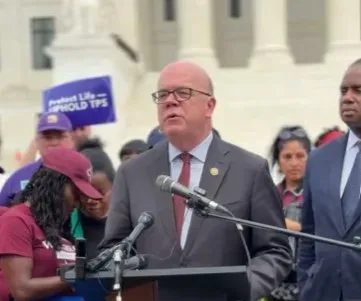
The appeal was led by Jim McGovern , Chris Smith , and Ro Khanna , with 11 additional signatories.
A bipartisan group of 14 members of the US House of Representatives has called on Secretary of State Marco Rubio to publicly denounce China's new Ethnic Unity Law, describing it as an instrument of “forced assimilation, ideological control, and transnational repression” directed at Tibetans, Uyghurs, Southern Mongolians, and other ethnic minority communities. The appeal was submitted on 1 July 2026, the day the law came into force.
Who Led the Appeal
The letter was spearheaded by Congressman Jim McGovern, Congressman Chris Smith, and Indian-American Congressman Ro Khanna, along with 11 other House members spanning both parties. The full list of signatories includes Representatives Michael T. McCaul, Yassamin Ansari, Jim Costa, Veronica Escobar, Jonathan L. Jackson, Eleanor Holmes Norton, Johnny Olszewski Jr., Ilhan Omar, Suhas Subramanyam, Thomas R. Suozzi, and James R. Walkinshaw.
What the Lawmakers Argue
“Far from promoting genuine equality among ethnic groups, this law codifies and expands the Chinese Communist Party’s majoritarian campaign of forced assimilation against Tibetans, Uyghurs, Southern Mongolians, and other non-Han Chinese communities,” the lawmakers wrote in their letter to Rubio.
According to the letter, China’s Law on Promoting Ethnic Unity and Progress, adopted by the National People’s Congress on 12 March, contradicts China’s own constitutional guarantees of regional ethnic autonomy. The lawmakers argue the legislation extends assimilation policies previously implemented in Tibet and Xinjiang across the entire country, subordinating minority languages, cultures, religions, and identities to a Han Chinese-dominated national identity.
Concerns Over Extraterritorial Reach
A significant portion of the letter focuses on the law’s extraterritorial provisions. The lawmakers flagged Articles 10 and 63 as potentially providing Chinese authorities with a claimed legal basis to target Tibetans, Uyghurs, Southern Mongolians, Hong Kongers, democracy advocates, and others living outside China — including on US soil.
“This language gives PRC authorities a claimed legal basis to target Tibetans, Uyghurs, Southern Mongolians, Hong Kongers, democracy advocates, and others living outside the PRC, including in the United States,” the letter stated, framing the provisions as part of “the PRC government’s broader pattern of transnational repression.”
What the Lawmakers Are Demanding
The bipartisan group urged the State Department to publicly condemn the law and raise the issue directly with Chinese officials. They also called for coordination with like-minded governments through bilateral dialogues, the UN Human Rights Council, and other international mechanisms.
Additionally, the lawmakers pressed the State Department to prioritise protection of minority-language education, religious freedom, and cultural preservation; to strengthen efforts countering Chinese transnational repression; and to reinforce enforcement of the Uyghur Forced Labor Prevention Act while encouraging allied nations to adopt comparable measures. This comes amid growing international scrutiny of Beijing’s policies toward ethnic minorities, with several Western governments having already imposed targeted sanctions over conditions in Xinjiang.
Point of View
But the substance is harder to dismiss. The extraterritorial provisions are the genuinely alarming element: if Articles 10 and 63 are interpreted as Beijing’s advocates suggest, they represent a formal legal architecture for reaching into diaspora communities in democratic countries, not merely a rhetorical posture. What the letter does not address is the gap between condemnation and consequence — the US has sanctioned Chinese officials over Xinjiang before, with limited behavioural change from Beijing. Whether Rubio, who has taken a hawkish line on China, acts on this or files it as a bipartisan courtesy will signal how seriously the current administration treats minority-rights pressure as a live diplomatic lever rather than a messaging exercise.
NationPress
29 Sept 2026
Frequently Asked Questions
What is China’s Ethnic Unity Law?
China’s Law on Promoting Ethnic Unity and Progress was adopted by the National People’s Congress on 12 March and came into force on 1 July 2026. US lawmakers argue it codifies forced assimilation of Tibetans, Uyghurs, Southern Mongolians, and other non-Han communities, contradicting China’s own constitutional guarantees of regional ethnic autonomy.
Why are US lawmakers concerned about the law’s extraterritorial provisions?
The lawmakers specifically flagged Articles 10 and 63, warning these clauses could give Chinese authorities a claimed legal basis to target Tibetans, Uyghurs, Southern Mongolians, Hong Kongers, and democracy advocates living outside China — including in the United States. They described this as part of Beijing’s broader pattern of transnational repression.
Who signed the letter to Secretary Rubio?
The letter was led by Congressmen Jim McGovern, Chris Smith, and Indian-American Congressman Ro Khanna, and co-signed by Representatives Michael T. McCaul, Yassamin Ansari, Jim Costa, Veronica Escobar, Jonathan L. Jackson, Eleanor Holmes Norton, Johnny Olszewski Jr., Ilhan Omar, Suhas Subramanyam, Thomas R. Suozzi, and James R. Walkinshaw — a total of 14 bipartisan House members.
What specific actions did the lawmakers request from the State Department?
The lawmakers asked Secretary Rubio to publicly condemn the law, raise it directly with Chinese officials, and coordinate with allied governments through bilateral channels, the UN Human Rights Council, and other international mechanisms. They also called for stronger enforcement of the Uyghur Forced Labor Prevention Act and protection of minority-language education, religious freedom, and cultural preservation.
How does this law relate to existing policies in Tibet and Xinjiang?
According to the letter, the Ethnic Unity Law extends assimilation policies that were previously applied in Tibet and Xinjiang to the rest of China, giving them a broader national legal framework. Critics argue it places minority languages, cultures, and religions beneath a Han Chinese-dominated national identity across all of China’s territory.