Tibetans in Japan protest China's Ethnic Unity Law outside Tokyo embassy

Synopsis
Tibetan communities from Tokyo to Zurich are mobilising against China's newly enacted Ethnic Unity and Progress Promotion Law — and the cost is already human. A Tibetan refugee, Lobga Rangzen, set himself ablaze outside the UN headquarters in New York on 2 July in protest, dying from his injuries. The law, critics say, is not about unity but about erasure.
Key Takeaways
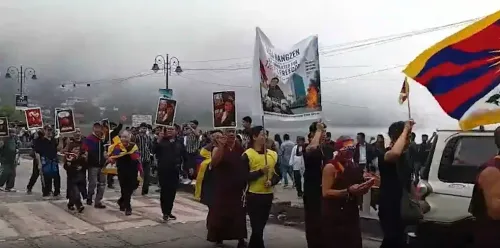
Tibetans in Japan protested outside the Chinese Embassy in Tokyo on 7 July against China's Ethnic Unity and Progress Promotion Law .
The law came into effect on 1 July and mandates promotion of Mandarin while penalising acts deemed to threaten national unity.
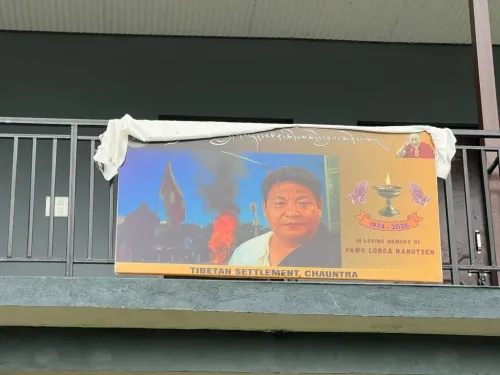
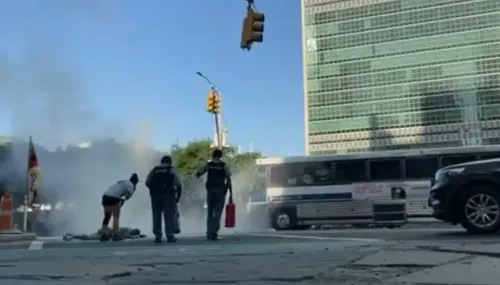
Lobga Rangzen, 42 , a Tibetan refugee, died after setting himself on fire outside the UN headquarters in New York on 2 July in protest against the law.
Over 400 people marched in Zurich the previous week from Werdmuhleplatz to the Chinese Consulate General .
The UN High Commissioner for Human Rights has reportedly called for the law's repeal, according to Dalai Lama representative Thinlay Chukki .
More than 157 Tibetans have self-immolated in Tibet over the years, according to statements made at the Zurich rally.
Tibetans residing in Japan staged a demonstration outside the Chinese Embassy in Tokyo on 7 July, condemning Beijing's newly enacted Ethnic Unity and Progress Promotion Law and demanding international action to safeguard Tibetan language, culture, and religious identity. The protest came days after the controversial law took effect on 1 July, drawing condemnation from Tibetan diaspora communities across multiple countries.
What the Law Does
China's Ethnic Unity and Progress Promotion Law, which came into force on 1 July, imposes penalties for acts deemed to threaten the 'unity of the Chinese nation' and mandates the comprehensive promotion of Standard Chinese (Mandarin). Critics argue the legislation will deepen assimilation policies in regions such as the Tibet Autonomous Region, accelerating the erosion of minority languages and cultural practices.
Voices from the Tokyo Rally
Kalden Obara, former representative of the Tibetan community in Japan, addressed the gathering and warned that the new legislation risks imposing severe restrictions on 'the Tibetan language, culture, religion, and our identity as Tibetans.' He said, 'If our culture and language disappear, it means the Tibetan nation disappears. That must never happen. China invaded Tibet and is trying to erase the Tibetan nation completely from the world. But we Tibetans will never give up.'
Participants also offered prayers in memory of Lobga Rangzen, 42, a Tibetan refugee who had reportedly fled to the United States approximately 20 years ago. According to reports, Rangzen held the Tibetan flag, recited prayers, and set himself on fire outside the United Nations headquarters in New York on 2 July in an apparent act of protest against the law. He was subsequently declared dead by doctors at a hospital. Kalden Obara said he believed the act was intended to draw the attention of the UN and international media to Tibet's situation.
Zurich March Draws Over 400 Protesters
The Tokyo protest followed a large demonstration in Switzerland the previous week, where over 400 participants marched from Werdmuhleplatz to the Chinese Consulate General in Zurich. The march was organised by the Tibetan Community of Switzerland and Liechtenstein, in partnership with the Tibetan Youth Association in Europe (TYAE), the Swiss Tibetan Friendship Association (GSTF), the World Uyghur Congress, the Swiss Tibetan Women's Association, and the Church of Almighty God.
The event opened with addresses by Thinlay Chukki, Representative of the Dalai Lama to Central and Eastern Europe, and Venerable Khenpo Tenzin Jangchup of Rikon Monastery. Representatives of the World Uyghur Congress and allied groups described the law as 'a policy that threatens the cultural, linguistic, and religious identities of Tibetans, Uyghurs, and other ethnic minorities.'
UN Human Rights Body Cited
Thinlay Chukki told the Zurich gathering that the United Nations High Commissioner for Human Rights had called for the repeal of the law, stating it was 'clear that this legislation is not intended to promote unity. Rather, it is designed to facilitate the complete erasure and forced assimilation of Tibetans, Uyghurs, and other so-called ethnic minorities.' She also expressed solidarity with the more than 157 Tibetans who have self-immolated in Tibet over the years, calling for the return of His Holiness the Dalai Lama and for freedom in Tibet.
Broader International Response
The coordinated protests across Tokyo and Zurich reflect a widening international pushback against the law, with diaspora communities and allied civil society organisations urging governments to reject the legislation and take concrete steps to protect the human rights of ethnic minorities in China. Whether these demonstrations translate into formal diplomatic pressure on Beijing remains to be seen.
Point of View
But the international response tells a different story — one of diaspora communities who see it as the legislative capstone of a decades-long assimilation drive. The self-immolation of Lobga Rangzen outside the UN is a stark signal that for some, conventional protest feels futile. What is missing from the mainstream coverage is the UN angle: if the High Commissioner has indeed called for repeal, that is a significant multilateral rebuke that deserves far more diplomatic scrutiny than it has received. Coordinated protests across Tokyo and Zurich suggest the Tibetan diaspora is attempting to internationalise this issue before it becomes normalised — but without sustained governmental pressure on Beijing, the law is unlikely to be walked back.
NationPress
6 Oct 2026
Frequently Asked Questions
What is China's Ethnic Unity and Progress Promotion Law?
China's Ethnic Unity and Progress Promotion Law is a legislation that came into effect on 1 July, imposing penalties for acts deemed to threaten the 'unity of the Chinese nation' and mandating the promotion of Standard Chinese (Mandarin). Critics, including Tibetan and Uyghur diaspora groups, argue the law accelerates forced assimilation and threatens minority languages, cultures, and religions.
Why are Tibetans protesting against the new Chinese law?
Tibetans argue the law will intensify restrictions on Tibetan language, culture, and religious practice in the Tibet Autonomous Region and beyond. Former Tibetan community representative in Japan, Kalden Obara, warned that if Tibetan language and culture disappear, 'it means the Tibetan nation disappears.'
Who was Lobga Rangzen and what happened to him?
Lobga Rangzen, 42, was a Tibetan refugee who had reportedly fled to the United States around 20 years ago. He set himself on fire outside the United Nations headquarters in New York on 2 July in an apparent act of protest against China's Ethnic Unity Law and was later declared dead by hospital doctors.
What happened at the Zurich protest against China's Ethnic Unity Law?
Over 400 people marched in Zurich from Werdmuhleplatz to the Chinese Consulate General, organised by the Tibetan Community of Switzerland and Liechtenstein alongside the World Uyghur Congress and other groups. Speakers cited the UN High Commissioner for Human Rights as having called for the law's repeal.
Has the United Nations responded to China's Ethnic Unity Law?
According to Thinlay Chukki, Representative of the Dalai Lama to Central and Eastern Europe, the United Nations High Commissioner for Human Rights has called for the repeal of the law, describing it as designed to facilitate 'the complete erasure and forced assimilation' of Tibetans, Uyghurs, and other ethnic minorities.