Tibet access crisis: How China's growing clout silences global response
Synopsis
Tibetan activist Lobga Rangzen died after setting himself on fire outside the UN headquarters in New York on 2 July — one day after China's new ethnic unity law took effect. The UN's response amounted to a single sentence of condolence. For Tibetan advocates, that silence is the story: China's growing clout within international institutions is quietly removing Tibet from the global agenda.
Key Takeaways
Tibet has become one of the world's most information-restricted regions, with foreign journalists, diplomats, and researchers facing near-total access bans, according to Freedom House .
Chinese authorities have deployed digital surveillance , facial-recognition technology , and online monitoring to block information flows out of Tibet.
Tibetan activist Lobga Rangzen died following self-immolation outside the UN headquarters in New York on 2 July 2025 , one day after Beijing's Promoting Ethnic Unity and Progress Law took effect.
UN spokesperson Stephane Dujarric called the act 'absolutely tragic' but made no reference to Tibet or its political context.
Tibet first appealed to the UN General Assembly in 1950 ; after China assumed its UN seat in 1971 , Tibet gradually vanished from the organisation's political agenda.
Analysts say China's expanding influence within international institutions is the primary driver of the muted global response to Tibetan rights concerns.
Access to Tibet has grown increasingly restricted as China tightens its grip on the region, with foreign journalists, diplomats, and independent researchers facing severe entry barriers while Tibetans inside risk reprisals for sharing any information — photos, videos, or messages — with the outside world, according to a report published by The Diplomat. The findings, citing the Central Tibetan Administration (Tibet's government-in-exile), underscore how a near-total information blackout is enabling what advocates describe as unchecked suppression.
Surveillance and Information Control
Chinese authorities have, according to the report, intensified a multi-layered surveillance apparatus across Tibet — deploying digital monitoring, facial-recognition technology, and online tracking systems to choke the flow of information beyond its borders. American think tank Freedom House has described Tibet as 'one of the world's least accessible places for independent journalism,' making it nearly impossible for reporters to verify events or document alleged abuses on the ground.
This information vacuum is not incidental, analysts argue — it is structural. Without independent verification, allegations of human rights violations remain difficult to substantiate internationally, which critics say suits Beijing's interests.
Lobga Rangzen's Self-Immolation at the UN
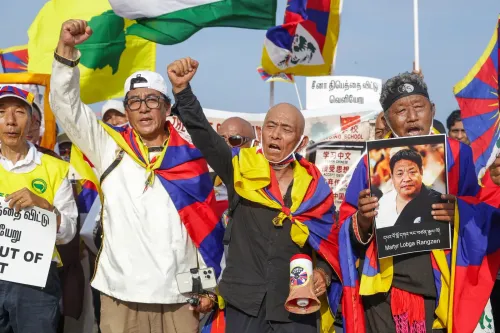
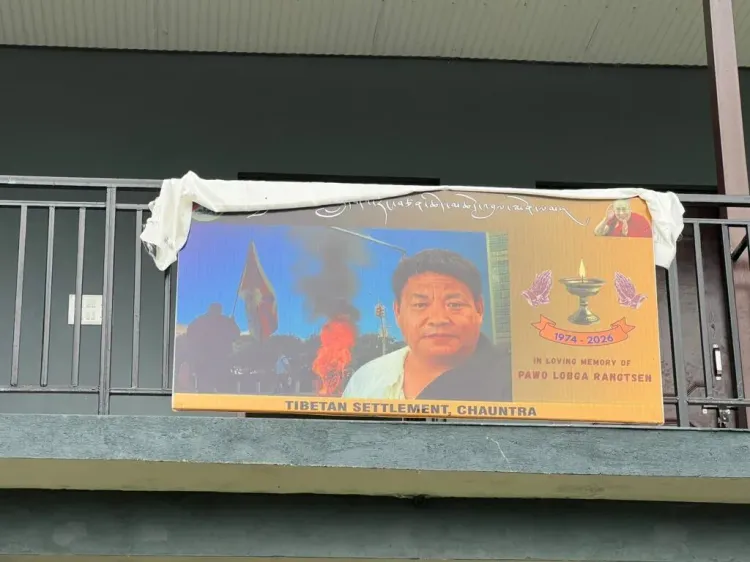
Against this backdrop, Tibetan activist Lobga Rangzen died following a self-immolation outside the United Nations headquarters in New York on 2 July 2025 — a day after Beijing's Promoting Ethnic Unity and Progress Law came into force. Dressed in traditional Tibetan attire, Rangzen planted a Tibetan flag on the pavement across from the UN entrance and set himself on fire, live-streaming the act on Facebook.
The Diplomat described the act as a deliberate, carefully chosen final statement: 'Lobga Rangzen chose perhaps the world's most recognisable symbol of international diplomacy as the place of his death... His final act was intended to draw attention to Tibet's decades-long struggle under Chinese rule.'
The timing — one day after the new Chinese law took effect — was widely read by Tibetan advocates as a direct political message, though Chinese authorities have not acknowledged any connection.
The United Nations' Limited Response
Despite the gravity and symbolism of the protest, the international response was notably restrained. UN Secretary-General spokesperson Stephane Dujarric, speaking at a press briefing the following day, called the self-immolation 'absolutely tragic' and offered condolences — but made no reference to Tibet or the political context behind Rangzen's act.
Beyond that initial acknowledgement, neither the United Nations nor most governments issued any meaningful public statement, according to the report. For many Tibetans, the silence compounded a long-standing sense of abandonment by the international community.
Tibet's Fading Place on the Global Agenda
The muted reaction is not without historical precedent. Tibet's government-in-exile first appealed to the UN General Assembly in 1950, following Chinese forces' entry into the region. While the issue briefly reached the Assembly floor, no immediate action followed. After the People's Republic of China assumed China's UN seat in 1971, Tibet steadily disappeared from the organisation's political agenda.
The Diplomat's report frames the current silence as part of a larger structural shift: 'For many Tibetan advocates and scholars, the United Nations' muted response to Rangzen's protest reflects a broader shift in which Tibet has steadily receded from the organisation's political agenda while China's influence within international institutions has grown.'
China's Expanding Institutional Influence
Observers note that Beijing's growing weight within multilateral bodies — financial, diplomatic, and procedural — has made it increasingly difficult for member states to raise Tibet-related concerns without risking bilateral consequences. Several Western governments that once raised Tibet publicly have grown more circumspect in recent years, a pattern critics describe as diplomatic self-censorship driven by economic interdependence with China.
With Rangzen's death drawing only a muted global reaction, Tibetan advocates warn that the window for meaningful international engagement on Tibet's status may be narrowing further.
Point of View
Tibet has been methodically deprioritised, and Beijing's growing financial and diplomatic leverage within multilateral bodies has accelerated that process. What is striking is that even the symbolic power of a man dying in front of the world's foremost diplomatic institution was insufficient to prompt a substantive statement. That gap between the act and the reaction tells you more about the current state of multilateral accountability than any formal report could.
NationPress
24 Oct 2026
Frequently Asked Questions
Why is access to Tibet so restricted?
China has imposed severe entry restrictions on foreign journalists, diplomats, and researchers, while deploying digital surveillance and facial-recognition technology to monitor and restrict information flows from inside Tibet. Freedom House has described Tibet as one of the world's least accessible places for independent journalism, making independent verification of events on the ground nearly impossible.
Who was Lobga Rangzen and why did he set himself on fire?
Lobga Rangzen was a Tibetan activist who died after self-immolation outside the United Nations headquarters in New York on 2 July 2025. He live-streamed the act on Facebook, dressed in traditional Tibetan clothing and holding a Tibetan flag, intending it as a protest against Tibet's decades-long struggle under Chinese rule — carried out one day after Beijing's Promoting Ethnic Unity and Progress Law came into force.
How did the United Nations respond to the self-immolation?
UN Secretary-General spokesperson Stephane Dujarric described the act as 'absolutely tragic' and offered condolences at a press briefing the following day, but made no mention of Tibet or the political message behind the protest. Beyond that, neither the UN nor most governments issued any further public statement.
Why has Tibet disappeared from the UN's political agenda?
Tibet's government-in-exile first appealed to the UN General Assembly in 1950 after Chinese forces entered the region, but no immediate action was taken. After the People's Republic of China assumed China's UN seat in 1971, Tibet gradually receded from the organisation's agenda. Analysts attribute this to China's growing influence within international institutions and the reluctance of member states to risk bilateral consequences by raising Tibet-related concerns.
What is China's Promoting Ethnic Unity and Progress Law?
It is a Chinese law that came into force on 1 July 2025, a day before Lobga Rangzen's self-immolation. Tibetan advocates have raised concerns that the law further restricts cultural and political expression in Tibet, though Beijing frames it as a measure to promote ethnic harmony within China.