China's Ethnic Unity Law draws rights criticism ahead of July 1 start
Synopsis
China's Ethnic Unity and Progress Law takes effect on 1 July, and rights advocates say it is not a unity measure — it is an assimilation mandate with legal teeth. From Mandarin-only schooling for Tibetan children to an extraterritorial clause that could penalise overseas activists, the law's reach extends far beyond China's borders.
Key Takeaways
China's Ethnic Unity and Progress Law comes into force on 1 July , codifying decades of assimilationist practices.
Kyinzom Dhongdue of Amnesty International Australia warned the law extends state control into family life, religion, education, media, and the internet.
Article 15 mandates Mandarin Chinese as the primary language of instruction, displacing Tibetan in schools.
Hundreds of thousands of children in Tibet attend state-run boarding schools, reportedly separated from families and prevented from speaking their native language.
Article 63 allows China to hold individuals and organisations outside its borders legally liable for actions deemed to 'undermine ethnic unity', raising transnational repression concerns.
China has ratified the International Convention on the Elimination of All Forms of Racial Discrimination and the Convention on the Rights of the Child , both of which protect cultural and linguistic rights.
China's Ethnic Unity and Progress Law, set to take effect on 1 July, has drawn sharp criticism from human rights advocates who argue it codifies decades of assimilationist policies and extends state control into virtually every dimension of daily life. Kyinzom Dhongdue, Strategy and Advocacy Manager at Amnesty International Australia, raised the alarm on Tuesday, warning that the law's reach goes well beyond its stated goals of national cohesion.
What the Law Mandates
According to Dhongdue, the law requires the fostering of what the Chinese Communist Party (CCP) calls a 'common consciousness of the Chinese nation' across all spheres — including family life, culture, religion, education, history, tourism, media, and the internet. Critics argue this framing gives legal weight to practices that have long been contested on human rights grounds.
Dhongdue stated that the right to enjoy one's culture, practise one's religion, and speak one's language are protected under international human rights instruments, including the International Convention on the Elimination of All Forms of Racial Discrimination and the Convention on the Rights of the Child — both of which China has officially ratified. She also noted that such protections exist under the International Covenant on Civil and Political Rights, which China has so far declined to ratify.
The Impact on Tibetans and Uyghurs
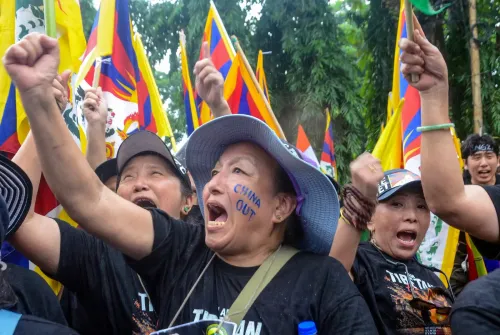
'Behind the language of 'unity' and 'progress', the draconian new law transforms decades of assimilationist practices into law, giving them a much wider reach and the appearance of legitimacy,' Dhongdue said. She added that for Tibetans and Uyghurs, the word 'unity' has too often translated into demands for allegiance and cultural assimilation, while 'stability' has been used to justify surveillance and repression, and 'development' has displaced communities from ancestral lands.
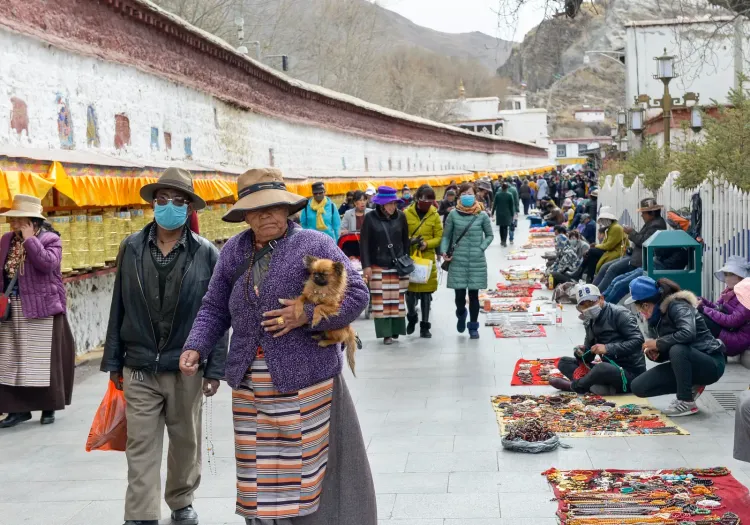
Dhongdue described the law's focus on children as its most disturbing element. Article 15 reinforces Mandarin Chinese as the primary language of instruction in schools and educational institutions, effectively sidelining Tibetan. She noted that hundreds of thousands of children in Tibet currently attend Chinese state-run boarding schools, spending most of the year separated from their families and, reportedly, prevented from speaking their native language.
'Stories tell of these children returning home during school holidays only to behave like strangers in front of their family members and having lost their ability to communicate with their grandparents,' Dhongdue said.
Transnational Repression Concerns
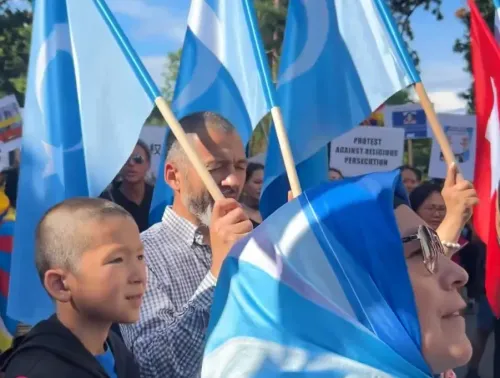
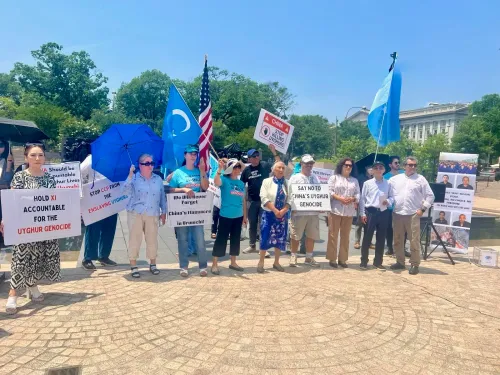
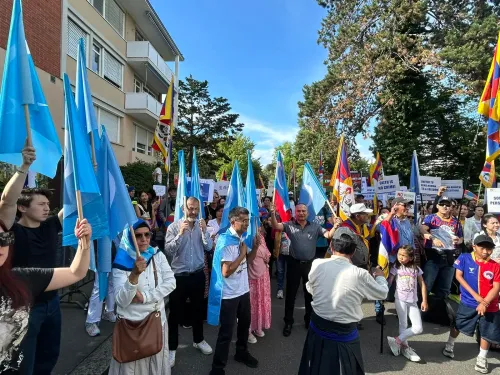
A provision that has drawn particular international concern is Article 63, which states that organisations and individuals outside China may be held legally liable for actions deemed to 'undermine ethnic unity'. Dhongdue warned this clause could significantly escalate risks for diaspora communities — including Tibetan, Uyghur, and Hong Kong activists living abroad — who have already reported surveillance, harassment, and intimidation, often through threats directed at family members still residing in Tibet and Xinjiang.
'For many Tibetans, Uyghurs and Hong Kong activists living overseas, this is a reality we already live with. Now the risks are set to increase significantly,' she said. Critics argue that Article 63 effectively provides legal cover for what rights groups describe as transnational repression.
Call for International Action
Dhongdue expressed hope that the international community would take concrete steps to address the situation facing Tibetans, Uyghurs, and others affected by the Chinese government's policies. The law's commencement on 1 July is being closely watched by rights organisations, foreign governments, and diaspora groups worldwide, with advocates calling for formal diplomatic responses before the legislation fully takes hold.
Point of View
Not just political pressure. The international community has repeatedly condemned China's treatment of Tibetans and Uyghurs without measurable consequence; this law tests whether that pattern holds. The burden now falls on governments that have ratified the same international conventions China has signed but appears to be systematically contravening.
NationPress
29 Sept 2026
Frequently Asked Questions
What is China's Ethnic Unity and Progress Law?
China's Ethnic Unity and Progress Law is legislation that comes into effect on 1 July and legally mandates the fostering of a 'common consciousness of the Chinese nation' across all areas of life, including family, religion, education, media, and the internet. Critics, including Amnesty International Australia, argue it codifies decades of assimilationist policies targeting ethnic minorities such as Tibetans and Uyghurs.
Why are rights groups criticising the new Chinese law?
Rights advocates argue the law, despite its language of 'unity' and 'progress', effectively suppresses distinct cultural identities, languages, and religious practices. They contend it contradicts international human rights conventions that China has itself ratified, including the International Convention on the Elimination of All Forms of Racial Discrimination and the Convention on the Rights of the Child.
What does Article 15 of the law say about language in schools?
Article 15 reinforces Mandarin Chinese as the primary language of instruction in schools and educational institutions, which critics say displaces Tibetan. Hundreds of thousands of Tibetan children reportedly attend Chinese state-run boarding schools where they are separated from their families and, according to advocates, prevented from speaking their native language.
What is Article 63 and why does it concern diaspora communities?
Article 63 allows China to hold organisations and individuals outside its borders legally liable for actions deemed to 'undermine ethnic unity'. Rights advocates say this provision gives legal cover to transnational repression, with Tibetan, Uyghur, and Hong Kong activists abroad already reporting surveillance, harassment, and threats directed at family members still living in China.
Who is Kyinzom Dhongdue and what has she said about the law?
Kyinzom Dhongdue is the Strategy and Advocacy Manager at Amnesty International Australia. She warned on Tuesday that the law transforms assimilationist practices into statute, extends state control into almost every aspect of life, and that Article 63 will significantly increase risks for diaspora communities already facing transnational repression.