Nadda hails PM Modi's Independence Day vision for Viksit Bharat
Synopsis
Union Health Minister J. P. Nadda lauded PM Modi's Independence Day address from the Red Fort, calling the singing of Vande Mataram from the ramparts a historic first and reaffirming the Viksit Bharat 2047 and Shakti ki Saptadhara vision for a self-reliant, youth-powered India.
Key Takeaways
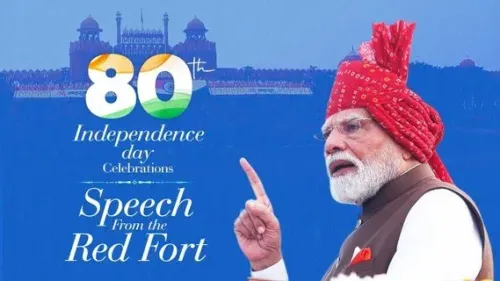
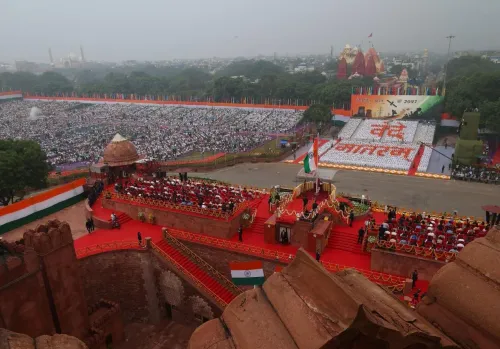
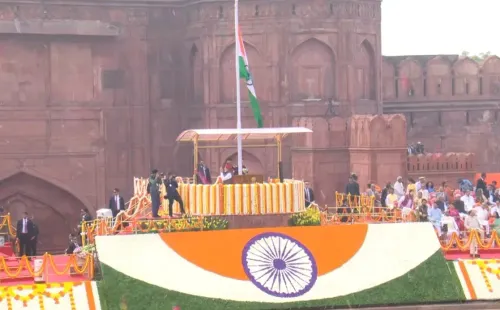
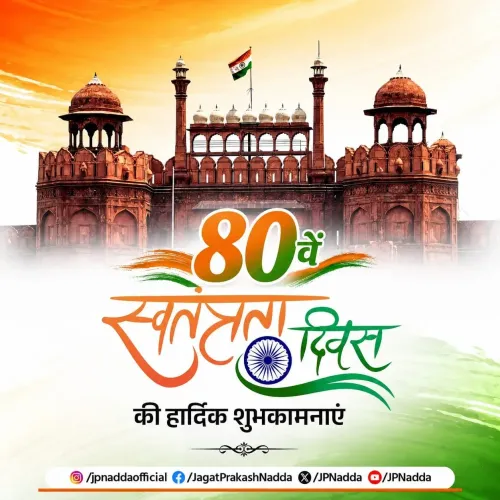
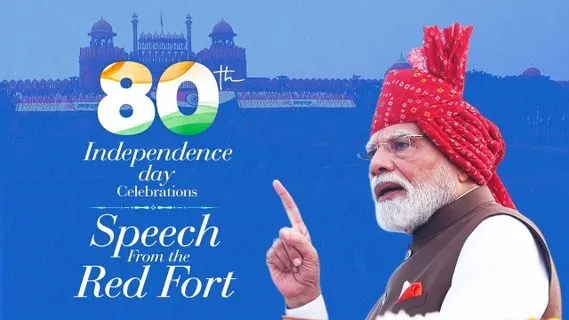
PM Narendra Modi addressed the nation from the Red Fort on 15 August 2026 , India's 80th Independence Day as counted by the government.
Union Health Minister J.
Nadda described the singing of Vande Mataram from the Red Fort ramparts as a first since independence and a historic cultural milestone.
PM Modi presented the Shakti ki Saptadhara framework to accelerate the Viksit Bharat 2047 vision of developed-nation status by India's centenary of independence.
Nadda cited 12 years of progress under the Modi government across defence production, electronics, digital infrastructure, internet adoption, digital transactions, and AI.
The Atmanirbhar Bharat self-reliance programme, launched in May 2020 , was cited as a foundation for the renewed push toward 2047 goals.
Concrete scheme rollouts or budget announcements under the Shakti ki Saptadhara framework remain to be detailed in the coming weeks.
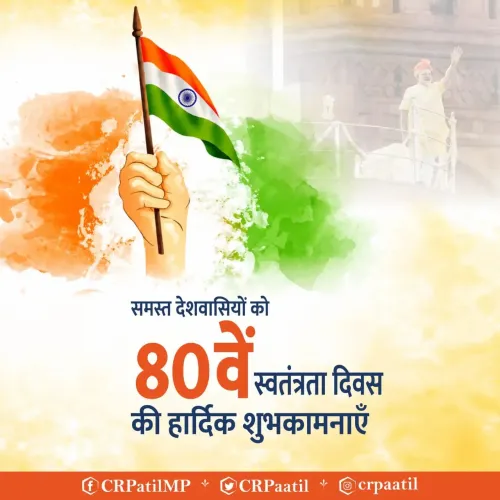
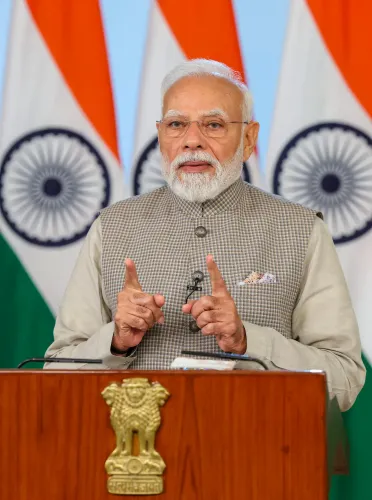
For the first time since independence, the walls of the Red Fort echoed with the national song Vande Mataram — and Union Health Minister J. P. Nadda called it a moment that will be 'written into the pages of history.' On Saturday, 15 August, as India marked its 80th Independence Day, Nadda took to X to amplify Prime Minister Narendra Modi's address to the nation, describing it as a defining articulation of the Viksit Bharat 2047 vision and a clarion call to India's youth.
The Red Fort address and the historic Vande Mataram moment
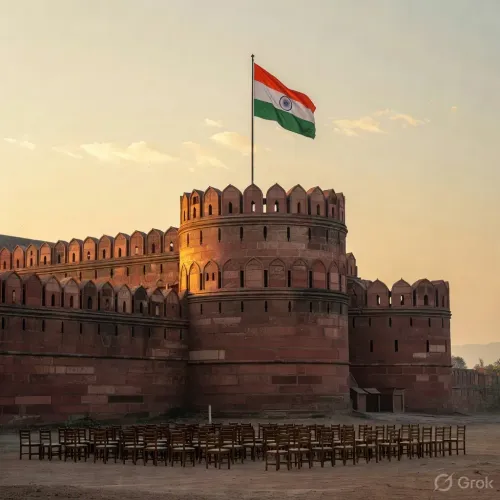
Nadda's post, written in Hindi, captured the emotional centrepiece of the day: the singing of Vande Mataram — India's national song — from the ramparts of the Red Fort for what he described as the first time since independence. 'It was a moment saturated with the consciousness of freedom and national pride,' Nadda wrote, framing it as a cultural milestone inseparable from the political one. The Red Fort has served as the stage for every Prime Minister's Independence Day address since 1947, but this particular gesture, according to Nadda, elevated the occasion beyond the ceremonial.
Viksit Bharat 2047 and the 'Shakti ki Saptadhara' framework
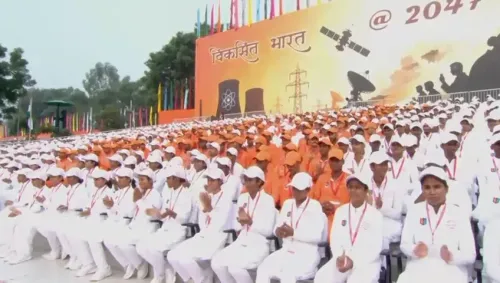
At the core of PM Modi's address, as Nadda recounted it, was a renewed push for Viksit Bharat 2047 — the government's long-horizon blueprint to make India a developed nation by the centenary of independence. Modi first publicly elaborated this vision during his 75th Independence Day address in 2022, and Saturday's speech appeared to give it fresh momentum through what the Prime Minister called the Shakti ki Saptadhara — a 'seven-streams-of-strength' framework aimed at channelling national energy toward self-reliance and growth. Nadda described it as providing 'a new direction and a new speed' to the Atmanirbhar Bharat resolve, the self-reliance programme first announced in May 2020.
Twelve years of progress: defence, digital, and AI in the frame
Nadda's post placed the day's address within a broader 12-year arc of the Modi government, citing acceleration across defence production, electronics manufacturing, digital infrastructure, internet adoption, digital transactions, and artificial intelligence. These are the sectors the government has consistently highlighted as evidence of structural transformation rather than cyclical growth. The framing positions 2026 not as a midpoint but as a launchpad — the argument being that the foundations are now firm enough to sustain a sharper climb toward 2047.
Youth as the central protagonist
Nadda closed his post with a forward-looking note squarely addressed to India's demographic dividend. He expressed confidence that the 'new resolutions, new energy and new speed of a young India' presented by PM Modi would only accelerate further. It is a recurring motif in BJP political communication — youth not as a constituency to be won but as an engine to be ignited. Whether the Shakti ki Saptadhara framework translates into concrete scheme announcements or budget allocations will be the real test of that promise in the weeks ahead.
Seventy-nine years after the tricolour first went up over the Red Fort, the government's message is that India is no longer building the runway — it is already in the air.
Point of View
One that can absorb multiple policy domains under a single brand. For Nadda specifically, amplifying the Prime Minister's address on a high-visibility national occasion consolidates his dual role as a cabinet minister and BJP national president. The real political test will be whether the framework produces specific, trackable youth-facing schemes before the next electoral cycle.
NationPress
15 Aug 2026
Frequently Asked Questions
What is Viksit Bharat 2047?
Viksit Bharat 2047 is the Indian government's long-term vision to make India a fully developed nation by 2047 , the centenary of independence. PM Modi first publicly detailed this goal during his 75th Independence Day address in 2022 .
Was Vande Mataram really sung at the Red Fort for the first time on Independence Day 2026?
Union Health Minister J. P. Nadda described the singing of Vande Mataram from the Red Fort ramparts on 15 August 2026 as a first since independence. This specific claim has not been independently verified from established public record.
What is the Shakti ki Saptadhara framework announced by PM Modi?
The Shakti ki Saptadhara , or 'seven streams of strength,' is a framework PM Modi presented in his 2026 Independence Day address to channel national energy toward the Viksit Bharat 2047 and Atmanirbhar Bharat goals. Detailed scheme rollouts under this framework are yet to be announced.
What did JP Nadda say about India's progress under the Modi government?
J. P. Nadda stated that over the past 12 years of the Modi government, India has made unprecedented progress in defence production, electronics manufacturing, digital infrastructure, internet adoption, digital transactions, and artificial intelligence.
What is Atmanirbhar Bharat?
Atmanirbhar Bharat, meaning 'self-reliant India,' is a programme announced by PM Narendra Modi in May 2020 to boost domestic manufacturing and reduce import dependence, with a focus on sectors such as defence, electronics, and pharmaceuticals.