Jal Shakti Minister Paatil hails JJM on Independence Day
Synopsis
On Independence Day 2026, Union Jal Shakti Minister C. R. Paatil invoked the seventh anniversary of Jal Jeevan Mission's launch to reframe the scheme as a movement for rural dignity, spotlighting the role of women, Jal Samitis, and Gram Panchayats in water asset management.
Key Takeaways
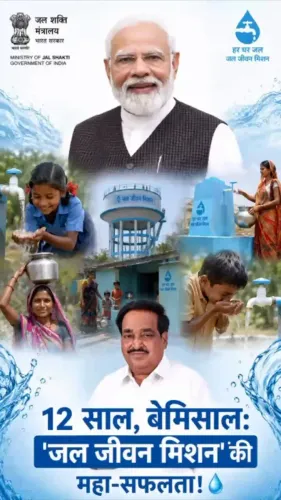
Jal Jeevan Mission was launched on 15 August 2019 by Prime Minister Narendra Modi with the goal of delivering tap water to all rural households.
Paatil described the scheme as a 'national campaign' to free rural women from daily water-fetching hardship, not just an infrastructure programme.
The JJM framework mandates that Gram Panchayats and village water committees manage and conserve water assets after infrastructure is built.
Women are required to make up at least 50 per cent of Village Water and Sanitation Committee membership under JJM guidelines.
Paatil called on citizens to renew pledges on water conservation, community ownership , and people's participation on Independence Day 2026.
Updated household coverage data from the Ministry of Jal Shakti is awaited to assess current scheme reach.
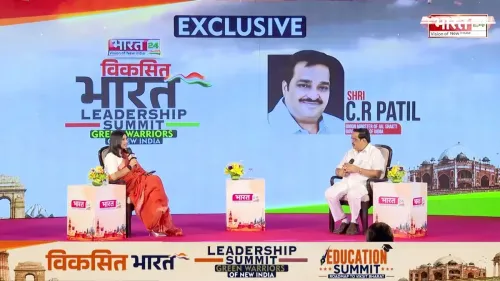
Seven years after Prime Minister Narendra Modi launched the Jal Jeevan Mission from the Red Fort ramparts on Independence Day 2019, Union Jal Shakti Minister C. R. Paatil marked the 2026 Independence Day by framing the scheme not merely as a pipe-and-tap infrastructure drive — but as a civilisational shift in how rural India lives.
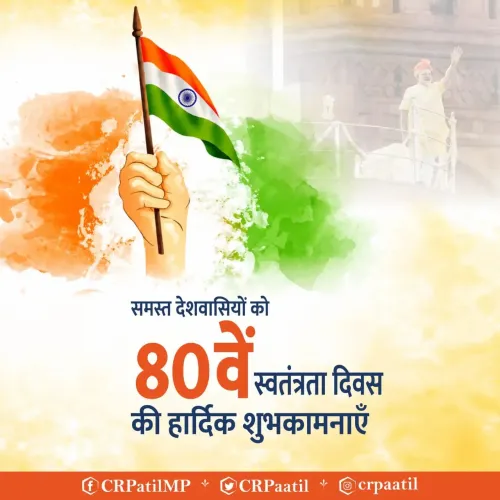
Posting in Hindi on 15 August 2026, Paatil wrote: 'Swatantrata ka amrit, vikas ka jal' — 'The nectar of freedom, the water of development' — opening with a line that deliberately braids the symbolism of Independence Day with the government's flagship rural water programme. Independence Day, he argued, is not only a celebration of political freedom but 'a pledge to ensure dignity, convenience and opportunity in every citizen's life.'
From a government scheme to a people's movement
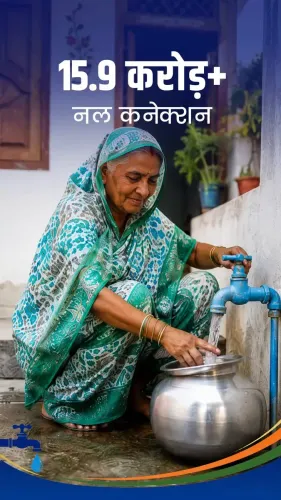
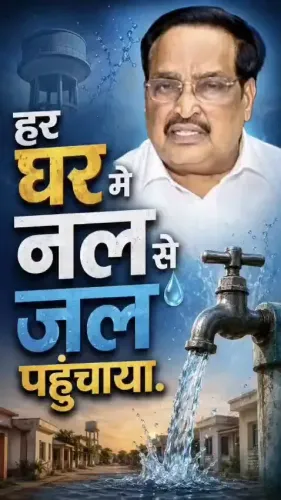
Paatil's post draws a sharp distinction between what Jal Jeevan Mission is on paper and what it has become on the ground. The scheme, he wrote, is not merely a programme to deliver tap water to homes — it is a 'national campaign to free crores of mothers and sisters from the daily hardship of fetching water, to give children better health, and to provide rural families a life of dignity.'
That framing matters politically. Since its launch on 15 August 2019, JJM has been the Ministry of Jal Shakti's centrepiece, built on a model that departs from earlier central water schemes by mandating community ownership. Gram Panchayats — village-level elected bodies — are not just beneficiaries; they are formally designated as the custodians and managers of water assets once infrastructure is in place.
Women and Jal Samitis at the centre of delivery
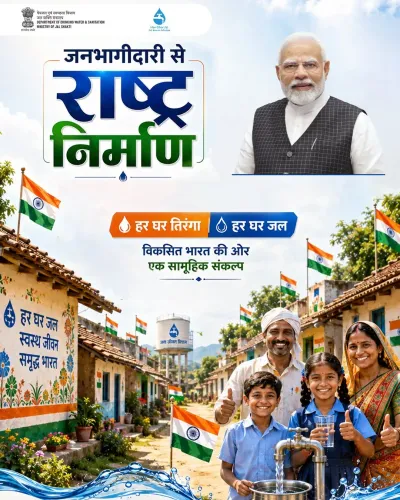
The minister specifically highlighted the role of jal samitis (water committees), women, and Gram Panchayats as 'actively playing a role in the conservation and management of water assets in every village.' This is not incidental — the JJM framework requires each village to form a Village Water and Sanitation Committee, with women comprising at least 50 per cent of its members, embedding gender participation directly into governance.
Successive central governments have prioritised rural water supply as part of broader public health and infrastructure goals, but JJM's emphasis on transparency mechanisms, quality monitoring, and local accountability represents a structural evolution from earlier schemes that were more top-down in design.
A 78th Independence Day pledge on water conservation
Paatil closed with a call to action: 'Let us, on this Independence Day, strengthen our resolve for water conservation, community ownership and people's participation, and play our role in building a Sujal Bharat' — a water-secure India. The closing slogan — 'Har Ghar Jal se sashakt gaon, sashakt gaon se Viksit Bharat' — translates as: 'Empowered villages through water in every home; a developed India through empowered villages.'
The post lands as the ministry awaits fresh household coverage data that will test how far the mission has travelled since its 2019 launch — and whether the community-ownership model has held in states where implementation has been uneven.
On a day when India counts its freedoms, the minister's message is pointed: access to clean water in your own home is not a welfare gesture. It is the infrastructure of dignity.
Point of View
The BJP frames rural water access as the fulfilment of the freedom movement's unfinished promise — a powerful electoral narrative ahead of state cycles. The emphasis on women's agency and community ownership is also a counter to criticism that large infrastructure schemes remain top-down; foregrounding Jal Samitis and Gram Panchayats lets the government claim grassroots legitimacy. The absence of specific coverage numbers — notable given the ministry's past habit of citing them — may reflect caution as updated post-2023 data remains unverified. The 'Sujal Bharat' framing slots neatly into the broader 'Viksit Bharat 2047' arc, signalling that JJM will remain central to the party's development story through the next election cycle.
NationPress
29 Sept 2026
Frequently Asked Questions
What is Jal Jeevan Mission and when was it launched?
Jal Jeevan Mission is a central government scheme launched on 15 August 2019 by Prime Minister Narendra Modi to provide functional household tap water connections to all rural homes in India.
What did C. R. Paatil say about Jal Jeevan Mission on Independence Day 2026?
Union Jal Shakti Minister C. R. Paatil called JJM a 'national campaign' to free rural women from daily water-fetching hardship and urged citizens to renew pledges on water conservation and community ownership.
What is the role of Gram Panchayats in Jal Jeevan Mission?
Gram Panchayats are designated custodians and managers of water assets under JJM. Village Water and Sanitation Committees, with at least 50 per cent women members, oversee local conservation and management.
What is 'Har Ghar Jal'?
'Har Ghar Jal' — meaning 'water in every home' — is the core objective and tagline of Jal Jeevan Mission, targeting universal tap water access for rural households across India.
Who is C. R. Paatil?
C. R. Paatil is the Union Minister of Jal Shakti in the Government of India, a senior BJP leader and former president of the BJP's Gujarat state unit.