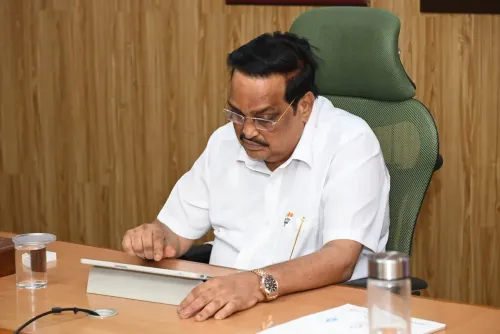
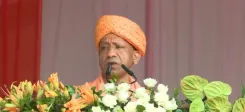
Jal Shakti Minister Paatil hails Swachh Bharat on Independence Day
Synopsis
On Independence Day 2026, Union Jal Shakti Minister C. R. Paatil highlighted the Swachh Bharat Mission's evolution from ODF to ODF Plus, crediting rural women, Swachhagrahis, and Gram Panchayats as the true architects of India's sanitation transformation.
Key Takeaways
Union Jal Shakti Minister C.
Paatil marked Independence Day, 15 August 2026 , with a post crediting the Swachh Bharat Mission as a historic national transformation.
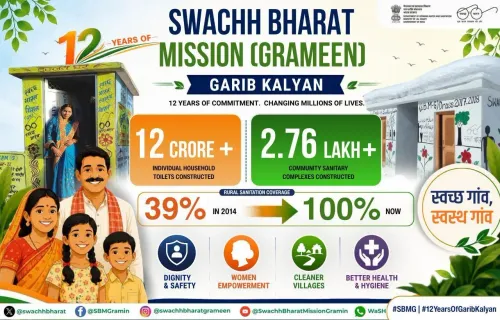
The Swachh Bharat Mission was launched on 2 October 2014 ; India declared all villages ODF (Open Defecation Free) by 2019 .
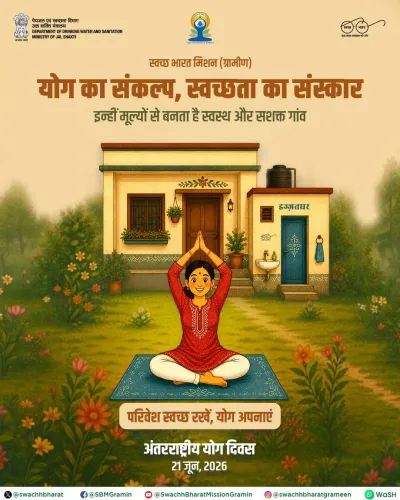
The mission's current phase — ODF Plus — focuses on solid and liquid waste management, plastic waste, and building clean villages.
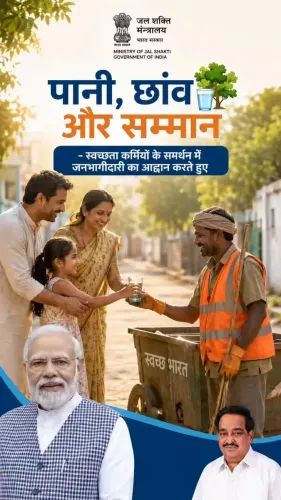
Paatil explicitly credited rural women, Swachhagrahis , and Gram Panchayats as the primary drivers of ground-level change.
The minister's call to action linked sanitation progress to the government's broader Viksit Bharat development framework targeting 2047.
On Independence Day, 15 August 2026, Union Jal Shakti Minister C. R. Paatil used the national occasion to spotlight a mission that has quietly reshaped daily life in rural India — the Swachh Bharat Mission — calling it a historic transformation driven not by government alone, but by hundreds of millions of ordinary citizens.
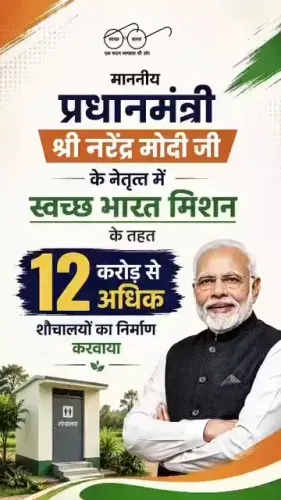
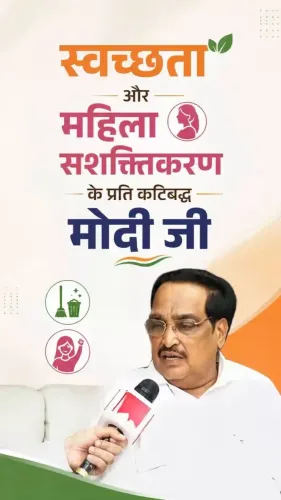
Posting in Hindi, Paatil wrote: 'Swachh Bharat Mission ne swachhata ko jan-jan ka sankalp banaakar desh mein ek aitihasik parivartan laaya hai' — 'the Swachh Bharat Mission has made cleanliness the resolve of every citizen, bringing a historic transformation to the country.' He credited the mission's momentum to Prime Minister Narendra Modi's leadership, while explicitly naming the real foot-soldiers: rural women, Swachhagrahis (sanitation volunteers), and Gram Panchayats.
From open defecation to ODF Plus — a decade of ground-level change
The Swachh Bharat Mission was launched on 2 October 2014, Gandhi Jayanti, with a single audacious target: make India open defecation free. By 2019, the government declared all villages across the country had achieved ODF (Open Defecation Free) status — a claim that drew both praise and scrutiny, but marked an undeniable shift in sanitation infrastructure and awareness at the village level.
The mission did not stop there. Its second phase — ODF Plus — moves beyond toilets to tackle solid and liquid waste management, plastic waste, and the broader ambition of building clean, visually transformed villages. Paatil's post signals that this harder, less headline-friendly phase of the mission is very much the ministry's active priority heading into the country's 80th year of independence.
Jan Bhagidari: the political philosophy behind the programme
The minister's framing is deliberate. By centering Jan Bhagidari — people's participation — over government machinery, Paatil echoes a recurring theme of the present administration: that durable behavioural change, particularly around sanitation, cannot be mandated from Delhi. It must be owned at the household and panchayat level.
The specific mention of 'mothers and sisters' (maaon-bahnon) reflects well-documented evidence that women bear the greatest burden of poor sanitation and are also the most effective agents of change in community hygiene behaviour. Swachhagrahis — trained local volunteers — have been the mission's last-mile connectors in thousands of villages across states.
Paatil closed with a call to action: 'Is Swatantrata Diwas par aaiye, hum sabhi swachh, swasth aur viksit Bharat ke nirmaan mein apni bhaagidaari ko aur mazboot karne ka sankalp lein' — 'On this Independence Day, let us all resolve to strengthen our participation in building a clean, healthy, and developed India.' The Viksit Bharat framing ties sanitation directly into the government's overarching 2047 development vision.
Point of View
A pattern consistent with how the Jal Shakti Ministry has managed sanitation messaging since 2021. The deliberate centering of Jan Bhagidari and women's participation over government infrastructure spending reflects the administration's broader pivot from input-based to outcome-and-behaviour-based governance storytelling. Tying sanitation to the Viksit Bharat 2047 framework signals that ODF Plus will remain a flagship metric in the ministry's medium-term political scorecard. Watch for state-level ODF Plus coverage data and waste management targets to become more prominent in ministry communications as the 2029 election cycle approaches.
NationPress
15 Aug 2026
Frequently Asked Questions
What is the Swachh Bharat Mission ODF Plus phase?
ODF Plus is the second phase of the Swachh Bharat Mission, which goes beyond building toilets to cover solid and liquid waste management, plastic waste management, and the development of clean and visually improved villages across rural India.
When was the Swachh Bharat Mission launched?
The Swachh Bharat Mission was launched on 2 October 2014 — Gandhi Jayanti — by Prime Minister Narendra Modi, with the primary goal of making India open defecation free.
What did C. R. Paatil say on Independence Day 2026?
Union Jal Shakti Minister C. R. Paatil posted on Independence Day 2026 praising the Swachh Bharat Mission as a historic transformation, crediting rural women, Swachhagrahis, and Gram Panchayats for driving ground-level change, and calling on all citizens to renew their commitment to a clean, healthy, and developed India.
Who are Swachhagrahis in the Swachh Bharat Mission?
Swachhagrahis are trained local sanitation volunteers who act as last-mile change agents in villages, mobilising communities around hygiene behaviour and supporting the implementation of Swachh Bharat Mission targets at the grassroots level.
What is Viksit Bharat and how does it relate to Swachh Bharat?
Viksit Bharat is the Indian government's overarching development vision targeting a fully developed India by 2047. The Swachh Bharat Mission's ODF Plus goals — clean villages, waste management, and community health — are positioned as foundational pillars of this broader national development framework.