Jal Shakti Minister Paatil hails 12 crore toilets under Swachh Bharat
Synopsis
Union Jal Shakti Minister C. R. Paatil on 19 June 2026 credited PM Narendra Modi's leadership for the construction of over 12 crore toilets under the Swachh Bharat Mission, underscoring the government's sustained push on sanitation as a public health priority.
Key Takeaways
Union Jal Shakti Minister C.
Paatil posted on X on 19 June 2026 highlighting the Swachh Bharat Mission's toilet construction drive.
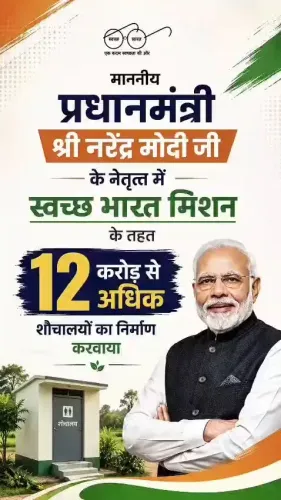
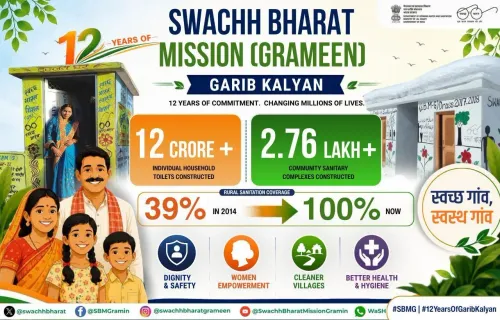
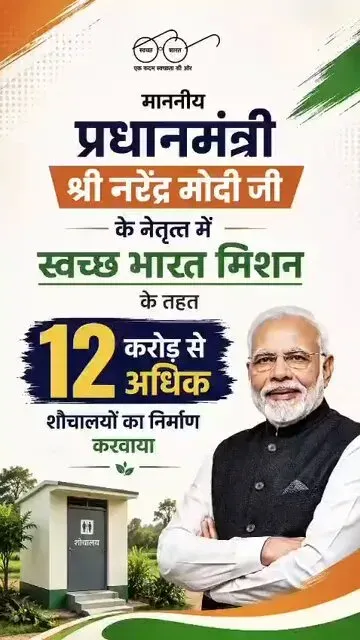
The post credits Prime Minister Narendra Modi's leadership for the construction of more than 12 crore toilets under the mission.
The Swachh Bharat Mission was launched on 2 October 2014 , subsuming the earlier Nirmal Bharat Abhiyan, with an initial ODF target of 2019 .
The Ministry of Jal Shakti now administers the mission, integrating water supply and sanitation under one ministry.
SBM Phase 2 extends the programme to ODF Plus villages, focusing on waste management and long-term sustainability.
Key stakeholders include rural households and urban local bodies across India.
Union Jal Shakti Minister C. R. Paatil on Friday, 19 June 2026, credited Prime Minister Narendra Modi's leadership for the construction of more than 12 crore toilets under the Swachh Bharat Mission, calling it a decisive step toward a cleaner India.
Context
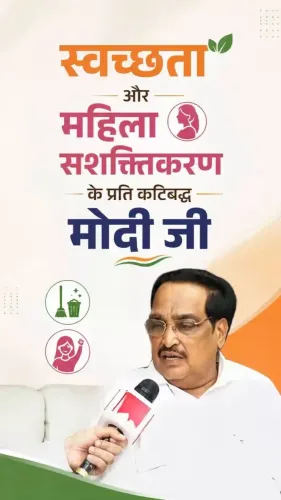
Posting on X, Minister Paatil wrote: 'स्वच्छ भारत – एक कदम स्वच्छता की ओर' ('Clean India — one step towards cleanliness'), stating that under the leadership of Prime Minister Modi, the Swachh Bharat Mission has facilitated the construction of more than 12 crore toilets across the country. The post was accompanied by a video, reinforcing the government's sustained communication drive around the mission's achievements.
The Swachh Bharat Mission was launched on 2 October 2014 by Prime Minister Narendra Modi with the twin goals of eliminating open defecation and improving solid waste management. It subsumed the earlier Nirmal Bharat Abhiyan and set an initial target of making India open defecation free by 2019.
Policy Backdrop
The Ministry of Jal Shakti now oversees the Swachh Bharat Mission, consolidating water supply and sanitation portfolios under a single administrative framework. This integration reflects the government's view that access to clean water and access to sanitation are inseparable public health priorities.
A second phase of the mission — SBM Phase 2 — extended the programme beyond toilet construction to focus on ODF Plus (Open Defecation Free Plus) villages, emphasising solid and liquid waste management, behaviour change, and long-term sustainability of sanitation gains. The mission has been consistently positioned as one of the flagship programmes of the Modi government since 2014.
Stakeholders and Impact
The primary beneficiaries of the Swachh Bharat Mission are rural households that previously lacked access to household sanitation facilities, as well as urban local bodies responsible for waste management and public hygiene infrastructure. Health researchers and public policy experts have linked increased toilet coverage to measurable improvements in child health outcomes, women's safety, and reduction of waterborne diseases in rural India.
Minister Paatil, a senior BJP leader and former Gujarat BJP state president, has been an active communicator of the Jal Shakti Ministry's agenda since assuming the portfolio, frequently highlighting sanitation and water conservation milestones on social media.
What's Next
Attention will now turn to the outcomes of SBM Phase 2, particularly the progress of ODF Plus village designations and sustainability indicators for existing toilet infrastructure. Any revised construction targets or additional funding allocations in the next Union Budget will be closely watched by sanitation policy stakeholders.
The government's continued emphasis on sanitation as a core development metric suggests that the Swachh Bharat Mission will remain a central pillar of India's public health and rural development narrative in the years ahead.
Point of View
Reinforcing the party's brand around the Swachh Bharat Mission ahead of any electoral or budgetary cycle. The Jal Shakti Ministry's dual mandate over water and sanitation gives Paatil a natural platform to amplify both infrastructure numbers and public health narratives simultaneously. The emphasis on 12 crore toilets signals that the government intends to keep SBM's quantitative achievements central to its development story, even as policy focus shifts to Phase 2's qualitative ODF Plus outcomes. This framing also positions sanitation spending as a non-negotiable budget priority in the near term.
NationPress
21 Sept 2026
Frequently Asked Questions
What is the Swachh Bharat Mission and when was it launched?
The Swachh Bharat Mission is India's national sanitation programme launched on 2 October 2014 by Prime Minister Narendra Modi, aimed at eliminating open defecation and improving waste management across rural and urban India.
How many toilets have been built under Swachh Bharat Mission?
According to Union Jal Shakti Minister C. R. Paatil's post on 19 June 2026, more than 12 crore toilets have been constructed under the Swachh Bharat Mission since its launch in 2014.
Which ministry oversees the Swachh Bharat Mission?
The Ministry of Jal Shakti oversees the Swachh Bharat Mission, consolidating water supply and sanitation under a single administrative framework at the central government level.
What is Swachh Bharat Mission Phase 2 or ODF Plus?
SBM Phase 2 extends the original mission beyond toilet construction to focus on ODF Plus villages, which involves solid and liquid waste management, behaviour change campaigns, and ensuring long-term sustainability of sanitation gains.
Who is C. R. Paatil and what is his role?
C. R. Paatil is India's Union Minister of Jal Shakti and a senior BJP leader who previously served as Gujarat BJP state president. His ministry is responsible for water resources, river development, and sanitation programmes including the Swachh Bharat Mission.