Jal Shakti Minister Paatil Champions Swachh Bharat's Rural Push
Synopsis
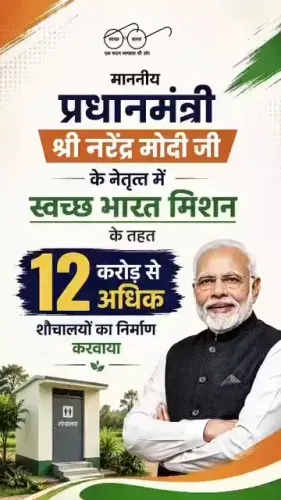
Union Jal Shakti Minister C. R. Paatil highlighted Swachh Bharat Mission Gramin's construction of over 10 crore rural toilets and called for a shift to sustained behavioural change, ODF permanence, and grey-water management in Phase 2.
Key Takeaways
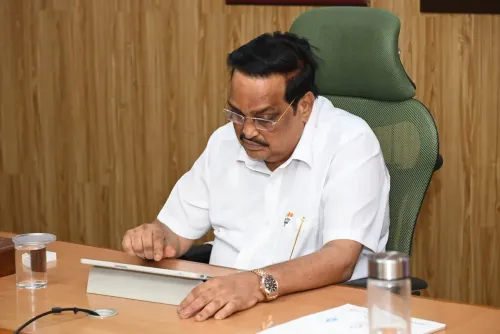
Union Jal Shakti Minister C.
Paatil posted on 26 September 2026 reaffirming commitment to Swachh Bharat Mission Gramin .
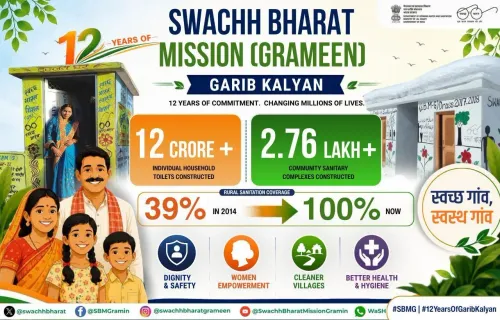
Over 10 crore (100 million) toilets have been built in rural India under SBM-G Phase 1, launched on 2 October 2014 .
Phase 2 (approved 2020) focuses on ODF sustainability , solid and liquid waste management, and grey-water management .
Paatil stressed that cleanliness must become a permanent part of citizens' behaviour , not just a systemic arrangement.
Gram panchayats and rural households are the primary accountability units under the ODF-Plus framework .
The Ministry of Jal Shakti combines water supply and sanitation under a single mandate, driving the mission forward.
Sanitation, declared Union Jal Shakti Minister C. R. Paatil on Saturday, 26 September 2026, is not a government programme — it is the very foundation of a healthy, dignified, and empowered India. In a pointed post on X, he framed Swachh Bharat Mission Gramin (SBM-G) not as bureaucratic housekeeping but as a civilisational compact between the state and every rural citizen.
Posting in Hindi, Paatil wrote: 'Swachhata keval ek abhiyan nahin, balki swasth, sammanjanak aur sashakt Bharat ke nirman ka aadhar hai' — ('Cleanliness is not merely a campaign, but the foundation for building a healthy, dignified, and empowered India'). He credited Prime Minister Narendra Modi's 'visionary leadership' for connecting sanitation to mass public participation (jan bhagidari) and bringing sweeping change to the country's villages.
From 10 Crore Toilets to the Next Frontier
The headline number Paatil cited is striking: more than 10 crore (100 million) toilets built in rural India under the Mission. That construction drive, which underpinned India's push to declare villages Open Defecation Free (ODF), was Phase 1 of the effort launched by Prime Minister Modi on 2 October 2014 — Gandhi Jayanti — with a deadline of 2019. But bricks and mortar, Paatil's post makes clear, were always the beginning. Phase 2 of SBM-G, approved in 2020 and now in full swing, has pivoted the mission's centre of gravity: from counting toilets to sustaining ODF status, and from individual household sanitation to community-level solid and liquid waste management and grey-water management. The grey-water piece — handling wastewater from kitchens and bathing — addresses a pollution source that survived Phase 1 largely untouched.Behaviour, Not Just Infrastructure
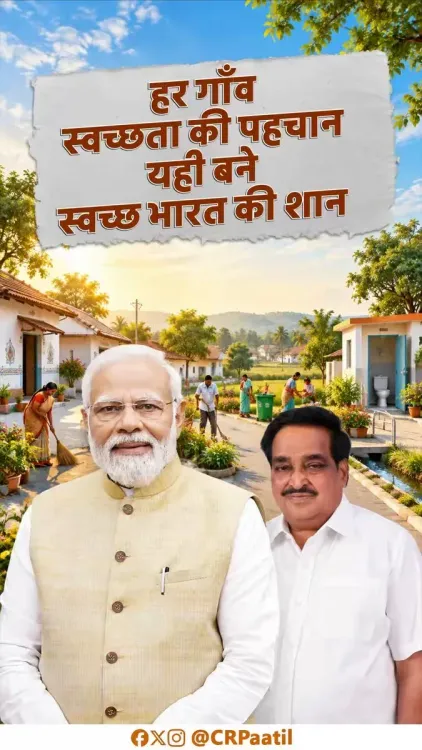
The sharpest line in Paatil's post is a commitment that cuts to the heart of why sanitation programmes fail: 'Our resolve is that cleanliness becomes not just a system, but a permanent part of every citizen's behaviour and lifestyle.' Infrastructure without behaviour change is infrastructure that gets abandoned. That lesson, learned painfully from earlier toilet-construction drives, shaped Phase 2's emphasis on jan bhagidari — genuine community ownership — over top-down delivery. Paatil closed with a couplet that doubles as a slogan: 'Har gaon swachhata ki pehchan, yahi bane Swachh Bharat ki shaan' — 'Let every village be known for cleanliness; let this be the pride of Swachh Bharat.' The verse is rhetorical, but the policy backstory is concrete: gram panchayats and rural households are now the primary units of accountability under the ODF-Plus framework that Phase 2 has established. As India's Ministry of Jal Shakti — which combines water supply and sanitation under a single mandate — accelerates the ODF-Plus rollout, the metric to watch is not toilet count but village-level waste management infrastructure and sustained behavioural surveys. The real test of Swachh Bharat's second chapter will be written not in Delhi but in the drains and compost pits of India's half-million villages.Point of View
Less-photogenic work of behavioural change and waste infrastructure. For the Ministry of Jal Shakti, this framing is also strategic: folding sanitation into a dignity-and-empowerment discourse broadens its public resonance beyond public health technocrats. The emphasis on jan bhagidari (public participation) deflects accountability downward to communities while also, genuinely, reflecting evidence that state-built toilets without community ownership fall into disuse. Watch whether ODF-Plus village certification numbers become the next headline metric as Phase 2 matures.
NationPress
26 Sept 2026
Frequently Asked Questions
What is Swachh Bharat Mission Gramin Phase 2?
Swachh Bharat Mission Gramin Phase 2 was approved in 2020 and focuses on maintaining ODF (Open Defecation Free) sustainability , managing solid and liquid waste, and implementing grey-water management in rural areas, going beyond the toilet-construction targets of Phase 1.
How many toilets have been built under Swachh Bharat Mission in rural India?
According to Union Jal Shakti Minister C. R. Paatil , more than 10 crore (100 million) toilets have been constructed in rural India under Swachh Bharat Mission Gramin.
When was Swachh Bharat Mission launched and by whom?
Swachh Bharat Mission was launched by Prime Minister Narendra Modi on 2 October 2014 (Gandhi Jayanti) with the goal of eliminating open defecation across India by 2019 .
What is grey-water management in the context of SBM Gramin?
Grey-water management refers to the treatment and reuse of wastewater generated from household activities like cooking and bathing. Under SBM-G Phase 2 , it is a key focus area to prevent this untreated water from contaminating village environments.
What is the role of C. R. Paatil in Swachh Bharat Mission?
C. R. Paatil is the Union Minister of Jal Shakti , the ministry that oversees both water supply and sanitation programmes in India, including Swachh Bharat Mission Gramin, making him the cabinet-level custodian of the mission's implementation.