Jal Shakti Minister Paatil hails SBM-Gramin's 12-year journey
Synopsis
Union Jal Shakti Minister C. R. Paatil has hailed Swachh Bharat Mission (Gramin) as a national resolve driven by public participation, crediting PM Modi's 12-year leadership for bringing dignity and health to crores of rural families and linking sanitation gains to the Viksit Bharat 2047 vision.
Key Takeaways
Union Jal Shakti Minister C.
Paatil posted on 13 June 2026 praising Swachh Bharat Mission (Gramin) as a 'national resolve' rooted in public participation.
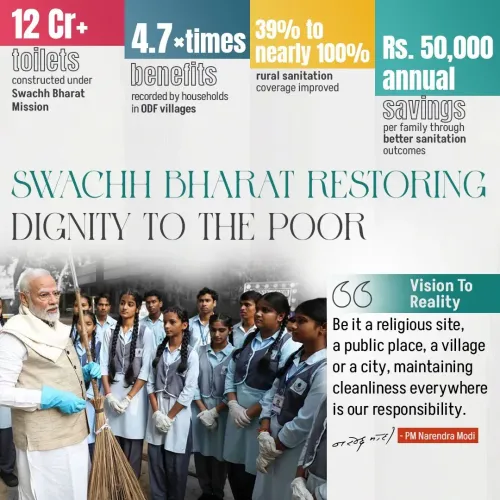
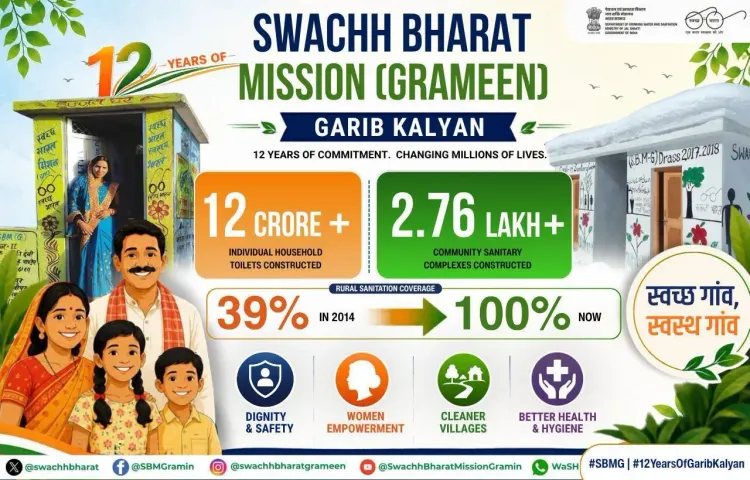
Swachh Bharat Mission was launched on 2 October 2014 ; India was declared open-defecation-free in 2019 after construction of over 10 crore toilets .
SBM-Gramin Phase-II , approved in 2020 , focuses on sustaining ODF status and expanding solid and liquid waste management in villages.
Paatil linked sanitation progress to the government's Viksit Bharat 2047 vision under the #GaribKalyanKe12Saal campaign.
The Jal Shakti Ministry oversees both rural sanitation and the Jal Jeevan Mission, integrating water supply and hygiene at the policy level.
Primary beneficiaries are rural households and village panchayats , with women and girls among the most directly impacted by improved sanitation access.
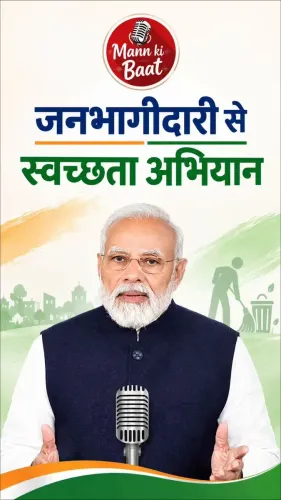
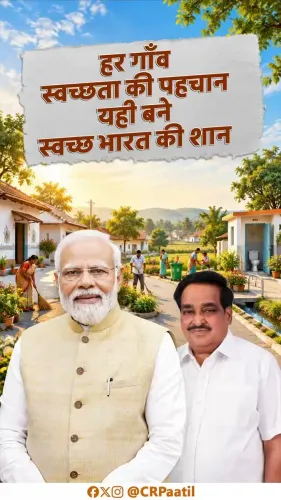
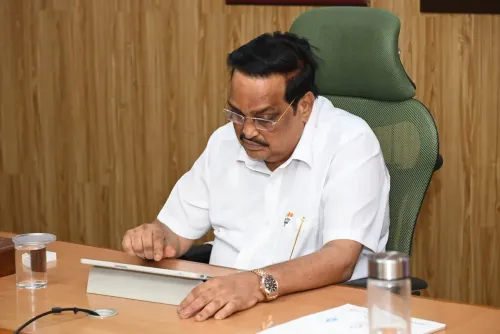
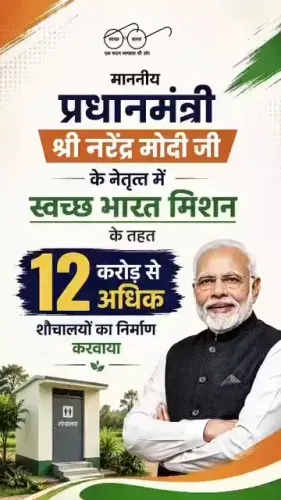
Union Jal Shakti Minister C. R. Paatil on Friday, 13 June 2026 invoked the Swachh Bharat Mission (Gramin) as a 'national resolve rooted in public participation,' crediting Prime Minister Narendra Modi's leadership over the past 12 years for bringing dignity, health and safety to crores of rural families.
Context
Posting in Hindi, Minister Paatil wrote: 'स्वच्छता केवल एक अभियान नहीं, बल्कि जनभागीदारी से जुड़ा राष्ट्रीय संकल्प है' ['Cleanliness is not merely a campaign but a national resolve linked to public participation']. He described the mission's arc from achieving an open-defecation-free India to building clean and healthy villages as 'a remarkable example of people's power and community involvement.' The post was tagged with #GaribKalyanKe12Saal, tying the sanitation milestone to the broader twelve-year welfare record the ruling party has been highlighting in 2026.
Paatil closed with the formulation 'Swachh Bharat, Samridh Bharat aur Viksit Bharat' ['Clean India, Prosperous India and Developed India'], signalling that sanitation progress is being positioned as a stepping stone toward the government's Viksit Bharat 2047 vision.
Policy Backdrop
Swachh Bharat Mission was launched by Prime Minister Modi on 2 October 2014, with a stated goal of ending open defecation by 2019. The government declared India open-defecation-free in 2019 following the construction of over 10 crore toilets under SBM-Gramin. A second phase — SBM-Gramin Phase-II — was approved in 2020 to sustain that status and scale up solid and liquid waste management in villages.
The Jal Shakti Ministry, which Paatil heads, has progressively integrated rural sanitation with the Jal Jeevan Mission's piped-water agenda, making the ministry the nodal body for both water supply and hygiene outcomes in rural India. The emphasis on Jan Bhagidari (public participation) reflects a consistent approach across central schemes since 2014 that pairs infrastructure creation with community mobilisation for behaviour change.
Stakeholders and Impact
The primary beneficiaries of SBM-Gramin are rural households — particularly women and girls — and village panchayats that have taken on responsibility for maintaining ODF status. Public health researchers have documented links between toilet access, reduced open defecation, and lower rates of diarrhoeal disease and child stunting in rural communities.
The framing of cleanliness as a pillar of Viksit Bharat also signals continued political salience for the mission: the government is keen to demonstrate that gains made under Phase-I have been consolidated and extended under Phase-II rather than reversed after the 2019 ODF declaration.
What's Next
Observers will watch for the release of the next annual progress report on ODF sustainability and any cabinet decision on extending SBM-Gramin Phase-II beyond its current funding cycle. With the #GaribKalyanKe12Saal campaign running through 2026, further ministerial communications spotlighting SBM milestones — including toilet coverage data and village-level ODF-Plus certifications — are expected in the coming weeks.
Point of View
Designed to consolidate the political narrative around welfare delivery ahead of future electoral cycles. By framing sanitation as a 'national resolve' rather than a party programme, the messaging seeks to broaden ownership of SBM's outcomes beyond BJP's core base. The linkage to Viksit Bharat 2047 is deliberate: it positions a decade-old scheme as an ongoing, forward-looking mission rather than a completed project. For Paatil specifically, championing SBM-Gramin reinforces his ministry's dual mandate over water and sanitation, underscoring Jal Shakti's growing centrality in the rural development architecture.
NationPress
26 Oct 2026
Frequently Asked Questions
What is Swachh Bharat Mission Gramin?
Swachh Bharat Mission (Gramin) is a central government scheme launched on 2 October 2014 to eliminate open defecation in rural India by building household toilets and promoting community-led behaviour change. India was declared open-defecation-free in 2019 after over 10 crore toilets were constructed.
Who is C. R. Paatil?
C. R. Paatil is the Union Minister of Jal Shakti and a senior BJP leader who previously served as BJP Gujarat state president. His ministry oversees both the Swachh Bharat Mission (Gramin) and the Jal Jeevan Mission for rural water supply.
What is SBM-Gramin Phase-II?
SBM-Gramin Phase-II was approved in 2020 to sustain the open-defecation-free status achieved under Phase-I and to scale up solid and liquid waste management in villages, moving beyond toilet construction toward comprehensive village cleanliness.
What does Jan Bhagidari mean in the context of Swachh Bharat?
Jan Bhagidari means 'public participation' and refers to the approach of mobilising communities — not just building infrastructure — to sustain behaviour change around sanitation and hygiene. It is a recurring theme across central schemes since 2014.
What is the Viksit Bharat 2047 vision?
Viksit Bharat 2047 is the Indian government's long-term development goal of transforming India into a fully developed nation by the centenary of its independence. The government links flagship missions like Swachh Bharat to this overarching vision to frame current welfare work as part of a generational project.