Jal Shakti Minister Paatil Hails SBM's 12 Crore Toilets
Synopsis
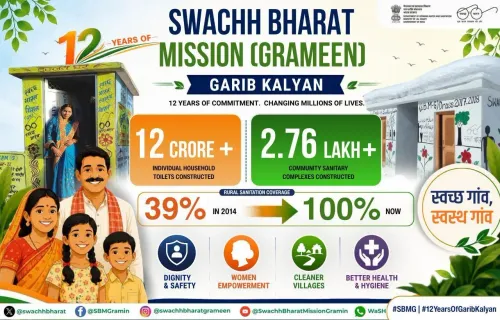
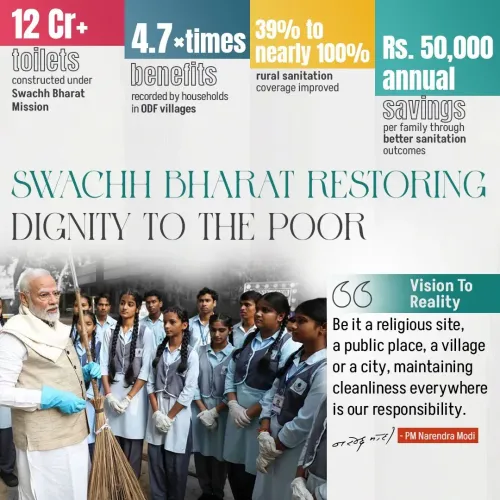
Union Jal Shakti Minister C. R. Paatil on 18 June 2026 highlighted the construction of over 12 crore toilets under Swachh Bharat Mission, attributing the milestone to PM Modi's leadership and reinforcing the government's sanitation push ahead of the ODF Plus phase.
Key Takeaways
Union Jal Shakti Minister C.
Paatil posted on 18 June 2026 citing construction of more than 12 crore toilets under Swachh Bharat Mission .
The mission was launched on 2 October 2014 with the goal of eliminating open defecation across India.
The Jal Shakti Ministry now administers both Swachh Bharat Mission (Gramin) and Jal Jeevan Mission , consolidating sanitation and water policy.
Rural women and girls are identified as the primary beneficiaries of household toilet access under the programme.
The next phase, ODF Plus , focuses on sustained usage, solid-liquid waste management, and integration with water-supply targets.
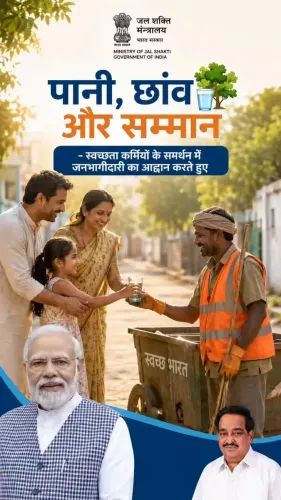
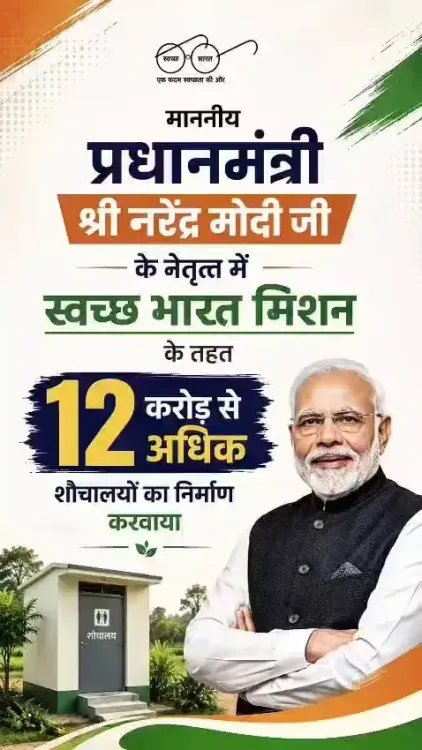
The post was accompanied by a video, indicating an active public-communication campaign around the milestone.
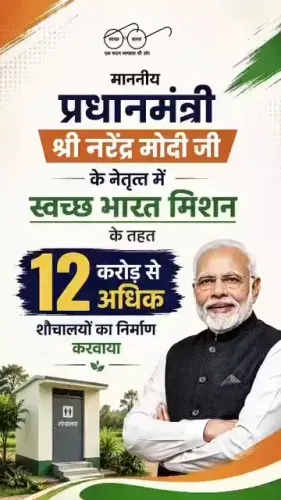
Union Jal Shakti Minister C. R. Paatil on Thursday, 18 June 2026 highlighted the construction of more than 12 crore toilets under the Swachh Bharat Mission, crediting the initiative to the leadership of Prime Minister Narendra Modi. The minister's post, captioned 'Swachh Bharat — ek kadam swachhata ki aur' ('Clean India — one step towards cleanliness'), underscored the programme's scale as a defining achievement of the central government's sanitation drive.
Context
Paatil's post states that under Prime Minister Modi's leadership, the Swachh Bharat Mission facilitated the construction of 'more than 12 crore toilets.' The message frames this milestone as a collective step towards a cleaner India, aligning with the mission's foundational goal of eliminating open defecation. The post was accompanied by a video, indicating a visual campaign element tied to the announcement.
The Swachh Bharat Mission was launched on 2 October 2014 by the central government, with toilet construction and behavioural change at its core. The programme set out to make India open-defecation-free by targeting rural and urban households that lacked access to sanitation infrastructure.
Policy Backdrop
The Jal Shakti Ministry, which Paatil heads, now administers the Swachh Bharat Mission (Gramin) — the rural arm of the programme — alongside the Jal Jeevan Mission, which focuses on piped drinking-water supply. This consolidation of water and sanitation under a single ministry reflects a deliberate policy architecture intended to link toilet access with clean water availability at the household level.
Over successive phases, the government has cited cumulative toilet-construction figures as a primary metric of the mission's progress. Official communications have repeatedly pointed to these numbers as evidence of rural infrastructure transformation, particularly for women and girls in villages who previously faced safety and dignity concerns due to the absence of household sanitation.
Stakeholders and Impact
Rural households remain the central beneficiaries of the mission's toilet-construction drive. Advocates and policy researchers have consistently noted that access to household toilets has the most direct impact on women in rural India, reducing exposure to harassment and improving health outcomes linked to open defecation.
The programme has also generated downstream activity for local construction workers, material suppliers, and gram panchayats tasked with verifying and maintaining infrastructure. Community-level behaviour-change campaigns have run alongside construction targets to encourage sustained toilet usage rather than construction alone.
What's Next
The government's focus in the current phase of Swachh Bharat Mission has shifted towards ODF Plus — a framework that goes beyond open-defecation-free status to address solid and liquid waste management, cleanliness of public spaces, and sustained toilet usage. Integration with Jal Jeevan Mission coverage targets is expected to deepen, as water supply and sanitation outcomes are increasingly tracked together at the village level.
With Paatil reaffirming the mission's scale through this public communication, attention will turn to how the ministry translates cumulative construction numbers into verified, sustained behavioural change — the harder, longer-term measure of the programme's success.
Point of View
Reinforcing the BJP government's ownership of the Swachh Bharat Mission ahead of what appears to be a fresh campaign cycle. By anchoring the 12-crore figure to PM Modi's personal leadership, the messaging follows a well-established pattern of tying large infrastructure numbers to the Prime Minister's brand rather than the ministry or bureaucracy. As the programme moves into the more complex ODF Plus phase — where outcomes are harder to quantify than toilet counts — the government's continued emphasis on construction figures signals that cumulative milestones remain the preferred political metric. The consolidation of sanitation under the Jal Shakti Ministry also gives Paatil a high-visibility portfolio to project nationally, beyond his Gujarat base.
NationPress
19 Sept 2026
Frequently Asked Questions
What is Swachh Bharat Mission and when was it launched?
Swachh Bharat Mission is a central government sanitation programme launched on 2 October 2014 to eliminate open defecation in India through mass toilet construction and behaviour-change campaigns.
How many toilets have been built under Swachh Bharat Mission?
Union Jal Shakti Minister C. R. Paatil stated on 18 June 2026 that more than 12 crore toilets have been constructed under the Swachh Bharat Mission under PM Modi's leadership.
Which ministry handles Swachh Bharat Mission?
The Jal Shakti Ministry, currently headed by Union Minister C. R. Paatil, administers the Swachh Bharat Mission (Gramin), the rural arm of the sanitation programme.
What is ODF Plus under Swachh Bharat Mission?
ODF Plus is the next phase of Swachh Bharat Mission that goes beyond open-defecation-free status to focus on solid and liquid waste management, cleanliness of public spaces, and sustained toilet usage.
Who is C. R. Paatil?
C. R. Paatil is the Union Minister of Jal Shakti, a senior BJP leader, and former president of the BJP's Gujarat state unit.