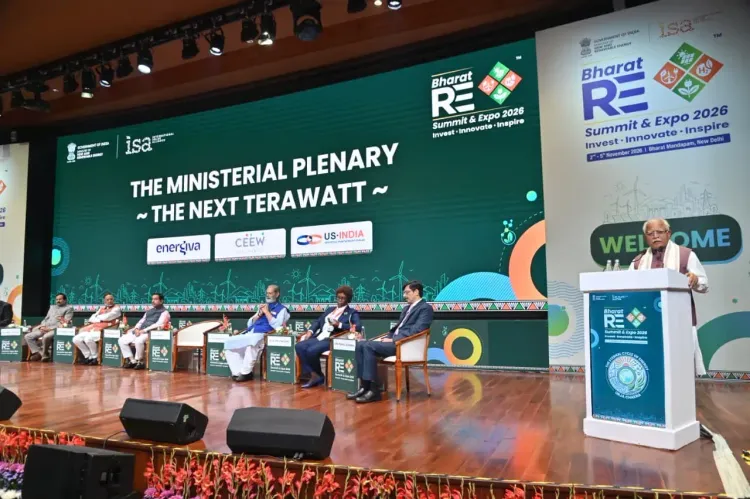
Khattar at Bharat Renewable Energy Summit 2026
Synopsis
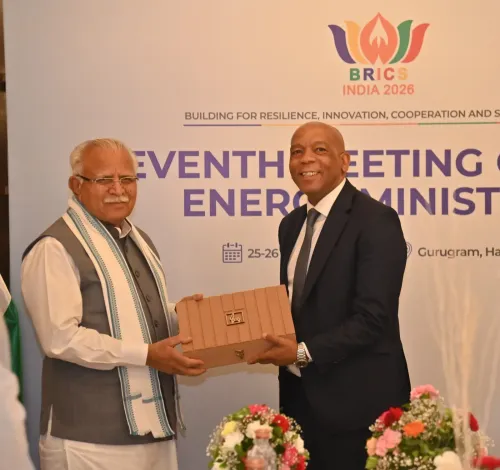
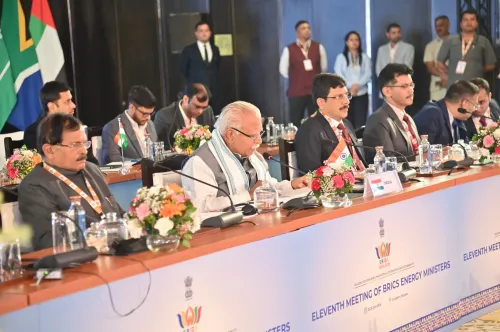
Union Power Minister Manohar Lal Khattar spoke at the Bharat Renewable Energy Summit 2026 Ministerial Plenary at Bharat Mandapam, sharing India's renewable milestones and holding discussions on investment in Rajasthan and Odisha, Zimbabwe energy priorities, and technology transfer for global clean-energy partnerships.
Key Takeaways
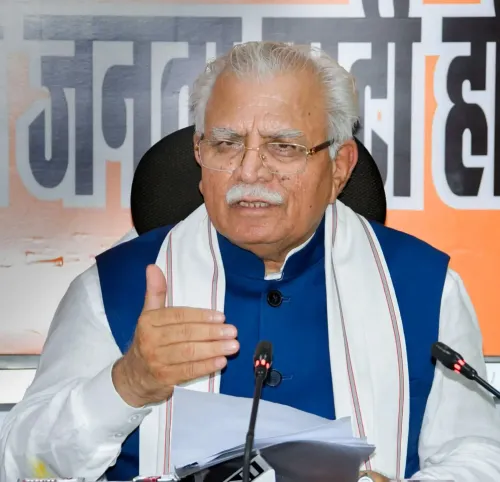
Manohar Lal Khattar addressed the Ministerial Plenary of Bharat Renewable Energy Summit 2026 at Bharat Mandapam, New Delhi on November 3, 2026 .
Session theme: 'The Next Terawatt: From National Successes to Global Solutions' — linking India's domestic achievements to a global cooperation agenda.
Interactive discussions covered renewable energy investment in Rajasthan and Odisha , policy incentives, and enabling frameworks for capital deployment.
Zimbabwe's energy sector priorities were discussed, underscoring India's South-South energy diplomacy.
Energy storage initiatives and technology transfer were highlighted as critical pillars for scaling the next terawatt.
India's approach: convert national innovations and experience into the foundation for international solutions and global partnerships.
India's renewable energy ambition stepped onto a global stage on Tuesday, November 3, 2026, as Union Power Minister Manohar Lal Khattar addressed the Ministerial Plenary Session of the Bharat Renewable Energy Summit 2026 at Bharat Mandapam, New Delhi — framing the country's hard-won domestic gains as a blueprint the world can borrow.
The session's theme — 'The Next Terawatt: From National Successes to Global Solutions' — set the tone. Khattar shared India's remarkable achievements in renewable energy, mapped the shifting demands of global power systems, and laid out both the challenges and the vast opportunities the sector faces in the decade ahead.
Rajasthan, Odisha and a Zimbabwe dialogue on the table
An interactive discussion after the plenary got granular. Participants explored renewable energy investment potential in Rajasthan and Odisha — two states that have emerged as frontrunners in solar and green-power park development — alongside the policy incentives and enabling environments needed to unlock that capital. Zimbabwe's energy sector priorities also featured, a signal of India's deepening South-South engagement on clean power.
Energy storage initiatives drew particular attention, reflecting a global consensus that the terawatt-scale ambition lives or dies on affordable, reliable storage. Technology transfer and the exchange of expertise were flagged as pillars of any credible partnership framework.
India's 500 GW promise and the template it offers
The summit draws its urgency from a commitment India made at COP26 in Glasgow in 2021: reaching 500 GW of non-fossil fuel capacity by 2030. Rapid auction-based scaling, state-level policy competition and manufacturing incentives have made India one of the world's largest renewable markets — and, increasingly, a reference model for developing economies navigating their own energy transitions.
The International Solar Alliance, launched in 2015, institutionalised that instinct: turning India's solar expertise into a multilateral cooperation tool. The Bharat Renewable Energy Summit continues that logic, with Khattar articulating it plainly — national experience must become global solution.
From bilateral talks to a wider cooperation architecture
The Minister's emphasis on technology transfer, expertise exchange and global partnerships signals that India is not content to remain a recipient of climate finance or technology — it intends to be an exporter of both. Discussions with Zimbabwe on energy priorities, alongside investment outreach to state-level projects in Rajasthan and Odisha, suggest a two-track approach: securing domestic capital flows while extending India's energy diplomacy southward.
The next markers to watch: state-level renewable policy updates and storage tender outcomes in Rajasthan and Odisha, and whether the Zimbabwe dialogue crystallises into a formal bilateral energy framework. The terawatt target demands both.
Point of View
Ministerial-level summits serve as both accountability checkpoints and deal-making platforms. The emphasis on storage and technology transfer suggests the government recognises that the easier wins in generation capacity are behind it; the harder, costlier storage and grid integration challenge is the frontier that will define whether the terawatt promise holds.
NationPress
4 Nov 2026
Frequently Asked Questions
What is the Bharat Renewable Energy Summit 2026?
The Bharat Renewable Energy Summit 2026 is a ministerial-level summit held at Bharat Mandapam in New Delhi, focused on scaling renewable energy from India's national achievements to global solutions, including discussions on investment, technology transfer, and international partnerships.
What did Manohar Lal Khattar say at the renewable energy summit?
Union Power Minister Manohar Lal Khattar spoke on India's renewable energy achievements, the evolving demands of global energy systems, and the challenges and opportunities ahead, stressing that India's domestic experience should underpin global clean-energy solutions.
Why were Rajasthan and Odisha discussed at the Bharat Renewable Energy Summit?
Rajasthan and Odisha are among India's leading states for renewable energy development, and the summit's interactive session explored their investment potential, policy incentives, and enabling environment to attract further capital into solar and green-power projects.
What is India's renewable energy target by 2030?
India committed at COP26 in Glasgow in 2021 to achieve 500 GW of non-fossil fuel capacity by 2030 , making it one of the most ambitious clean-energy targets among major economies.
Why did the Bharat Renewable Energy Summit discuss Zimbabwe?
Zimbabwe's energy sector priorities were raised during the ministerial discussion as part of India's broader South-South cooperation agenda, exploring how India's renewable expertise, technology transfer, and capacity-building can support partner nations in Africa.