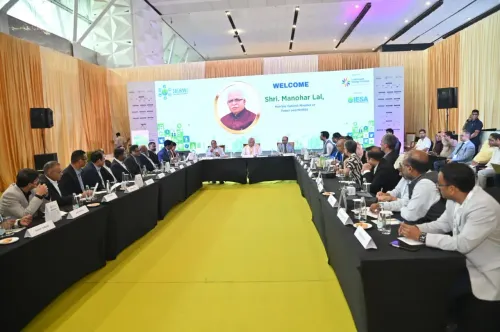
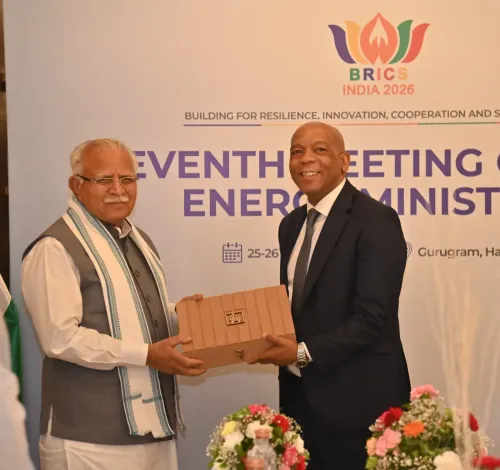
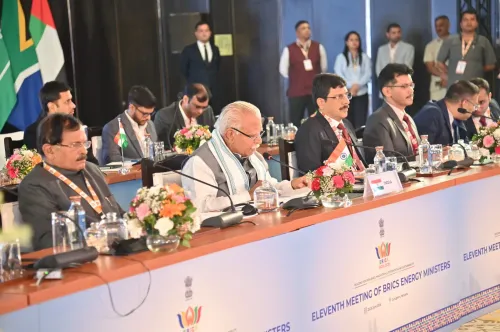
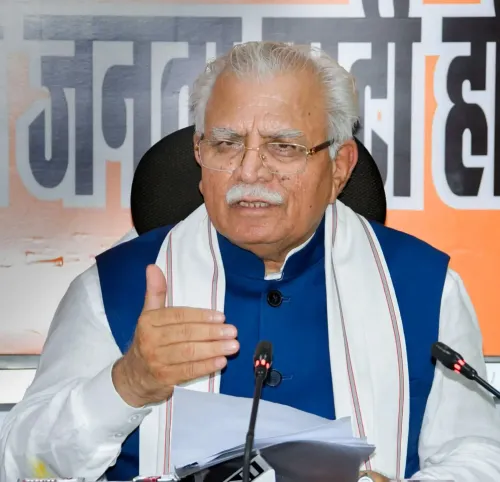
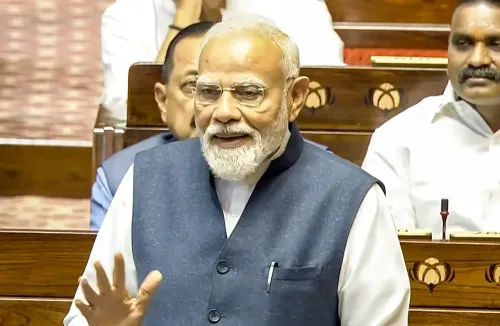
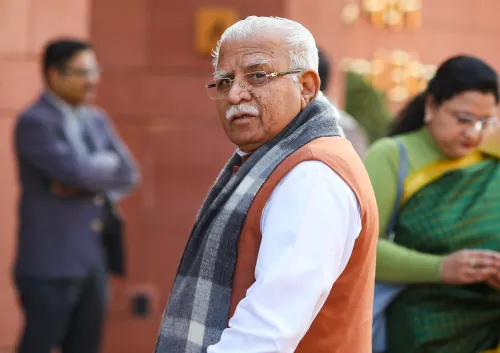
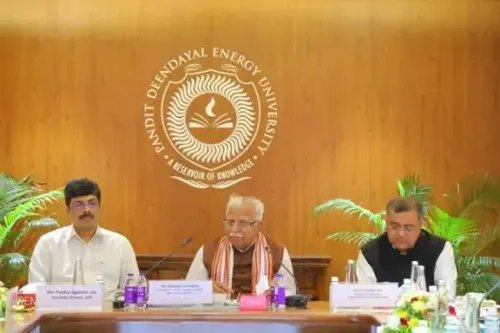
Khattar Keynotes Energy Storage Vision for India 2047
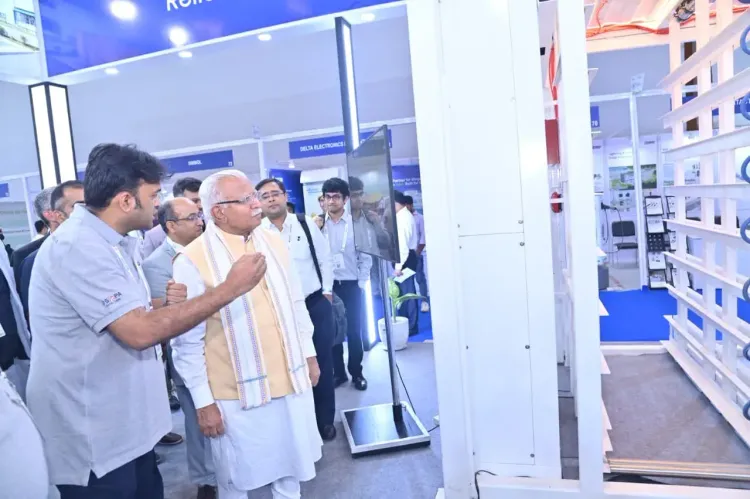
Synopsis
Power Minister Manohar Lal Khattar delivered a keynote on 'Energy Storage Vision for India 2047', placing storage at the centre of India's clean energy transition. He reaffirmed government support for innovation, indigenous technology, and global partnerships to secure a resilient energy future aligned with Viksit Bharat goals.
Key Takeaways
Union Power Minister Manohar Lal Khattar delivered the keynote on 'Energy Storage Vision for India 2047' on July 8, 2026 .
He declared energy storage 'central' to India's clean energy transition and the Viksit Bharat 2047 national vision.
The government reaffirmed commitment to indigenous technology development and global partnerships in the storage sector.
India's storage push is anchored in COP26 Panchamrit targets, including 500 GW non-fossil fuel capacity by 2030 .
The PLI scheme for Advanced Chemistry Cells underpins domestic battery manufacturing to reduce import dependence.
Policy watchers expect follow-through via storage capacity targets, viability gap funding, or state procurement mandates.
Union Power Minister Manohar Lal Khattar on Wednesday, July 8, 2026, delivered the keynote address on 'Energy Storage Vision for India 2047', reaffirming that energy storage will be central to India's clean energy transition and its march toward Viksit Bharat by 2047.
Context
Khattar used the address to place energy storage at the heart of India's long-term power strategy. He stated that the government remains committed to 'supporting the sector and fostering innovation, indigenous technology and global partnerships to build a resilient energy future.' The remarks signal that storage is no longer a peripheral concern but a policy priority at the ministerial level.
India's electricity grid is increasingly carrying large volumes of solar and wind power — both variable by nature. Without adequate storage infrastructure, surpluses generated during peak generation hours cannot be reliably shifted to meet evening or overnight demand, creating grid stability risks as renewable capacity expands.
Policy Backdrop
India's energy storage push is rooted in the Panchamrit commitments announced at COP26 in 2021, which include achieving 500 GW of non-fossil fuel capacity by 2030 and reaching net-zero emissions by 2070. Storage is the critical bridge between intermittent generation and reliable supply at that scale.
On the manufacturing side, the government notified the Production Linked Incentive (PLI) scheme for Advanced Chemistry Cells to build domestic battery production capacity and reduce dependence on imports. Khattar's emphasis on 'indigenous technology' aligns squarely with this Atmanirbhar Bharat framework, reinforcing that self-reliance in battery and storage technology is a strategic, not merely commercial, objective.
The Viksit Bharat 2047 vision — India's national goal to become a fully developed nation by the centenary of independence — provides the overarching frame. A reliable, affordable, and clean power supply is considered foundational to that transformation, making energy storage a cross-cutting enabler rather than a sector-specific agenda.
Stakeholders and Impact
The minister's remarks carry direct implications for renewable energy developers who need storage co-located with solar and wind projects to meet round-the-clock power supply obligations. Regulatory and financial certainty from the Centre is a key determinant of their investment decisions.
Battery and storage manufacturers — both domestic firms scaling under PLI incentives and global technology partners — stand to benefit from the government's stated openness to international collaboration. Khattar's explicit mention of 'global partnerships' suggests the policy window for technology tie-ups and joint ventures remains open, even as indigenisation is prioritised.
State electricity distribution companies, which bear the cost of grid balancing, also have a stake: a well-developed storage ecosystem can reduce the need for expensive peaking power and lower overall procurement costs over time.
What's Next
Observers will watch for concrete follow-through in the form of storage capacity targets, viability gap funding announcements, or state-level procurement mandates that translate the minister's vision into binding policy. Upcoming Union Budget discussions and orders from the Central Electricity Regulatory Commission are the most likely vehicles for such specifics.
With India's renewable capacity addition accelerating, the window for getting storage policy right is narrow. Khattar's keynote sets the political tone; the sector will now look for the regulatory and financial architecture to match it.
Point of View
The minister is threading a careful needle between Atmanirbhar Bharat optics and the technology realism that battery-scale manufacturing demands. The Viksit Bharat 2047 frame gives the storage agenda political longevity beyond any single budget cycle, making it harder for future administrations to deprioritise. The real test, however, will be whether the rhetorical commitment is followed by viability gap funding and regulatory mandates that de-risk private investment at scale.
NationPress
7 Oct 2026
Frequently Asked Questions
What did Power Minister Khattar say about energy storage for India?
Khattar said energy storage will be 'central' to India's clean energy transition and reaffirmed government support for innovation, indigenous technology, and global partnerships to build a resilient energy future aligned with Viksit Bharat 2047.
What is the Energy Storage Vision for India 2047?
It is a policy vision articulated by the Power Ministry that places battery and grid-scale energy storage at the core of India's plan to integrate large volumes of renewable energy and achieve a reliable, clean power supply by 2047, the centenary of independence.
What is Viksit Bharat 2047 and how does energy storage relate to it?
Viksit Bharat 2047 is India's national goal to become a fully developed nation by 2047. Reliable and affordable clean energy is considered foundational to that vision, making energy storage a key enabler of the broader development agenda.
What is the PLI scheme for Advanced Chemistry Cells?
It is a Production Linked Incentive scheme notified by the Indian government to promote domestic manufacturing of advanced batteries, reduce import dependence, and support the Atmanirbhar Bharat goal of self-reliance in energy storage technology.
What are India's renewable energy targets linked to energy storage?
India committed at COP26 in 2021 to achieve 500 GW of non-fossil fuel capacity by 2030 and net-zero emissions by 2070. Energy storage is critical to meeting these targets by stabilising the grid as variable solar and wind capacity scales up.