Khattar Highlights India Energy Storage Week 2026
Synopsis
Union Power Minister Manohar Lal Khattar highlighted key moments from India Energy Storage Week 2026, reaffirming the government's commitment to scaling storage technologies critical to India's 500 GW clean-energy target by 2030.
Key Takeaways
Union Power Minister Manohar Lal Khattar shared highlights from India Energy Storage Week 2026 on 9 July 2026 .
India has a target of 500 GW of non-fossil fuel electricity capacity by 2030 , announced at COP26 in 2021 .
The government approved a viability gap funding scheme for battery energy storage systems in 2023 to accelerate deployment.
Key stakeholders include renewable developers, state discoms, and domestic and international battery manufacturers.
India Energy Storage Week serves as a platform for policy signalling, investment attraction, and industry collaboration on storage technologies.
Further storage-linked incentives, new tenders, and technology partnerships are expected in the coming months.
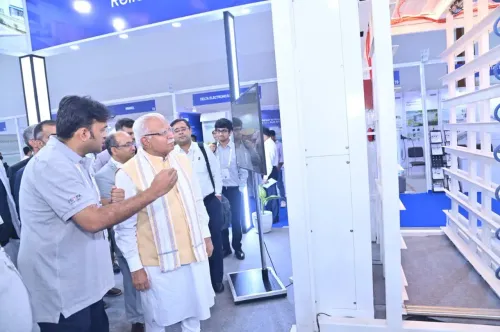
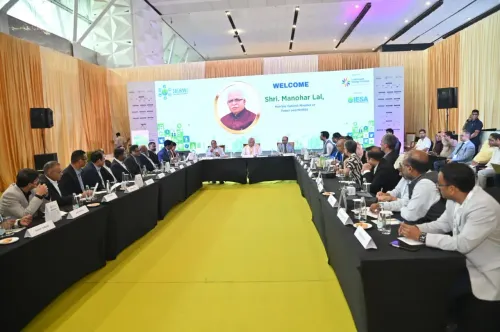
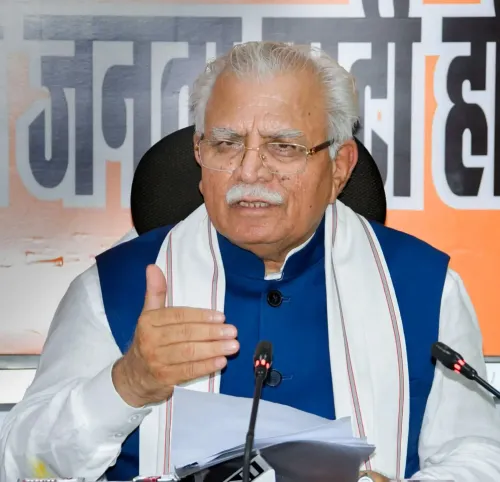
Union Power Minister Manohar Lal Khattar on Thursday, 9 July 2026 shared highlights from India Energy Storage Week 2026, calling the event 'eventful' and signalling the government's continued focus on scaling storage technologies as a backbone of the country's clean-energy transition.
Context
India Energy Storage Week is an industry-facing platform that brings together battery manufacturers, renewable developers, grid operators, and policymakers to discuss the deployment of storage technologies — from lithium-ion batteries to pumped-hydro systems. The minister's post, accompanied by a video, underscores the Ministry of Power's active engagement with the sector at a time when grid-scale storage has become central to India's energy planning.
Khattar's participation reflects the ministry's intent to use such forums to communicate policy direction and attract investment into what remains a nascent but fast-growing segment of India's power sector.
Policy Backdrop
India committed at COP26 in 2021 to achieving 500 GW of non-fossil fuel electricity capacity by 2030, a target that makes large-scale energy storage indispensable. Intermittency in solar and wind generation — which now account for a growing share of installed capacity — cannot be managed without adequate storage buffers.
In 2023, the government approved a viability gap funding (VGF) scheme for battery energy storage systems (BESS), providing financial support to bridge the cost gap and accelerate commercial deployment. The scheme is designed to crowd in private investment alongside public support, enabling state electricity distribution companies (discoms) to procure storage capacity at competitive tariffs.
Successive policy measures have also sought to promote domestic manufacturing of storage components, aligning with the broader Aatmanirbhar Bharat (self-reliant India) push and reducing dependence on imports for a strategically critical technology.
Stakeholders and Impact
The beneficiaries of a robust storage ecosystem span the entire power value chain. Renewable energy developers gain the ability to firm up supply and meet round-the-clock power purchase obligations. State discoms, which bear the brunt of peak demand and grid instability, stand to benefit from smoother load curves and reduced reliance on expensive peaking power plants.
Battery manufacturers — both domestic and international — view India as one of the largest emerging markets for grid-scale storage, given the scale of renewable capacity additions planned through the decade. Events like India Energy Storage Week serve as a critical deal-making and knowledge-sharing environment for this community.
For consumers, effective storage deployment translates into greater supply reliability and, over the longer term, downward pressure on electricity costs as the share of zero-marginal-cost renewables rises.
What's Next
The coming months are expected to see further rollout of storage-linked incentives, including potential new tender announcements for grid-scale BESS projects and technology partnership agreements between Indian and global firms. The Ministry of Power's engagement at India Energy Storage Week 2026 is likely to be followed by policy communications detailing the next tranche of support measures.
Analysts and industry stakeholders will watch closely for any announcements on domestic manufacturing mandates, expanded VGF allocations, or new targets for storage capacity addition — all of which would signal the pace at which India intends to close the gap between its renewable ambitions and the storage infrastructure needed to realise them.
Point of View
Recognising that hitting the 500 GW target without firm power delivery would be a political as much as a technical failure. By visibly associating himself with the event, Khattar is also staking ministerial credibility on storage outcomes — a signal that the VGF scheme and related measures are expected to show measurable results. The post's brevity, however, leaves open the question of whether the week produced concrete new commitments or remained a showcase of existing policy.
NationPress
8 Oct 2026
Frequently Asked Questions
What is India Energy Storage Week 2026?
India Energy Storage Week 2026 is an industry event focused on battery, pumped-hydro, and other storage technologies aimed at supporting the integration of renewable energy into India's power grid. It brings together manufacturers, developers, grid operators, and policymakers.
Why is energy storage important for India?
India has committed to achieving 500 GW of non-fossil fuel electricity capacity by 2030. Since solar and wind power are intermittent, large-scale energy storage is essential to stabilise the grid, meet peak demand, and ensure reliable supply.
What is the viability gap funding scheme for battery storage in India?
The government approved a viability gap funding (VGF) scheme for battery energy storage systems in 2023 to reduce the cost gap and make grid-scale storage commercially viable. It enables state discoms to procure storage capacity at competitive tariffs with public financial support.
What did Manohar Lal Khattar say about India Energy Storage Week 2026?
Union Power Minister Manohar Lal Khattar described India Energy Storage Week 2026 as 'eventful' and shared highlights from the event, signalling the government's focus on scaling storage technologies as part of India's clean-energy transition.
What is India's renewable energy storage target?
India does not yet have a single published standalone storage capacity target, but the overarching goal is 500 GW of non-fossil fuel capacity by 2030, for which significant grid-scale storage deployment is considered essential by policymakers and industry.