Jal Shakti Minister Paatil takes PM Modi's water conservation call to Mirzapur schools
Synopsis
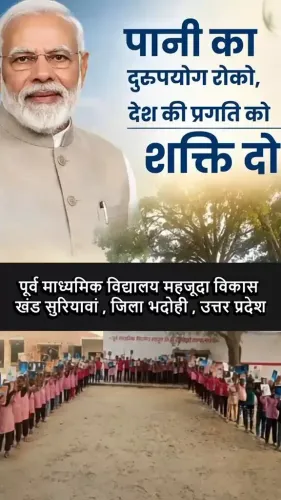
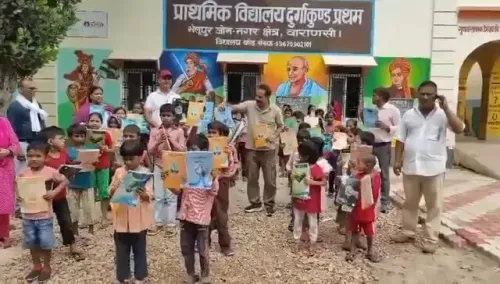
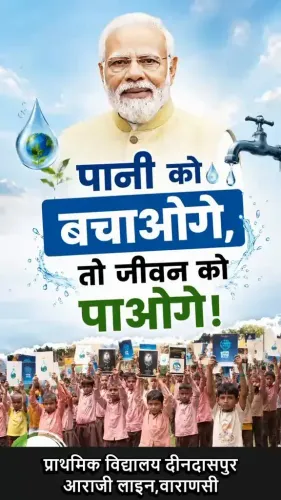
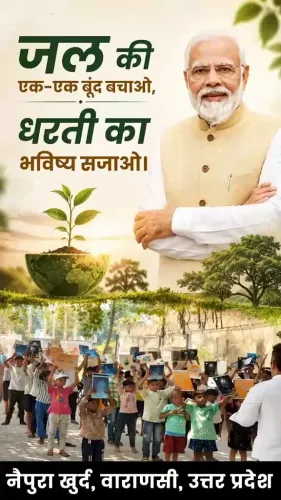
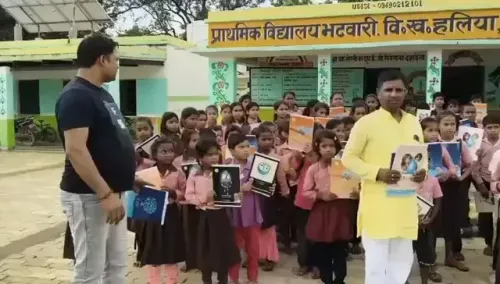
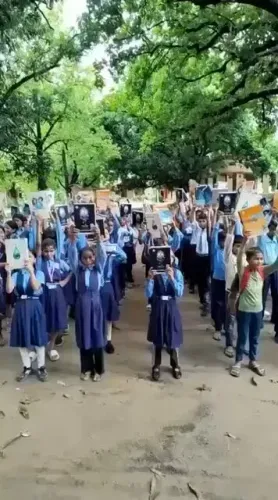
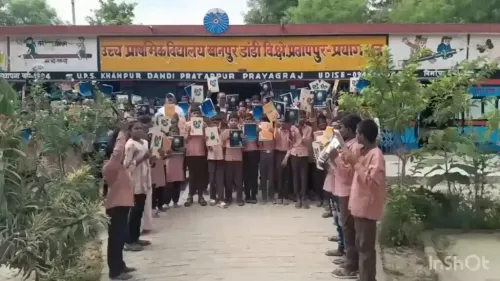
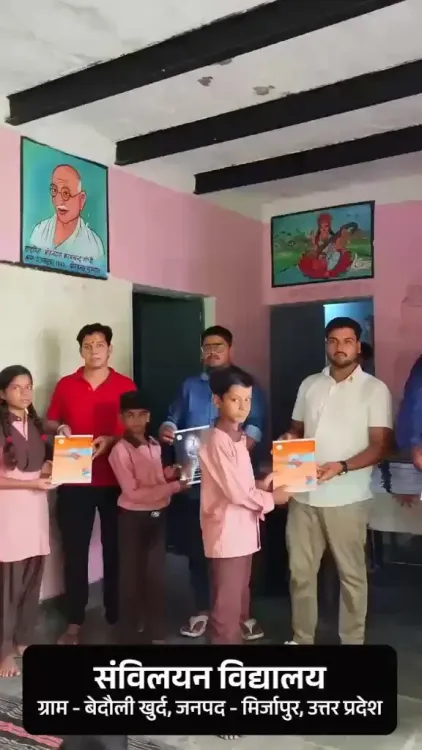
Union Jal Shakti Minister C. R. Paatil on 9 July 2026 announced that notebooks were distributed to students at a school in Mirzapur's Khurd village, carrying PM Modi's water conservation message. The event included a community awareness session, with Paatil describing the initiative as part of a growing people's movement.
Key Takeaways
Union Jal Shakti Minister C.
Paatil announced on 9 July 2026 that notebooks were distributed to students of a composite school in Khurd village, Mirzapur as a water conservation awareness initiative.
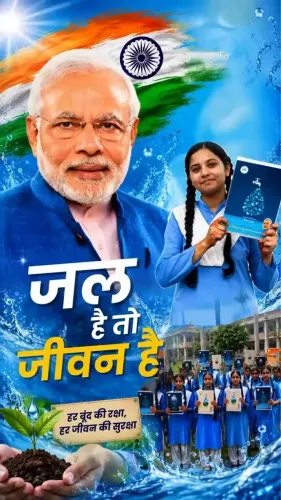
The drive was framed as an effort to carry PM Narendra Modi 's repeated appeal to save water for the future to every citizen.
A dedicated water conservation awareness session was also held for the children and the local community at the event.
Paatil described Modi 's conservation call as 'now taking the shape of a jan andolan ' — a people's movement.
The initiative aligns with the Jal Shakti Abhiyan and Jal Jeevan Mission , both launched in 2019 , which combine infrastructure delivery with grassroots behavioural outreach.
Mirzapur, Uttar Pradesh , a seasonally water-stressed district, hosted the event, underlining the geographic targeting of such awareness drives.
Union Jal Shakti Minister C. R. Paatil on Thursday, 9 July 2026, shared that notebooks were distributed to students of a samvilay vidyalaya (composite school) in Khurd village, Mirzapur, as part of an effort to carry Prime Minister Narendra Modi's repeated appeal for water conservation to every citizen. The initiative also included a dedicated awareness session on water conservation for the children and the local community.
Context
Paatil's post, written in Hindi, states: 'Aadarniya Pradhanmantri Shri Narendra Modi ji ne samay-samay par sabhi se paani ko bhavishya ke liye bachane ka aavahan kiya hai' — 'Honourable Prime Minister Shri Narendra Modi has, on repeated occasions, called upon everyone to save water for the future.' The minister added that the notebook distribution at the school in Khurd village was undertaken with the resolve to carry this message to every person, and that awareness on water conservation was also imparted to all present.
Paatil concluded by noting that Modi's appeal 'is now taking the shape of a jan andolan' — a people's movement. The event illustrates how the central government is using school-level outreach as a vehicle for behavioural change alongside large infrastructure programmes.
Policy Backdrop
The outreach in Mirzapur fits squarely within two flagship central programmes. The Jal Shakti Abhiyan, launched in 2019, was designed as a time-bound, mission-mode campaign to promote water conservation through community participation across water-stressed districts. Simultaneously, the Jal Jeevan Mission, also announced in 2019, set out to provide functional household tap connections to every rural home while embedding sustainable water-use messaging at the grassroots level.
Together, the two programmes reflect a deliberate policy architecture: pair hard infrastructure delivery with sustained behavioural outreach targeting youth and rural populations. Distributing notebooks carrying conservation messaging to schoolchildren is consistent with this dual-track approach.
Stakeholders and Impact
The immediate beneficiaries of the Khurd village event are the students of the local samvilay vidyalaya and the broader rural community in Mirzapur district, Uttar Pradesh. School-going children are considered a high-leverage audience for behavioural messaging: awareness instilled at an early age tends to influence household practices, effectively multiplying the reach of any single intervention.
Mirzapur, situated along the Vindhya plateau and the banks of the Ganga, faces seasonal water stress, making conservation awareness particularly relevant for its rural population. Community-level drives of this kind are intended to complement the government's infrastructure investments by building a culture of responsible water use from the ground up.
What's Next
The government's stated ambition is to convert water conservation from a policy directive into a genuine jan andolan — a mass movement driven by citizen participation rather than top-down mandates alone. If the Khurd village model proves replicable, similar school-based notebook distribution and awareness drives could be rolled out to additional districts across Uttar Pradesh and other water-stressed states.
A broader question for policymakers is whether water conservation messaging will be formally integrated into state school curricula, giving the campaign institutional permanence beyond event-driven outreach. The trajectory of the Jal Shakti Abhiyan in the coming months will indicate how systematically such community drives are being scaled.
Point of View
Using school-level touchpoints to demonstrate popular ownership of flagship schemes. By framing PM Modi's conservation appeal as an emerging jan andolan, Paatil is reinforcing a political narrative that positions the government not merely as a service provider but as a catalyst for citizen-led change. The choice of a rural school in Mirzapur — a district in politically significant Uttar Pradesh — also reflects the administration's focus on reaching constituencies where both water stress and electoral salience are high. Whether such episodic outreach translates into measurable behavioural change will depend on whether it is sustained and institutionalised beyond symbolic distributions.
NationPress
8 Oct 2026
Frequently Asked Questions
What did Jal Shakti Minister C. R. Paatil announce on 9 July 2026?
Minister C. R. Paatil announced that notebooks were distributed to students of a composite school in Khurd village, Mirzapur, as part of an effort to spread PM Modi's water conservation message, and that a community awareness session on water conservation was also held.
Where is Khurd village and why was it chosen for this initiative?
Khurd village is located in Mirzapur district, Uttar Pradesh. Mirzapur is a seasonally water-stressed district, making it a relevant location for conservation awareness drives aligned with the government's Jal Shakti Abhiyan.
What is the Jal Shakti Abhiyan?
The Jal Shakti Abhiyan is a nationwide campaign launched in 2019 by the central government to promote water conservation through community participation, particularly in water-stressed districts across India.
How does notebook distribution relate to water conservation?
The notebooks distributed at the Khurd village school were used as a vehicle to carry water conservation messaging to children, embedding PM Modi's appeal to save water for the future into an everyday educational item.
What did C. R. Paatil mean by calling water conservation a 'jan andolan'?
Paatil used the Hindi term 'jan andolan,' meaning a people's movement, to suggest that PM Modi's appeal for water conservation is gaining broad public participation beyond a government-led directive, reflecting the administration's goal of citizen-driven behavioural change.