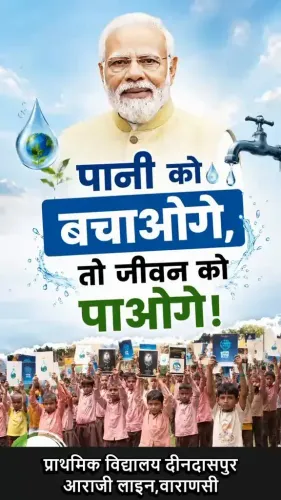
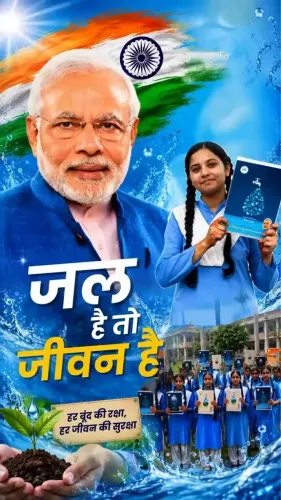
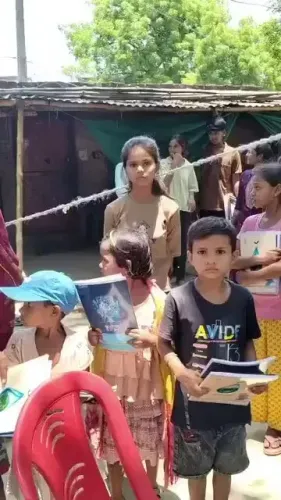
Jal Shakti Minister Paatil Holds Water Awareness Drive at Meerut School
Synopsis
Union Jal Shakti Minister C. R. Paatil attended a water conservation awareness event at Millennium Public School in Meerut on 8 July 2026, distributing notebooks to students and urging them to save water under PM Modi's Jal Shakti Abhiyan jan aandolan initiative.
Key Takeaways
Union Jal Shakti Minister C.
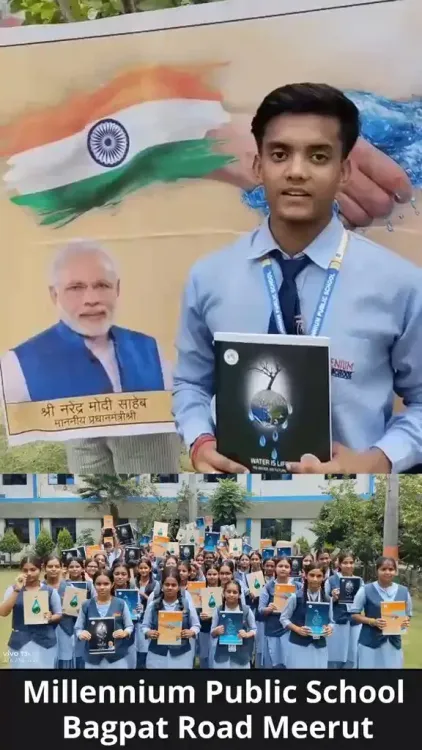
Paatil shared details of a water conservation awareness event at Millennium Public School, Baghpat Road, Meerut on 8 July 2026 .
Students received notebooks alongside structured messaging to motivate water-saving behaviour.
The event is framed under PM Narendra Modi 's vision of turning water conservation into a jan aandolan (people's movement).
The outreach aligns with the Jal Shakti Abhiyan , the Central government's community-participation campaign launched in 2019 .
Western Uttar Pradesh faces significant groundwater stress, making school-level awareness drives a policy priority ahead of the monsoon.
The event follows a broader pattern of pairing material incentives with conservation messaging in BJP-ruled states .
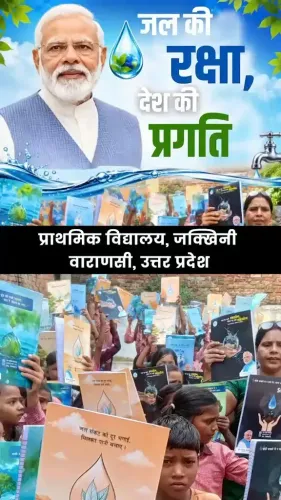
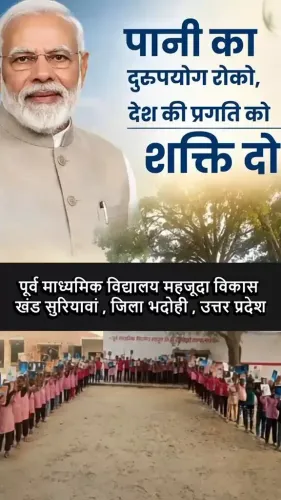
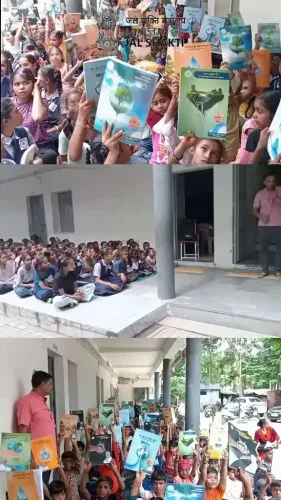
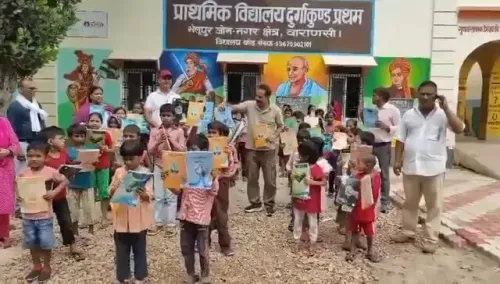
Union Jal Shakti Minister C. R. Paatil on Wednesday, 8 July 2026, shared details of a water conservation awareness event held at Millennium Public School on Baghpat Road, Meerut, where students received notebooks and were encouraged to save water under the banner of Prime Minister Narendra Modi's push to turn water conservation into a mass movement.
Posting on X, Minister Paatil wrote that under the leadership of Prime Minister Modi, water conservation is becoming a jan aandolan (people's movement). He noted that notebooks were distributed to students at the Meerut school and that children were motivated to save water, adding that all the children said, 'Thank You Modi Ji.'
Context
The event in Meerut, a city in western Uttar Pradesh, combined a modest material gesture — notebook distribution — with structured messaging on water conservation aimed at schoolchildren. Such school-level outreach has become a recurring feature of the central government's water-sector communications, linking individual behavioural change to a broader national agenda championed by the Prime Minister.
Western Uttar Pradesh faces significant groundwater stress, making awareness campaigns in the region directly relevant to the Jal Shakti Abhiyan, the Central government's flagship conservation campaign launched in 2019.
Policy Backdrop
The Jal Shakti Abhiyan, launched in 2019, was designed to promote rainwater harvesting and water conservation through community participation, explicitly framing the effort as a jan aandolan rather than a top-down departmental exercise. It has since been complemented by the Catch the Rain campaign, initiated in 2020–21, which directed states to build rainwater harvesting structures ahead of each monsoon season.
The Jal Jeevan Mission, also launched in 2019, runs in parallel with a focus on delivering functional household tap connections while stressing community ownership of water sources. Together, these schemes form a layered policy architecture that pairs large-scale infrastructure with low-cost behavioural outreach — exactly the model on display in Meerut.
BJP-ruled states, including Uttar Pradesh, have been active venues for such school-level events, which serve the dual purpose of programme visibility and grassroots sensitisation ahead of the monsoon season.
Stakeholders and Impact
The immediate beneficiaries of the Meerut event are students of Millennium Public School, who received both educational materials and conservation messaging. School-based outreach is considered a high-leverage channel by policymakers because children can carry water-saving habits into households, amplifying the reach of government campaigns beyond the classroom.
Urban and peri-urban households across western Uttar Pradesh stand to benefit from sustained awareness drives if they translate into reduced per-capita water consumption and greater uptake of rainwater harvesting at the community level. The region's dependence on groundwater makes such behavioural nudges a necessary complement to infrastructure investment.
What's Next
State-level progress reports on Jal Shakti Abhiyan structures built ahead of the 2026 monsoon will offer a clearer picture of how ground-level outreach is translating into measurable conservation outcomes. Parliamentary questions on the school-outreach component of the mission are also a possibility when the legislature is next in session.
As the monsoon advances across Uttar Pradesh, the government's ability to convert awareness events like the one in Meerut into lasting community behaviour will be a key test of whether the jan aandolan framing has moved beyond political messaging into durable public habit.
Point of View
Notebooks, children — rather than relying solely on infrastructure announcements. By invoking the Prime Minister's name and the 'Thank You Modi Ji' response, the event doubles as both policy outreach and political brand-building, a pattern consistent with how the Jal Shakti Abhiyan has been communicated since 2019. The choice of western Uttar Pradesh, a groundwater-stressed region and an electorally significant one, is unlikely to be incidental. Whether these awareness events translate into measurable behavioural change or remain largely symbolic will define the long-term credibility of the jan aandolan framing.
NationPress
7 Oct 2026
Frequently Asked Questions
What is the Jal Shakti Abhiyan and who launched it?
The Jal Shakti Abhiyan is a Central government campaign launched in 2019 to promote rainwater harvesting and water conservation through community participation. It was initiated under Prime Minister Narendra Modi's administration and is administered by the Ministry of Jal Shakti.
What did C. R. Paatil do at Millennium Public School in Meerut?
Union Jal Shakti Minister C. R. Paatil participated in an event at Millennium Public School on Baghpat Road, Meerut, on 8 July 2026, where notebooks were distributed to students and children were motivated to adopt water-saving habits.
What is the Jal Jeevan Mission?
The Jal Jeevan Mission is a Central government scheme launched in 2019 with the goal of providing functional household tap connections to every rural home in India, while also stressing community ownership and conservation of water sources.
Why is water conservation important in western Uttar Pradesh?
Western Uttar Pradesh faces significant groundwater stress due to high agricultural and urban demand, making both infrastructure investment and behavioural awareness campaigns critical to sustainable water management in the region.
What is the Catch the Rain campaign?
The Catch the Rain campaign was initiated in 2020-21 by the Central government, directing states to construct rainwater harvesting structures before the onset of the monsoon season to reduce dependence on groundwater.