Jal Shakti Minister Paatil drives water conservation at UP school
Synopsis
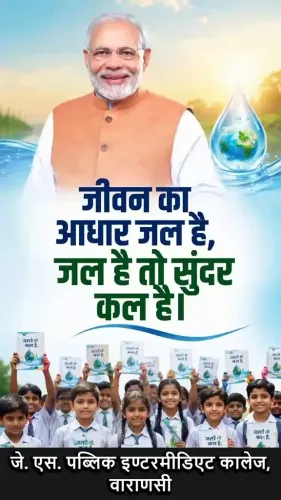
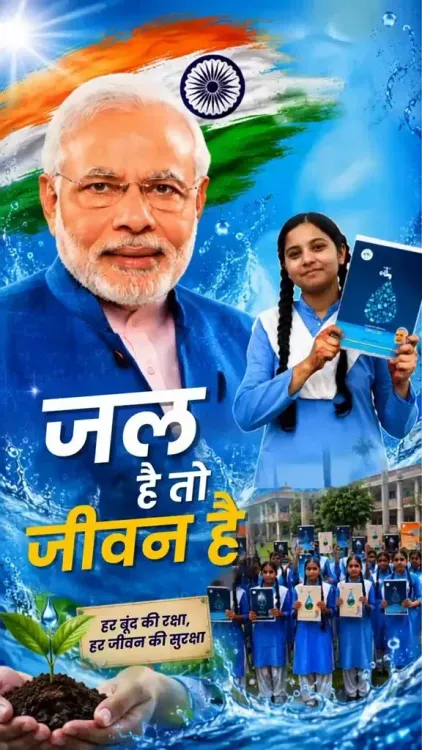
Union Jal Shakti Minister C. R. Paatil on 10 July 2026 shared an outreach event at Shri Hans Inter College in Muradnagar, Uttar Pradesh, where students received notebooks and pledged to conserve water, reinforcing the Modi government's drive to make water conservation a people's movement.
Key Takeaways
Union Jal Shakti Minister C.
Paatil posted about a school outreach event on 10 July 2026 .
The event was held at Shri Hans Inter College , Muradnagar , Ghaziabad district, Uttar Pradesh .
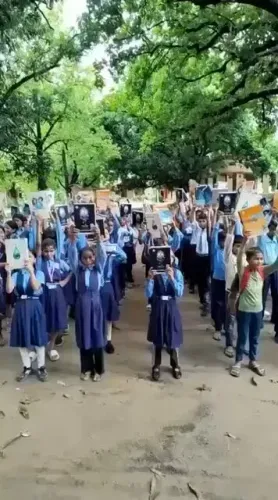
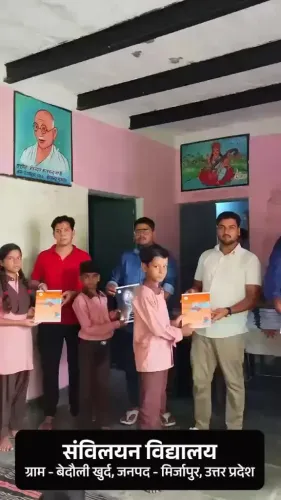
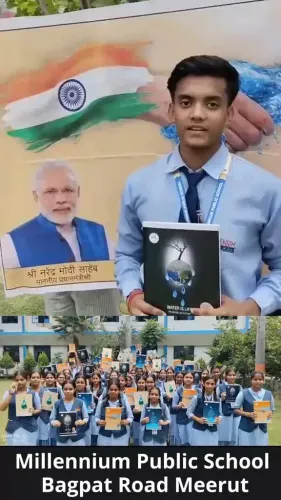
Students received notebooks and were urged to adopt water-conservation habits.
Children chanted 'Save Water, Save Life' — framed by the minister as evidence of a jan aandolan (people's movement).
The drive aligns with two 2019 flagship schemes: Jal Jeevan Mission and Jal Shakti Abhiyan .
Uttar Pradesh is a key focus state for both water infrastructure and behavioural-change campaigns under the Union government.
Union Jal Shakti Minister C. R. Paatil on Friday, 10 July 2026, shared an outreach event held at Shri Hans Inter College in Muradnagar, Uttar Pradesh, where students received notebooks and were urged to conserve water under the government's push to turn water conservation into a mass movement.
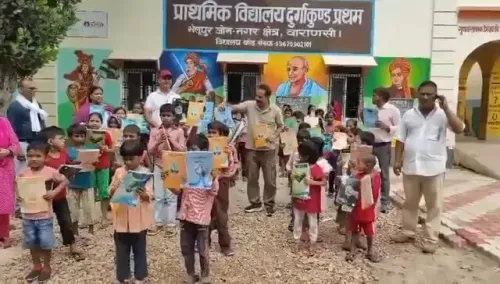
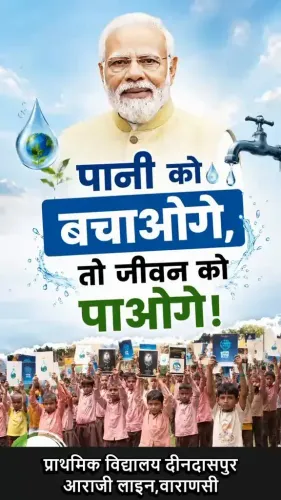
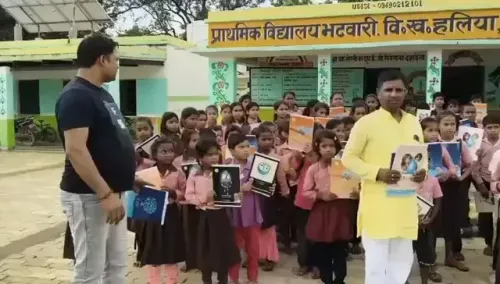
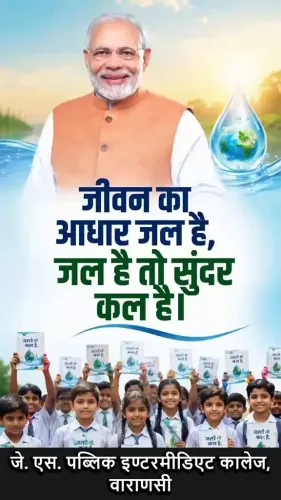
Posting on X, Minister Paatil wrote: 'आदरणीय प्रधानमंत्री जी श्री @narendramodi जी के नेतृत्व में जल संरक्षण बन रहा है जनआंदोलन!' — loosely translated as: 'Under the leadership of respected Prime Minister Narendra Modi, water conservation is becoming a people's movement!' He added that along with the distribution of notebooks, children were inspired to save water, with students chanting 'Save Water, Save Life' and 'Thank You Modi Ji.'
Context
The event at Shri Hans Inter College combined a material incentive — notebook distribution — with an awareness message, reflecting a model the Union government has used in environmental and sanitation campaigns. Students at the Muradnagar school, located in Ghaziabad district, were the primary audience. The minister framed the initiative as evidence that water conservation is evolving from a policy directive into a grassroots jan aandolan (people's movement).
The choice of a school setting is deliberate: similar outreach formats were used under Swachh Bharat and Namami Gange campaigns to embed conservation messaging among younger generations, with the expectation that children become ambassadors within their households.
Policy Backdrop
The event sits within two flagship programmes launched in 2019. The Jal Jeevan Mission was announced to provide functional household tap connections for drinking water to all rural households, targeting completion by 2024. Alongside it, the Jal Shakti Abhiyan was rolled out as a time-bound campaign for water conservation across 256 water-stressed districts.
Uttar Pradesh has been a key focus state for both programmes given its large rural population and dependence on groundwater. Successive budget allocations since 2019 have linked Jal Jeevan Mission infrastructure targets to behavioural change activities in states including Uttar Pradesh, making school-level drives a recognised component of the broader strategy.
Stakeholders and Impact
The immediate beneficiaries are the school students of Shri Hans Inter College, who received notebooks and water-conservation messaging. More broadly, rural households in Uttar Pradesh remain the principal stakeholders of the Jal Jeevan Mission, as tap-water connectivity and awareness together determine whether the scheme's infrastructure is sustained over time.
Educational outreach of this kind is intended to create long-term behavioural shifts. When children internalise conservation habits, the impact is expected to extend to family water-use practices, complementing the physical infrastructure being laid under the mission.
What's Next
State-level implementation reports for Jal Jeevan Mission in Uttar Pradesh will indicate how consistently such awareness drives are being integrated with infrastructure rollout. Parliamentary questions on school water-education modules are expected in the next monsoon session, which could shed further light on the scale and standardisation of such outreach events.
As the government continues to position water conservation as a jan aandolan, the frequency and geographic spread of school-level programmes across states will be a key indicator of whether the messaging is translating into a structured, replicable model beyond individual ministerial visits.
Point of View
' the ministry is reinforcing a political narrative that positions water conservation as a bottom-up phenomenon rather than a top-down mandate. For Minister Paatil, a senior Gujarat BJP leader now heading a Union ministry with a national footprint, such grassroots visibility events in states like Uttar Pradesh serve a dual purpose: keeping the Jal Jeevan Mission in public discourse and demonstrating on-ground engagement ahead of any legislative scrutiny. The long-term test, however, will be whether these awareness drives are institutionalised across schools at scale or remain episodic ministerial moments.
NationPress
8 Oct 2026
Frequently Asked Questions
What is the Jal Jeevan Mission and how does it relate to this school event?
The Jal Jeevan Mission is a central government scheme launched in 2019 to provide piped drinking water to all rural households. The school event in Muradnagar is part of the accompanying behavioural-change outreach that supports the mission's infrastructure goals by building water-conservation awareness among children.
Who is C. R. Paatil and what ministry does he head?
C. R. Paatil is a senior BJP leader and former Gujarat BJP state president who currently serves as Union Minister of Jal Shakti, the ministry responsible for water supply, conservation, and related schemes including Jal Jeevan Mission and Jal Shakti Abhiyan.
What happened at Shri Hans Inter College in Muradnagar?
On 10 July 2026, students at Shri Hans Inter College in Muradnagar, Uttar Pradesh, received notebooks and participated in a water-conservation awareness session. Minister Paatil shared the event on X, noting that children chanted 'Save Water, Save Life.'
What is Jal Shakti Abhiyan?
Jal Shakti Abhiyan is a time-bound water-conservation campaign launched by the Union government in 2019, initially targeting 256 water-stressed districts across India through community mobilisation and conservation works.
Why is Uttar Pradesh a focus state for water conservation programmes?
Uttar Pradesh has a large rural population with significant dependence on groundwater, making it a priority state for both the Jal Jeevan Mission's tap-water connectivity targets and broader water-conservation awareness drives.