Jal Shakti Minister CR Paatil flags water drive at Varanasi school
Synopsis
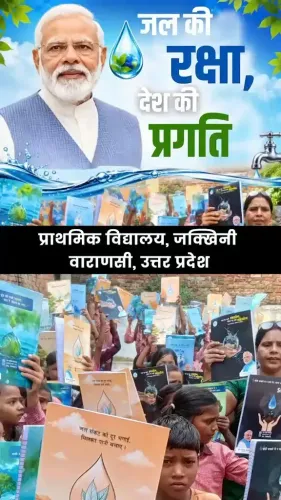
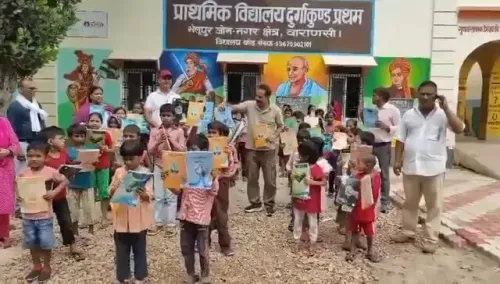
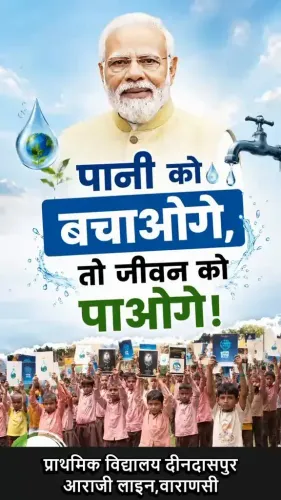
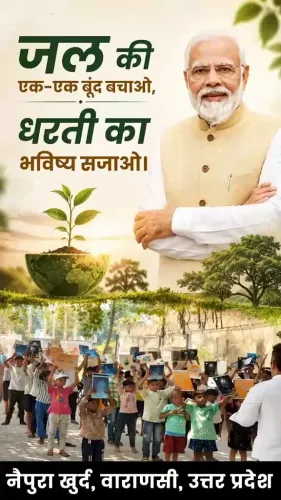
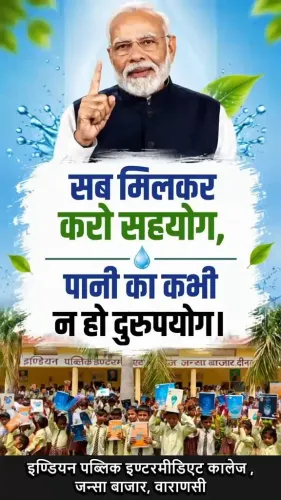
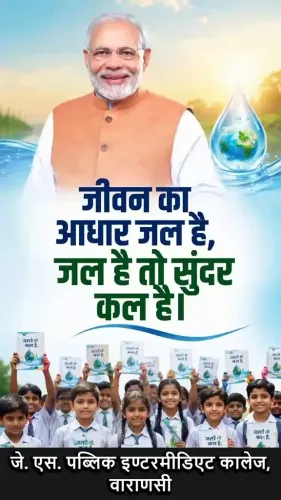
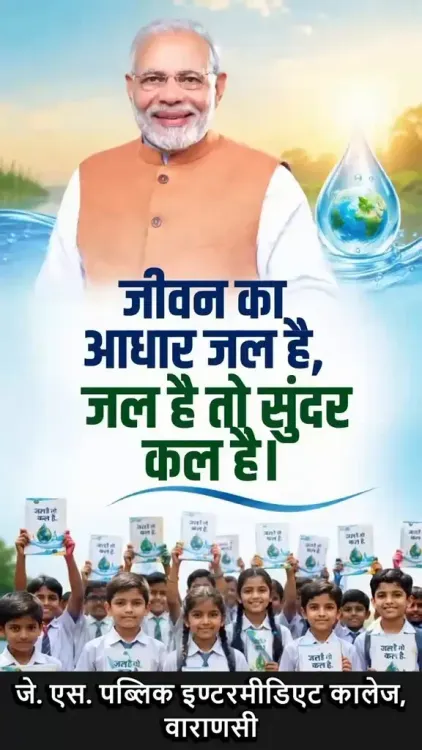
Union Jal Shakti Minister C. R. Paatil on 20 July 2026 spotlighted a 'Jal Hai To Kal Hai' event at J. S. Public Intermediate College, Varanasi, where students received special notebooks and took a collective pledge to conserve water and spread the message nationwide.
Key Takeaways
Union Jal Shakti Minister C.
Paatil posted about the event on 20 July 2026 .
Special notebooks were distributed to students at J.
Public Intermediate College, Varanasi under the 'Jal Hai To Kal Hai' campaign.
Students took a collective pledge to save every drop of water and spread the conservation message.
The campaign is part of the Jal Shakti Ministry's broader effort to pair infrastructure schemes like Jal Jeevan Mission with behavioural-change outreach.
Varanasi , PM Modi's parliamentary constituency, has been a recurring pilot site for Central government awareness initiatives.
Potential next steps include scaling the notebook-pledge model to other states and integrating water-conservation content into school curricula.
Union Jal Shakti Minister C. R. Paatil on Monday, 20 July 2026 highlighted a water-conservation awareness event held at J. S. Public Intermediate College, Varanasi, where special notebooks were distributed among students under the Centre's 'Jal Hai To Kal Hai' (Water is Tomorrow) public-awareness campaign led by Prime Minister Narendra Modi.
Context
Paatil shared that after receiving the notebooks, students broke into chants of 'Bharat Mata Ki Jai' (Victory to Mother India) and collectively took a pledge to save every drop of water and carry the conservation message to the wider public. The minister quoted the campaign's core message: 'Jal hai to kal hai' — 'If there is water, there is a tomorrow.' He added: 'Every drop is priceless, every drop is the future. Save water, save life.'
Varanasi, a historic city in Uttar Pradesh, is also the parliamentary constituency of Prime Minister Modi and has repeatedly served as a pilot location for government welfare and awareness initiatives.
Policy Backdrop
The Jal Shakti Ministry, formed in 2019 by merging the water-resources and drinking-water departments, has been the nodal body for two flagship programmes: the Jal Jeevan Mission, which targets piped-water connections to every rural household, and the Namami Gange programme, which pairs river cleaning with community participation drives.
The 'Jal Hai To Kal Hai' campaign extends this policy architecture into the behavioural domain, seeking to embed conservation habits through school-level outreach. Distributing branded notebooks is a low-cost, high-reach mechanism that keeps the water-conservation message in students' daily routines.
The broader pattern reflects the government's consistent approach of pairing large-scale water infrastructure with youth-focused awareness to address scarcity risks amplified by climate change.
Stakeholders and Impact
School students are the primary audience for this phase of the campaign, with the government banking on young people as multipliers who carry the conservation message into households. Urban households in water-stressed cities stand to benefit if the behavioural shifts promoted in classrooms translate into reduced domestic consumption.
The pledge-taking format — committing to save every drop and spread the message — is designed to create a sense of personal responsibility rather than passive awareness, a model that aligns with community-ownership principles embedded in the Jal Jeevan Mission.
What's Next
Observers will watch whether the notebook-distribution and pledge model is scaled to schools in other states and whether the Ministry of Education integrates formal water-conservation modules into school curricula in coordination with the Jal Shakti Ministry. The Varanasi event could serve as a template for similar drives ahead of the monsoon season, when public messaging on water harvesting and conservation typically intensifies.
Point of View
Not merely a technocratic target. The notebook-and-pledge format is a replicable, low-cost model that, if scaled, could serve as a measurable outreach metric for the ministry ahead of the next policy review cycle. Whether the initiative produces lasting conservation habits or remains a ceremonial exercise will depend on follow-through in school curricula and community monitoring.
NationPress
20 Oct 2026
Frequently Asked Questions
What is the 'Jal Hai To Kal Hai' campaign?
'Jal Hai To Kal Hai' — meaning 'If there is water, there is a tomorrow' — is a Central government public-awareness campaign run by the Jal Shakti Ministry to promote water conservation and behavioural change among citizens, particularly the youth.
What happened at J. S. Public Intermediate College, Varanasi on 20 July 2026?
Students at J. S. Public Intermediate College in Varanasi received special notebooks under the 'Jal Hai To Kal Hai' campaign and took a collective pledge to save every drop of water and spread the conservation message to the wider public.
Who is C. R. Paatil and what ministry does he head?
C. R. Paatil is the Union Minister of Jal Shakti, the ministry formed in 2019 that oversees water resources, river rejuvenation, and drinking-water programmes across India. He is also a senior BJP leader and former Gujarat BJP state president.
What is the Jal Jeevan Mission?
The Jal Jeevan Mission, launched in 2019, is a Central government scheme aimed at providing piped drinking-water connections to every rural household in India, with an emphasis on community ownership and water conservation.
Why is Varanasi frequently chosen for Central government awareness events?
Varanasi is the parliamentary constituency of Prime Minister Narendra Modi, which makes it a high-visibility location for government initiatives. It has repeatedly served as a pilot site for welfare and awareness programmes, lending political and symbolic significance to events held there.